



Back to catalogue
Shrub; Hybrid SpinosissimaR. Harkness & Co., 1988White and cream

Jacqueline du Pré

RHS Award of Garden Merit 1994; creamy white with crimson-gold stamens; in memory of the cellist Jacqueline du Pré (1945–1987).

R. spinosissima ancestry

Variety profile

Flowering

Repeat-flowering, with pauses

Awards

RHS AGM 1994

United Kingdom · Royal Horticultural Society award

Winter hardiness

−20 °C

USDA zone 5b–10. RHS H6; in Ukraine without protection in most regions. RHS H6 · in Ukraine, no cover needed in most regions.

Compare reference temperatures

Plant size

135–185 × 75–150 cm
person 170 cm135–185 cm
Habit
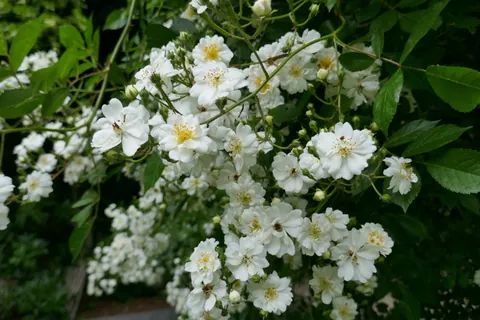
Spreading shrub with arching canes, like a dog-rose bush
Dimensions
135–185 × 75–150 cm, per HMF; in Ukrainian conditions more often 150 × 110 cm
Support
Not needed: a self-supporting shrub
Shoots
Sturdy, flexible, with a natural tendency to bend towards the ground
Branching
Good, from the base

Flower

8–10 cm
Bud shape
Elongated, peach-apricot, opens quickly
Open flower
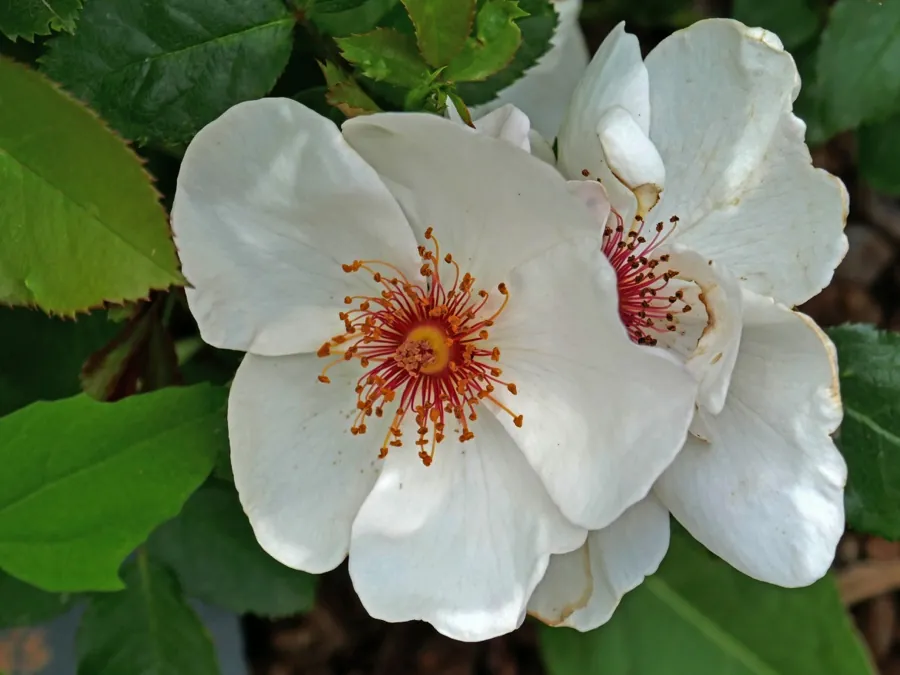
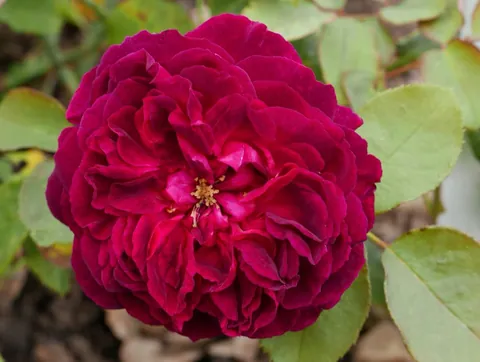
Semi-open cup, delicately white with a peach tint inside; bright crimson-gold stamens, the variety's signature trait
Centre
Visible, with a tuft of golden stamens on crimson anthers
Fullness
Semi-double, about 15 petals: the petals are thin, silky, with wavy edges
Flower carriage
Small inflorescences of 3–5 flowers per stem

Fragrance

Strong; lemon and musk

Strong lemon and musk: a rare combination in white varieties, partly inherited from the father Maigold (from R. spinosissima).

Disease resistance

4 out of 5

Strong: the wild-rose genes give natural hardiness.

Sun

Full sun

From its R. spinosissima ancestry it tolerates windy sites.

Thorns

Many
thornlessfewmoderatemanyvery many

Dense small prickles from the R. spinosissima heritage: typical for Hybrid Spinosissima.

Foliage

Fine, dark green, leathery, like a dog rose.

All characteristics in a table
Group
Shrub; Hybrid Spinosissima
Breeder
R. Harkness & Co., United Kingdom, 1988
Bud shape
Elongated, peach-apricot, opens quickly
Open flower
Semi-open cup, delicately white with a peach tint inside; bright crimson-gold stamens, the variety's signature trait
Centre
Visible, with a tuft of golden stamens on crimson anthers
Colour
Ivory with a delicate pink flush in bud; in sun it quickly fades to pure creamy white
Fullness
Semi-double, about 15 petals: the petals are thin, silky, with wavy edges
Flower carriage
Small inflorescences of 3–5 flowers per stem
Flowering
Repeat-flowering, with pauses
Fragrance
Strong lemon and musk: a rare combination in white varieties, partly inherited from the father Maigold (from R. spinosissima)
Hips
Orange-red hips in autumn
Habit
Spreading shrub with arching canes, like a dog-rose bush
Branching
Good, from the base
Shoots
Sturdy, flexible, with a natural tendency to bend towards the ground
Thorns
Dense small prickles from the R. spinosissima heritage: typical for Hybrid Spinosissima.
Dimensions
135–185 × 75–150 cm, per HMF; in Ukrainian conditions more often 150 × 110 cm
Support
Not needed: a self-supporting shrub
Foliage
Fine, dark green, leathery, like a dog rose
Resistance
Strong: the wild-rose genes give natural hardiness
Variations of the variety
Code HARwanna; parentage Radox Bouquet × Maigold; R. spinosissima blood via Maigold

Colour scheme

Ivory with a delicate pink flush in bud; in sun it quickly fades to pure creamy white

Rose neighbours

Perennials to plant nearby

Rose neighbours

Cream-apricot and pink Hybrid Musks and David Austin roses — a natural, productive backdrop:

Companion perennials

Violet-blue accents will bring out the raspberry stamens:

lavender 'Munstead'catmintsoft lady's mantleevening primrose

Availability worldwide

A classic Harkness variety, available in most regions:

  • 🇬🇧 United Kingdom: high · official Harkness catalogue
  • 🇪🇺 Europe: high · classic
  • 🇺🇸 USA: moderate
  • 🇺🇦 Ukraine: moderate · from European nurseries

More about the variety

Hips
Orange-red hips in autumn
Variations of the variety
Code HARwanna; parentage Radox Bouquet × Maigold; R. spinosissima blood via Maigold

How to grow

Where to plant. Natural cottage gardens, by stone walls, as solitary specimens, in mixed borders with lavender and catmint. Thanks to its R. spinosissima genes it is good for seaside coasts and windy sites.

Climate. Down to −20 °C. In Ukraine, no protection in most regions; in the north, light protection in snowless winters.

Care. Minimal, like a dog rose: remove only thin or dead canes; excessive pruning reduces fruiting.

About the name

Name. The rose was created in memory of Jacqueline du Pré (1945–1987), a world-class British cellist and the wife of the conductor Daniel Barenboim. At 26 Jacqueline stopped performing because of multiple sclerosis; she died at 42. Harold Harkness named the variety in her memory, choosing a strong lemon-musk scent as a symbol of her 'purely musical' quality.

Breeding. Bred at the nursery of R. Harkness & Co. (Hitchin, Hertfordshire, UK) and introduced in 1988. Code HARwanna. Parentage: Radox Bouquet × Maigold; from its father Maigold (Kordes 1953) it inherited blood of Rosa spinosissima (the burnet rose), which explains its small prickles, arching habit, early flowering and high hardiness.

Significance. RHS Award of Garden Merit 1994, the Royal Horticultural Society's award for 'excellent garden qualities'. One of the most respected Harkness shrubs. It belongs to the rare Hybrid Spinosissima category in our catalogue: a classic that combines a cultivated variety with a wild rose root. It is often mistakenly sold as an 'English Rose' or a 'David Austin' rose; this is incorrect: the variety is a Harkness, not an Austin.

Frequently asked questions about Jacqueline du Pré

Does Jacqueline du Pré need winter protection?

The cultivar’s reference temperature is −20 °C (USDA zone 5b–10). Overwintering depends on the conditions. RHS H6; in Ukraine without protection in most regions.

How many times a season does Jacqueline du Pré flower?

Repeat-flowering, with pauses.

How big does Jacqueline du Pré grow?

135–185 cm tall, 75–150 cm wide.

Which diseases affect Jacqueline du Pré?

Overall resistance: 4 out of 5. A healthy shrub; its strength comes from the wild rose genes.

How much sun does Jacqueline du Pré need?

Sun; full sun; from its R. spinosissima ancestry it tolerates windy sites.

What does Jacqueline du Pré smell like?

Strong lemon and musk: a rare combination in white varieties, partly inherited from the father Maigold (from R. spinosissima).

Gardeners' photos and reviews

My climate

Choose a reference temperature to compare with the cultivar’s data. This is not an overwintering forecast or advice on winter protection; consider wind, moisture and the duration of frost.

Regional data are generalised. USDA describes average annual extreme minima, not a forecast; the values in the list are rounded. Check the conditions at your site. More information: Roses in Ukraine's climate.