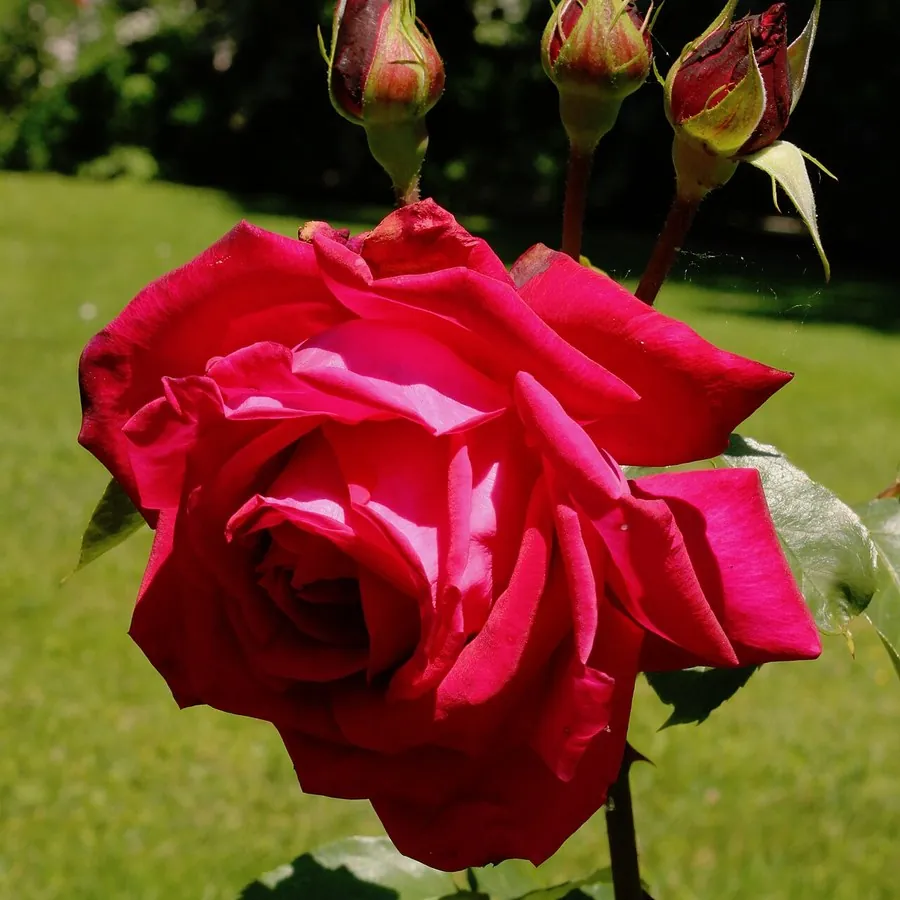
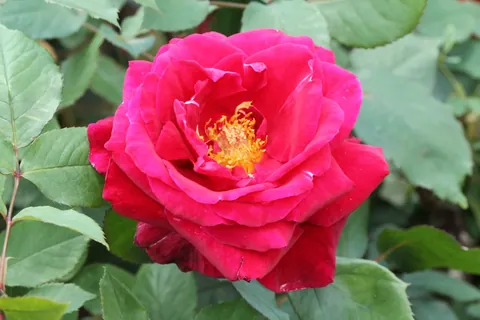
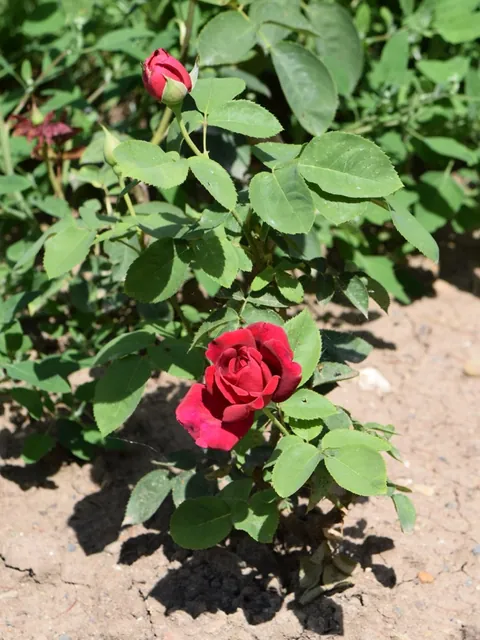
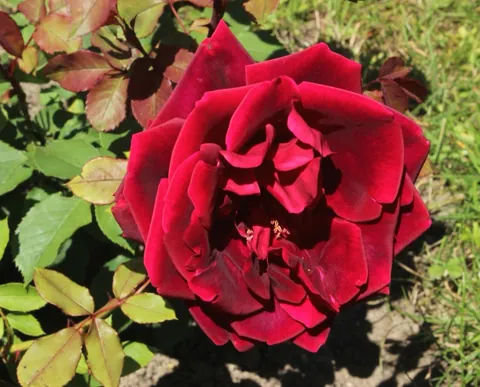





Karl Herbst, close-up of the flower
Photo: Anna reg, CC BY-SA 3.0
Back to catalogue
Hybrid TeaWilhelm Kordes II, 1950Red

Karl Herbst

A bright cherry-red classic of the post-war 1950s; a large high-centred flower with ~60 petals; an upright bush 70–90 cm; one of the varieties that started the fashion for red roses.

Independence × Peace

Variety profile

Flowering

Repeat-flowering, in flushes throughout the season

Awards

Gold medal

RNRS 1950 (per French Wikipedia — treat with caution)

Winter hardiness

−15 °C

USDA zone 7b+. To ~−15 °C; in Ukraine winter protection is essential. Down to ~-15 °C · in Ukraine, winter protection is essential.

Compare reference temperatures

Plant size

70–90 × 70 cm
person 170 cm70–90 cm
Habit
Upright bush
Dimensions
70–90 × ~70 cm
Support
Not needed — the bush is upright, the stems are strong
Shoots
Strong, hold the large flower without tying
Branching
No data

Flower

60 petals
Bud shape
Classic high-centred bud of the hybrid tea type
Open flower
Large high-centred, very double — a typical show form of the 1950s; the exact diameter is not documented
Fullness
~60 petals — very double
Flower carriage
Mostly solitary flowers

Fragrance

Moderate to strong; pleasant

Moderate to strong, pleasant; the specific character (fruity, spicy, etc.) is not detailed in the sources.

Sun

No data

No information on sun-fading — so we do not state it.

Thorns

Moderate
thornlessfewmoderatemanyvery many

There is no precise data on thorniness — an averaged estimate for Hybrid Teas is shown.

Foliage

Light green, glossy.

Other names

Red Peace, The Old Bull
All characteristics in a table
Group
Hybrid Tea
Breeder
Wilhelm Kordes II, Germany, 1950
Bud shape
Classic high-centred bud of the hybrid tea type
Open flower
Large high-centred, very double — a typical show form of the 1950s; the exact diameter is not documented
Colour
Bright cherry red (raspberry red, 'scarlet'). There is no data on a paler reverse of the petals; nor on fading — so we do not state it
Fullness
~60 petals — very double
Flower carriage
Mostly solitary flowers
Flowering
Repeat-flowering, in flushes throughout the season
Fragrance
Moderate to strong, pleasant; the specific character (fruity, spicy, etc.) is not detailed in the sources
Hips
No data
Habit
Upright bush
Branching
No data
Shoots
Strong, hold the large flower without tying
Thorns
There is no precise data on thorniness — an averaged estimate for Hybrid Teas is shown.
Dimensions
70–90 × ~70 cm
Support
Not needed — the bush is upright, the stems are strong
Foliage
Light green, glossy
Resistance
No data
Variations of the variety
No separate breeding code; synonyms Red Peace and The Old Bull

Colour scheme

Bright cherry red (raspberry red, 'scarlet'). There is no data on a paler reverse of the petals; nor on fading — so we do not state it

Rose neighbours

Perennials to plant nearby

Neighbouring roses

Classic cherry and dark red Hybrid Teas — the family of the 'great red rose':

Companion perennials

Silver foliage and lilac-blue flower clusters set off the rich red:

lavendercatmintlamb's earsage

Significance

One of the varieties that set the postwar fashion for red roses:

  • 🇩🇪 Germany: Kordes breeding, 1950
  • 🏅 Gold medal RNRS 1950
  • 🌹 parent of the variety Miss All-American Beauty

More about the variety

Hips
No data
Variations of the variety
No separate breeding code; synonyms Red Peace and The Old Bull

How to grow

Where to plant. An upright bush 70–90 cm tall — a classic Hybrid Tea for a sunny bed or border. It needs no support: the strong stems hold the large flower well. The bright cherry-red colour reads best next to silver foliage (lavender, lamb's ear) and lilac-blue flower spikes.

Climate. USDA 7b+ (roughly down to −15 °C). In Ukraine winter protection is essential — it overwinters on its own only in the mildest zones. Flowering: repeat, in flushes throughout the season.

About the name

Name. The variety is named after Karl Herbst, a colleague of the breeder Kordes. The synonym Red Peace appeared because the pollen parent of the variety was the famous Peace (the seed parent — Independence). Another synonym is The Old Bull. The variety has no separate breeding code.

Breeding. Bred by Wilhelm Kordes II (specifically Wilhelm II, not Reimer Kordes) in Germany, 1950; parents — Independence × Peace. According to the French Wikipedia, the variety received a RNRS Gold Medal in 1950 (cited with caution).

Significance. Karl Herbst is one of the varieties that started the post-war fashion for red roses. It also became the parent of Miss All-American Beauty, continuing the line of large red hybrid teas.

Frequently asked questions about Karl Herbst

Does Karl Herbst need winter protection?

The cultivar’s reference temperature is −15 °C (USDA zone 7b+). Overwintering depends on the conditions. To ~−15 °C; in Ukraine winter protection is essential.

How many times a season does Karl Herbst flower?

Repeat-flowering, in flushes throughout the season.

How big does Karl Herbst grow?

70–90 cm tall, about 70 cm wide.

How much sun does Karl Herbst need?

No data; no information on sun-fading — so we do not state it.

What does Karl Herbst smell like?

Moderate to strong, pleasant; the specific character (fruity, spicy, etc.) is not detailed in the sources.

Gardeners' photos and reviews

My climate

Choose a reference temperature to compare with the cultivar’s data. This is not an overwintering forecast or advice on winter protection; consider wind, moisture and the duration of frost.

Regional data are generalised. USDA describes average annual extreme minima, not a forecast; the values in the list are rounded. Check the conditions at your site. More information: Roses in Ukraine's climate.