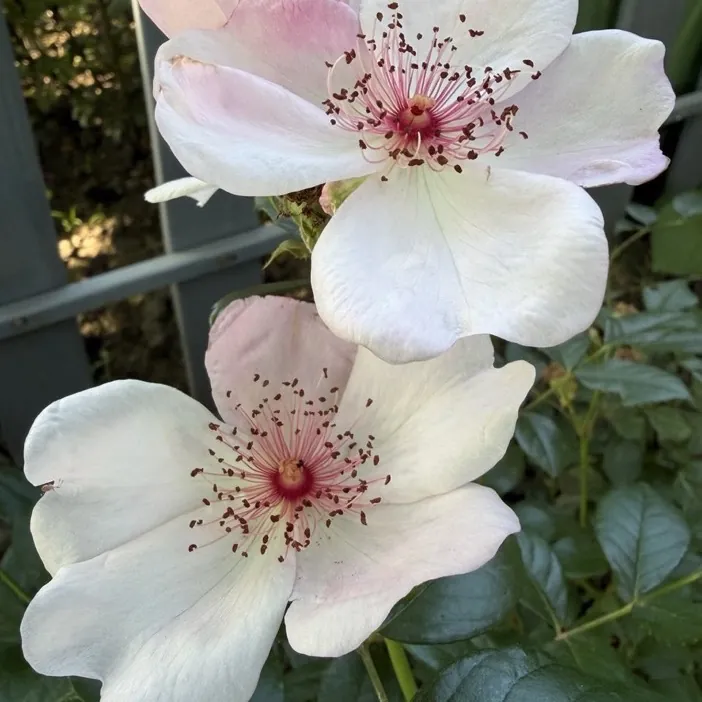


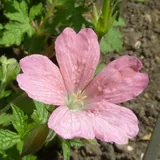

Astronomia, close-up of the flower
Back to catalogue
Landscape; groundcoverMeilland, 2004Pink

Astronomia

MEIguimov · Sweet Pretty · ground-cover rose dedicated to the Paris Observatory.

Variety profile

Flowering

Repeat flowering

Almost continuous from spring until the frosts. Months are approximate, for the climate of Ukraine.

Plant size

60 × 60 cm
person 170 cm60 cm
Habit
Compact, rounded
Dimensions
About 60 cm tall and 60 cm wide; a compact, rounded bush for the front of the border
Shoots
Flexible, leafy
Branching
Very dense

Flower

4–8 cm
Bud shape
Small, round
Open flower
Simple flat star; diameter 4–8 cm
Centre
A cluster of red-and-gold stamens is the flower's main feature, reminiscent of a star
Fullness
Simple, 5 petals
How it flowers on the shoot
In profuse clusters of 5–15

Fragrance

Barely noticeable

Light, almost absent —.

Sun

Suitable for massed plantings, borders and well-lit front-of-border positions

Foliage

Small, dark green, glossy, very dense.

Other names

Astronomia, Sweet Pretty, Pink Sakurina
All characteristics in a table
Group
Landscape; groundcover
Breeder
Meilland, 2004
Bud shape
Small, round
Open flower
Simple flat star; diameter 4–8 cm
Centre
A cluster of red-and-gold stamens is the flower's main feature, reminiscent of a star
Colour
Soft pink with a creamy centre; the edge slightly lighter
Fullness
Simple, 5 petals
How it flowers on the shoot
In profuse clusters of 5–15
Flowering
Almost continuous from spring until the frosts
Fragrance
Light, almost absent —
Habit
Compact, rounded
Branching
Very dense
Shoots
Flexible, leafy
Dimensions
About 60 cm tall and 60 cm wide; a compact, rounded bush for the front of the border
Foliage
Small, dark green, glossy, very dense
Resistance
Meilland rates disease resistance as excellent; this is the originator's assessment, not a guarantee of the same result in every garden
Names of the variety
Registration name — MEIguimov; also sold under the names Astronomia, Sweet Pretty and Pink Sakurina

Colour scheme

Soft pink with a creamy centre; the edge slightly lighter

Rose neighbours

Perennials to plant nearby

Not a finished plan, but directions

How to pair Astronomia in the garden

Astronomia looks light thanks to its single pink flowers and open golden-red stamens. Choose the neighbouring rose so as to keep this lightness, rather than overwhelm it with large, heavy blooms.

A calm light background

A milky-cream rose creates a light base and highlights the single flower form of Astronomia by contrast with double blooms.

A light pink rhythm

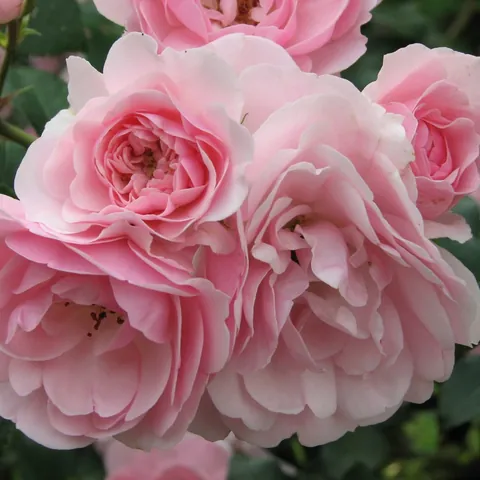
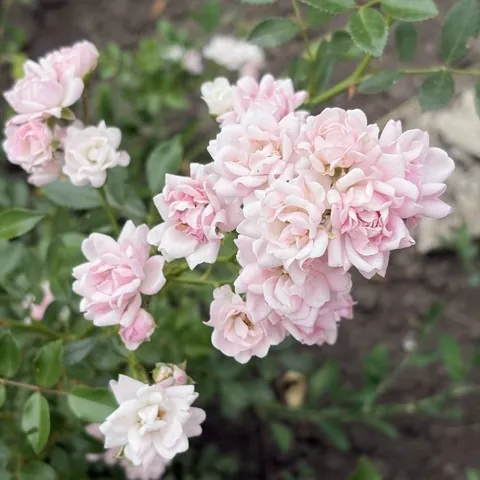
A lower rose with small pink rosettes supports the colour and creates a different scale without drawing attention from the main variety.

One colour accent

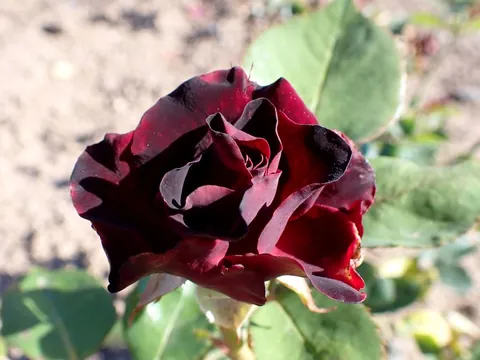
Choose a cool smoky-lilac depth or a warm honey-amber echo of the golden centre; both options together are not essential.

Companion perennials

Companions form a low edge; lavender and catmint like drier sun, heuchera prefers a cooler edge.

  • Lavender 'Hidcote'. Dark violet spikes give a cool contrast; plant on a drier, sunny edge.
  • Geranium 'Wargrave Pink'. A single warm pink flower supports the natural character, but it has a different leaf texture and a lower tier.
  • Catmint. A blue cloud brings out the soft pink petals and does not hide the compact bush.
  • Heuchera 'Caramel'. Warm caramel foliage adds a long decorative accent; place it on a cooler edge with morning sun.

What to avoid

Do not surround Astronomia with several tall large-flowered roses in intense colours: its delicate pink 'stars' will get lost among them.

More about the variety

Names of the variety
Registration name — MEIguimov; also sold under the names Astronomia, Sweet Pretty and Pink Sakurina

How to grow

Where to plant. In masses, in borders, along paths, on slopes or in a low hedge. The compact bush is convenient for the front of the border. Conditions: sun, well-drained soil and room for a bush of about 60 × 60 cm. Wintering in Ukraine: in the south and in sheltered spots protect the base of the young bush; in the central, northern and eastern regions add a light, breathable cover after a spell of hard frost.

About the name

Astronomia is dedicated to the Paris Observatory; the simple five-petalled flower with red stamens resembles a star. The Meilland variety has the registration name MEIguimov and was introduced in the early 2000s; official synonyms include Sweet Pretty. In 2005 Astronomia received Rose of the Year at Bagatelle and gold medals in several international trials; in 2012 — the Piaget Rose Trophy in Monaco.

Frequently asked questions about Astronomia

How many times a season does Astronomia flower?

Almost continuous from spring until the frosts.

How big does Astronomia grow?

About 60 cm tall, about 60 cm wide.

How much sun does Astronomia need?

Sun; suitable for massed plantings, borders and well-lit front-of-border positions.

What does Astronomia smell like?

Light, almost absent —.

Gardeners' photos and reviews

My climate

Choose a reference temperature to compare with the cultivar’s data. This is not an overwintering forecast or advice on winter protection; consider wind, moisture and the duration of frost.

Regional data are generalised. USDA describes average annual extreme minima, not a forecast; the values in the list are rounded. Check the conditions at your site. More information: Roses in Ukraine's climate.