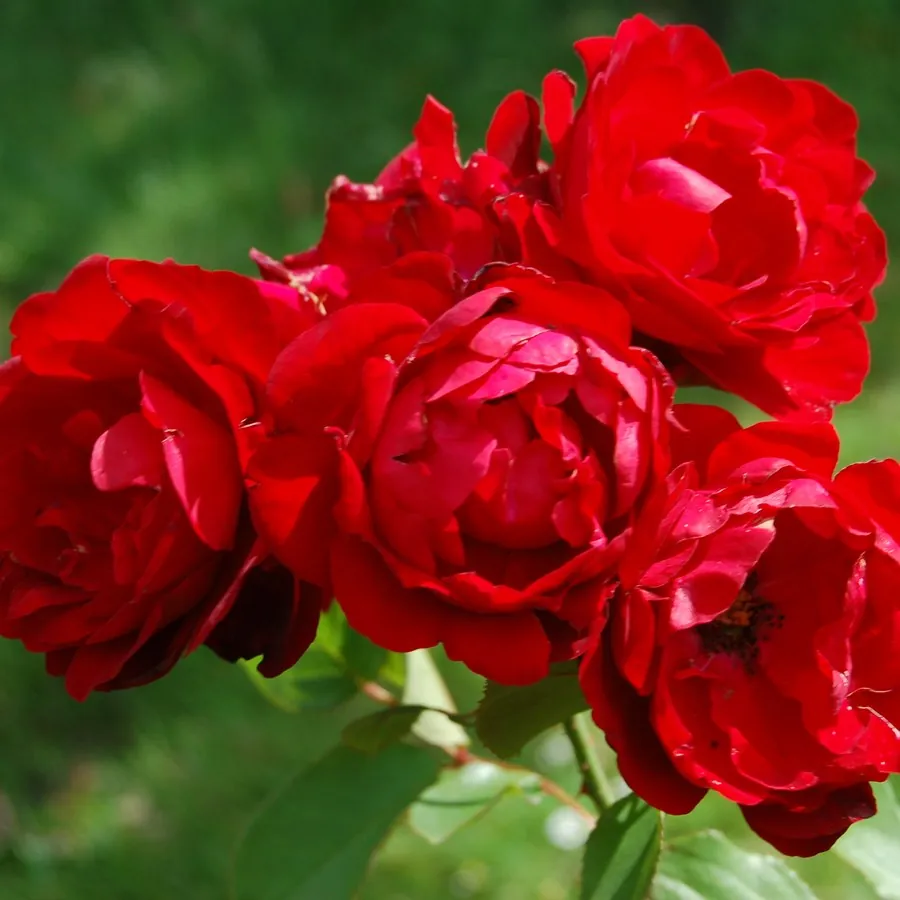
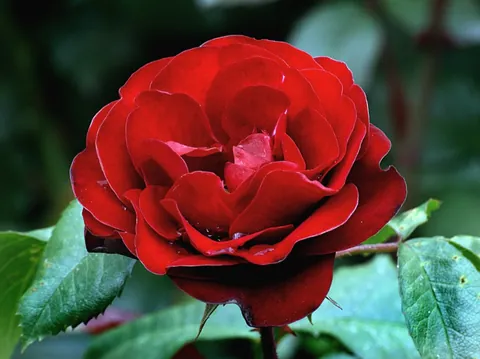
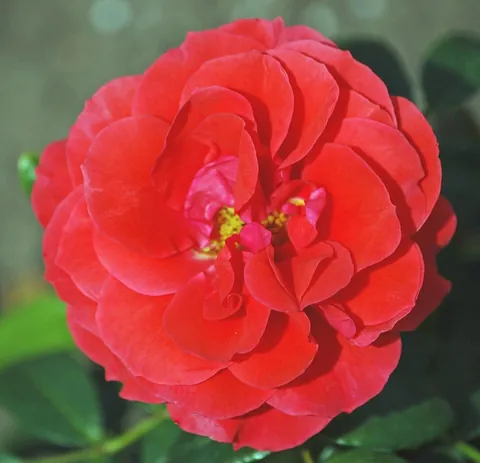
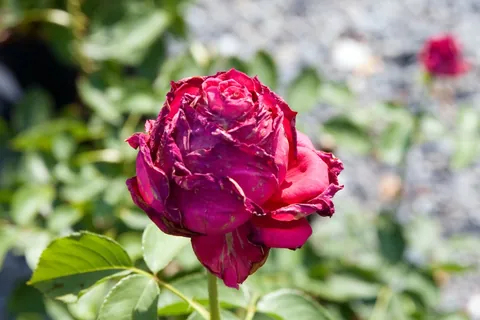





Lilli Marlene, close-up of the flower
Photo: Huhu, Public Domain
Back to catalogue
FloribundaReimer Kordes; W. Kordes' Söhne, 1959Red

Lilli Marlene

A bright red floribunda by Reimer Kordes; named after the legendary song «Lili Marleen»; ADR 1960; NRS Gold Medal 1959; The Hague gold 1966; abundant continuous flowering in clusters.

Classic bright red FL, ADR variety

Variety profile

Flowering

Repeat flowering

Remontant — abundant and continuous all summer and autumn. Months are approximate, for the climate of Ukraine.

Awards

ADR 1960

NRS Gold Medal 1959 · Gold, The Hague 1966 · no RHS AGM

Plant size

55–65 × 50–60 cm
person 170 cm55–65 cm
Habit
Compact, dense, branching bush — a classic Kordes-floribunda of the late 1950s
Dimensions
55–65 × 50–60 cm — compact
Support
Not required
Shoots
Sturdy, holding the flower clusters well
Branching
Good, from the base; the bush is dense

Flower

6–7 cm
Bud shape
Neat, bright red
Open flower
Flat-cupped, about 6–7 cm across; about 25 petals (17–25)
Centre
Compact, in the same bright red tone
Fullness
Moderately double, about 25 petals
Flower carriage
In clusters of 5–7 flowers — a typical floribunda form

Fragrance

Barely perceptible

Weak, delicate, barely perceptible.

Disease resistance

3 out of 5
Black spotsusceptiblePowdery mildewsusceptible

Two versions: older sources point to a tendency toward powdery mildew and black spot; modern nurseries, by contrast, praise its resistance. We show this honestly — the truth is probably somewhere in between: plant in a well-ventilated, sunny spot, and disease rarely becomes a problem.

Sun

Full sun

The colour holds well, with no strong fading.

Thorns

Few
thornlessfewmoderatemanyvery many

The bush has prickles — a moderate number.

Foliage

Healthy green foliage on a dense bush.

Other names

Lilli Marleen, Lili Marleen, Limar
All characteristics in a table
Group
Floribunda
Breeder
Reimer Kordes; W. Kordes' Söhne, Germany, 1959
Bud shape
Neat, bright red
Open flower
Flat-cupped, about 6–7 cm across; about 25 petals (17–25)
Centre
Compact, in the same bright red tone
Colour
Bright red, velvety red (scarlet / deep crimson) — even and clean; holds well, with no strong fading
Fullness
Moderately double, about 25 petals
Flower carriage
In clusters of 5–7 flowers — a typical floribunda form
Flowering
Remontant — abundant and continuous all summer and autumn
Fragrance
Weak, delicate, barely perceptible
Hips
Not documented
Habit
Compact, dense, branching bush — a classic Kordes-floribunda of the late 1950s
Branching
Good, from the base; the bush is dense
Shoots
Sturdy, holding the flower clusters well
Thorns
The bush has prickles — a moderate number.
Dimensions
55–65 × 50–60 cm — compact
Support
Not required
Foliage
Healthy green foliage on a dense bush
Resistance
Two versions: older sources point to a tendency toward powdery mildew and black spot; modern nurseries, by contrast, praise its resistance. We show this honestly — the truth is probably somewhere in between: plant in a well-ventilated, sunny spot, and disease rarely becomes a problem.
Variations of the variety
Code KORlima; synonyms: Lilli Marleen, Lili Marleen, Limar

Colour scheme

Bright red, velvety red (scarlet / deep crimson) — even and clean; holds well, with no strong fading

Rose neighbours

Perennials to plant nearby

Neighbouring roses

The red family — from bright to deep velvet:

Companion perennials

A silvery-purple family for contrast with bright red:

lamb's earlavendersagegypsophila

Availability worldwide

A classic Kordes Floribunda, 65+ years in cultivation:

🇩🇪 Germany: high · official Kordes🇪🇺 Europe: high · classic🇺🇦 Ukraine: moderate · via European nurseries

More about the variety

Hips
Not documented
Variations of the variety
Code KORlima; synonyms: Lilli Marleen, Lili Marleen, Limar

How to grow

Where to plant. Red borders, hedges, formal groups, landscape masses; a compact, dense bush that looks good at the front of a bed and works well as a specimen against a background of silvery or white neighbours.

Climate. USDA 5b+, RHS H6 (~−20…−15 °C) — a winter-hardy ADR-variety; in cold regions light protection is enough.

Care. A classic floribunda — spring pruning to 4–6 buds; for disease prevention (two versions of resistance — see above), plant in a well-ventilated, sunny spot.

About the name

Name. «Lilli Marlene», after the legendary song «Lili Marleen», a German soldiers' song about love (lyrics 1915, music 1938). The song became famous in the voice of Lale Andersen; the English-language version was sung by Marlene Dietrich. During the Second World War the song became a favourite on both sides of the front and a symbol of longing for home and love. The rose is named after this song.

Breeding. Raised by Reimer Kordes at W. Kordes' Söhne (Germany) in 1959. Code KORlima. Synonyms: Lilli Marleen, Lili Marleen, Limar.

Significance. One of Kordes' classic bright red floribundas. ADR 1960; NRS Gold Medal 1959; gold medal at The Hague 1966. This variety does not hold the RHS Award of Garden Merit. Valued for its abundant, continuous flowering in clusters and its clean, even red colour.

Frequently asked questions about Lilli Marlene

How many times a season does Lilli Marlene flower?

Remontant — abundant and continuous all summer and autumn.

How big does Lilli Marlene grow?

55–65 cm tall, 50–60 cm wide.

Which diseases affect Lilli Marlene?

Overall resistance: 3 out of 5. Two versions — see below; tip: a well-ventilated site.

How much sun does Lilli Marlene need?

Sun; full sun; the colour holds well, with no strong fading.

What does Lilli Marlene smell like?

Weak, delicate, barely perceptible.

Gardeners' photos and reviews

My climate

Choose a reference temperature to compare with the cultivar’s data. This is not an overwintering forecast or advice on winter protection; consider wind, moisture and the duration of frost.

Regional data are generalised. USDA describes average annual extreme minima, not a forecast; the values in the list are rounded. Check the conditions at your site. More information: Roses in Ukraine's climate.