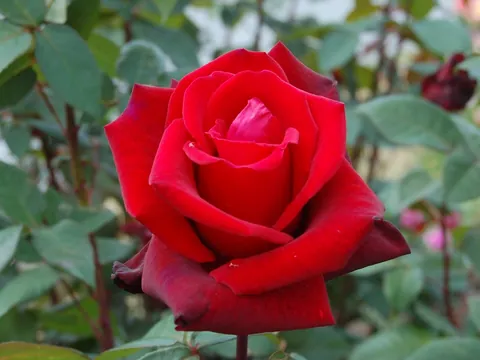
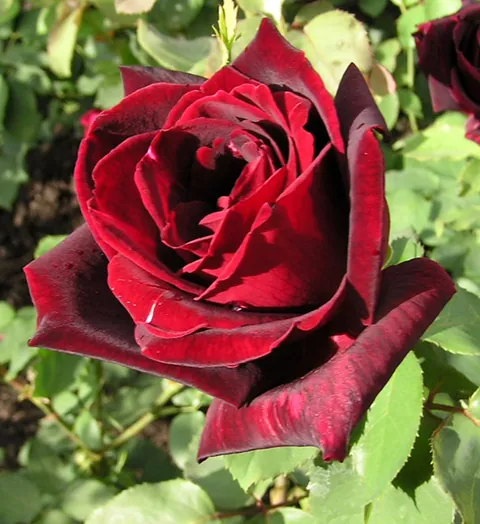
Loving Memory, close-up of the flower
Photo: Garitzko, Public Domain
Back to catalogue
Hybrid TeaReimer Kordes; Kordes, 1981Red

Loving Memory

A classic dark red Hybrid Tea on long, sturdy stems; a rich crimson-scarlet that does not fade and is almost unaffected by rain; a large, high flower borne singly; an excellent cut rose.

Variety profile

Flowering

Repeat flowering

Remontant — flowers abundantly and for a very long time, from late June to autumn. Months are approximate, for the climate of Ukraine.

Winter hardiness

−20 °C

USDA zone 7b+. RHS H6 (~−20 °C); in Ukraine — cover + mounding soil around the base, spring protection.

Compare reference temperatures

Plant size

90–120 × 70–75 cm
person 170 cm90–120 cm
Habit
Upright, bushy, tall
Dimensions
90–120 cm tall (up to 150) × 70–75 cm wide
Support
Usually not required — the stems are sturdy enough
Shoots
Long, sturdy stems, wind-resistant — they hold the large flower without flopping
Branching
Bushy, well foliated

Flower

10–12 cm
Bud shape
Classic high-centred, dark red
Open flower
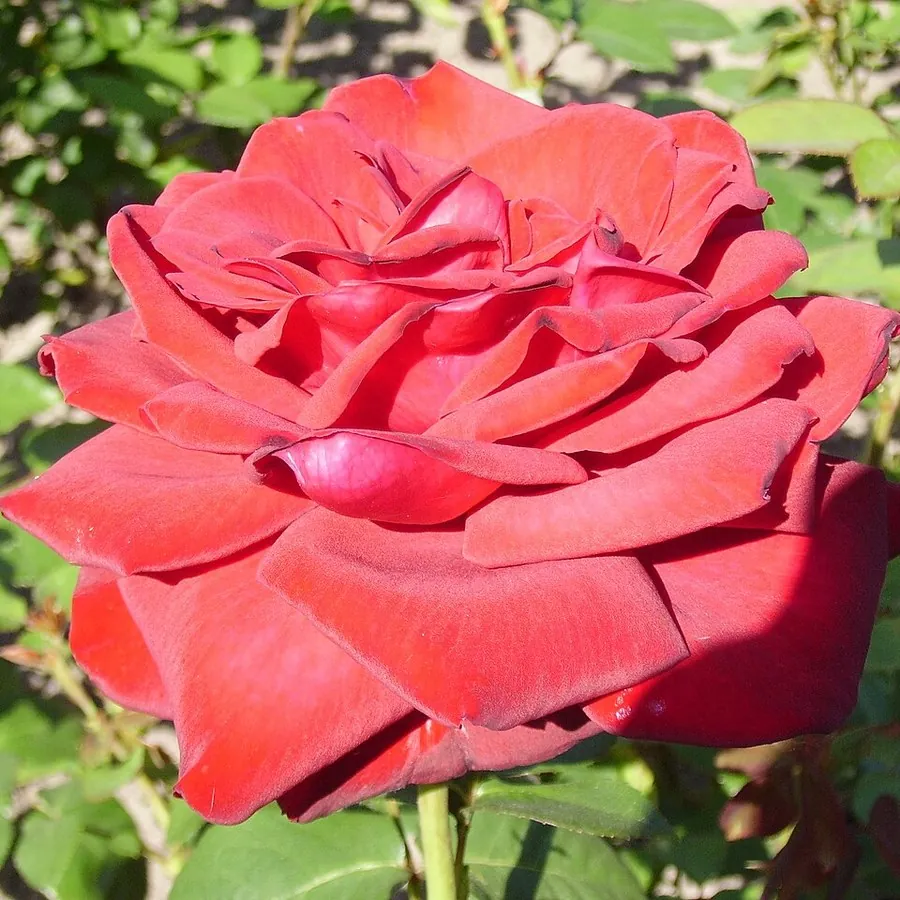
Large, high, goblet-shaped flower of the classic Hybrid Tea form, 10–12 cm across
Fullness
About 40 petals
Flower carriage
Flowers borne singly on long, sturdy stems — an excellent cut rose; the stems are wind-resistant

Fragrance

Barely perceptible; a light sweet note

Barely perceptible — light, with a fine sweet note.

Disease resistance

5 out of 5

Very high (5/5) — one of the variety's key advantages.

Sun

Does not fade

The colour holds in sunlight; almost unaffected by rain.

Thorns

Moderate
thornlessfewmoderatemanyvery many

Moderate number of prickles — typical for Hybrid Teas.

Foliage

Healthy, covering the bush well.

Other names

Burgund '81, Red Cedar, The MacArthur Rose
All characteristics in a table
Group
Hybrid Tea
Breeder
Reimer Kordes; Kordes, Germany, 1981
Bud shape
Classic high-centred, dark red
Open flower
Large, high, goblet-shaped flower of the classic Hybrid Tea form, 10–12 cm across
Colour
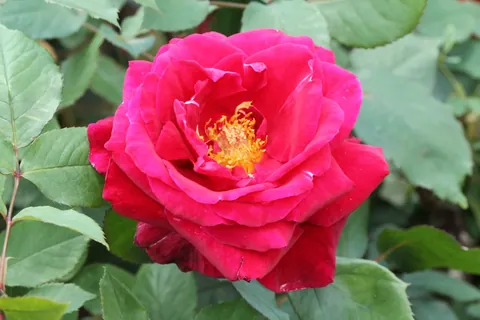
Rich dark red, raspberry-red (crimson-scarlet); its main value is that the colour does not fade in sunlight and is almost unaffected by rain
Fullness
About 40 petals
Flower carriage
Flowers borne singly on long, sturdy stems — an excellent cut rose; the stems are wind-resistant
Flowering
Remontant — flowers abundantly and for a very long time, from late June to autumn
Fragrance
Barely perceptible — light, with a fine sweet note
Hips
No data
Habit
Upright, bushy, tall
Branching
Bushy, well foliated
Shoots
Long, sturdy stems, wind-resistant — they hold the large flower without flopping
Thorns
Moderate number of prickles — typical for Hybrid Teas.
Dimensions
90–120 cm tall (up to 150) × 70–75 cm wide
Support
Usually not required — the stems are sturdy enough
Foliage
Healthy, covering the bush well
Resistance
Very high (5/5) — one of the variety's key advantages
Variations of the variety
Breeding code KORgund81; synonyms Burgund '81, Red Cedar, The MacArthur Rose
Colour scheme

Rich dark red, raspberry-red (crimson-scarlet); its main value is that the colour does not fade in sunlight and is almost unaffected by rain

Rose neighbours

Perennials to plant nearby

Neighbouring roses

Classic deep red Hybrid Teas — the 'noble red' family:

Companion perennials

Silver foliage and blue/lilac flower clusters highlight the deep red:

lavendercatmintlamb's eardelphinium

Variety features

A reliable, healthy deep red classic of the 1980s from Kordes:

🩸 colour does not fade and copes well with rain💪 very disease-resistant✂️ excellent for cutting on long, sturdy stems🕊️ in Britain — a popular memorial rose

More about the variety

Hips
No data
Variations of the variety
Breeding code KORgund81; synonyms Burgund '81, Red Cedar, The MacArthur Rose
How to grow

Where to plant. A reliable dark red Hybrid Tea for a sunny bed, as a specimen or in a group; its long, sturdy stems make it an excellent cut rose from your own bush. An upright, tall bush (90–120 cm, up to 150) holds its shape well and usually needs no support. Companions: the deep crimson-red stands out beside silvery foliage (lamb's ear) and blue-lilac flower spikes (lavender, catmint, delphinium).

Climate. USDA 7b+, RHS H6 (tolerates about −20 °C). In Ukraine it needs winter cover with the base mounded up, and spring protection. The colour is fade-resistant, and the flower is almost unaffected by rain; it flowers abundantly and for a very long time — from late June to autumn.

About the name

Breeding. Raised by Reimer Kordes at the German house of Kordes, introduced in 1981. Breeding code — KORgund81. Name and synonyms: in different countries the variety is known under several names — Burgund '81 (German name), Red Cedar, The MacArthur Rose, and also Loving Memory. Historical fact: in Britain, Loving Memory became a popular memorial rose — it is often planted in memory of loved ones. Its reliability, health and rich dark red colour, which does not fade, helped this. No official awards are documented in our sources.

Frequently asked questions about Loving Memory

Does Loving Memory need winter protection?

The cultivar’s reference temperature is −20 °C (USDA zone 7b+). Overwintering depends on the conditions. RHS H6 (~−20 °C); in Ukraine — cover + mounding soil around the base, spring protection.

How many times a season does Loving Memory flower?

Remontant — flowers abundantly and for a very long time, from late June to autumn.

How big does Loving Memory grow?

90–120 cm tall, 70–75 cm wide.

Which diseases affect Loving Memory?

Overall resistance: 5 out of 5. Very resistant — the variety's key advantage.

How much sun does Loving Memory need?

Does not fade; the colour holds in sunlight; almost unaffected by rain.

What does Loving Memory smell like?

Barely perceptible — light, with a fine sweet note.

Gardeners' photos and reviews

My climate

Choose a reference temperature to compare with the cultivar’s data. This is not an overwintering forecast or advice on winter protection; consider wind, moisture and the duration of frost.

Regional data are generalised. USDA describes average annual extreme minima, not a forecast; the values in the list are rounded. Check the conditions at your site. More information: Roses in Ukraine's climate.