



Liolà, close-up of the flower
Back to catalogue
FloribundaAnna Medici Barni; Rose Barni, 2003Bicolour

Liolà

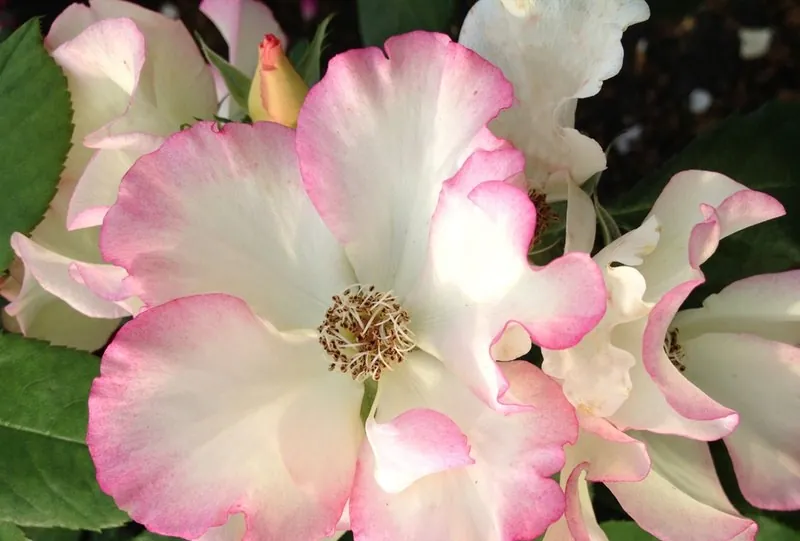
🇮🇹 Silver medal at Monza 2003 + the title «Most Beautiful Rose of Italy»; creamy white with a carmine-purple edge; the first Italian variety in the catalogue; named after Pirandello's play (1916).

The first Italian variety in our catalogue

Variety profile

Flowering

Repeat-flowering, abundant

Awards

Monza 2003

Silver medal + 'Most Beautiful Rose of Italy'

Winter hardiness

−20 °C

In Ukraine with moderate winter protection.

Compare reference temperatures

Plant size

70–90 × 60 cm
person 170 cm70–90 cm
Habit
Upright, compact
Dimensions
70–90 cm tall; up to 120 cm with flower stalks; about 60 cm wide
Support
No support needed
Shoots
Sturdy, straight
Branching
Good, from the base

Flower

5–7 cm
Bud shape
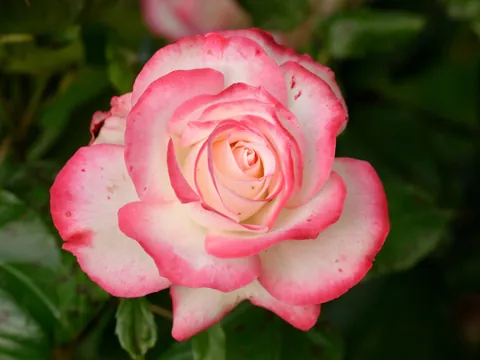
Round-oval, creamy white with a purple edge already visible
Open flower
Semi-open cup with an open centre and visible yellow stamens — a typical Floribunda-form
Centre
Visible, with a tuft of yellow stamens against a light cream background
Fullness
Single to semi-double, 5–8 petals
Flower carriage
3–5 flowers per stem

Fragrance

Light

Light, unobtrusive.

Disease resistance

4 out of 5

Good, typical of modern floribundas.

Sun

Sun + shade

Tolerates partial shade.

Thorns

Few
thornlessfewmoderatemanyvery many

Few prickles — convenient for formal beds.

Foliage

Dark green, healthy.

All characteristics in a table
Group
Floribunda
Breeder
Anna Medici Barni; Rose Barni, Italy, 2003
Bud shape
Round-oval, creamy white with a purple edge already visible
Open flower
Semi-open cup with an open centre and visible yellow stamens — a typical Floribunda-form
Centre
Visible, with a tuft of yellow stamens against a light cream background
Colour
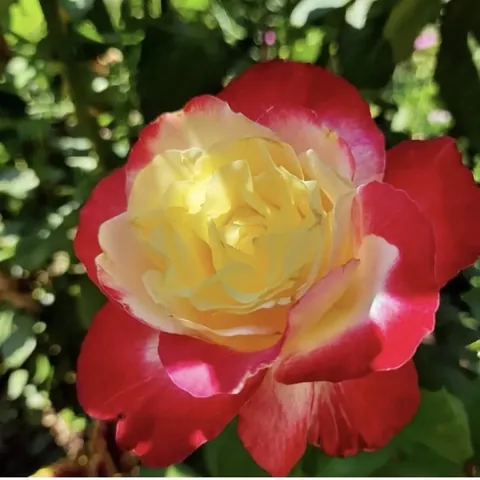
A unique contrast: the petal is creamy white to ivory, with a carmine-purple edge; the boundary is sharp, like a marbled border
Fullness
Single to semi-double, 5–8 petals
Flower carriage
3–5 flowers per stem
Flowering
Repeat-flowering, abundant
Fragrance
Light, unobtrusive
Hips
Not documented
Habit
Upright, compact
Branching
Good, from the base
Shoots
Sturdy, straight
Thorns
Few prickles — convenient for formal beds.
Dimensions
70–90 cm tall; up to 120 cm with flower stalks; about 60 cm wide
Support
No support needed
Foliage
Dark green, healthy
Resistance
Good, typical of modern floribundas
Variations of the variety
Code BAR 5336 / trade name BARlio; parentage not published; do not confuse with the various «Liola» brands (cosmetics, fashion) — these are different things

Colour scheme

A unique contrast: the petal is creamy white to ivory, with a carmine-purple edge; the boundary is sharp, like a marbled border

Rose neighbours

Perennials to plant nearby

Neighbouring roses

White bicolour family — dramatic contrasts:

Companion perennials

Purple-silver accents enhance the purple edging:

sage 'Caradonna'lavenderlamb's eargypsophila

Availability worldwide

Italian classic from the country's oldest nursery:

🇮🇹 Italy: high · official Rose Barni🇪🇺 Europe: moderate · via Italian nurseries🇺🇸 USA: low🇺🇦 Ukraine: low · collector's variety

More about the variety

Hips
Not documented
Variations of the variety
Code BAR 5336 / trade name BARlio; parentage not published; do not confuse with the various «Liola» brands (cosmetics, fashion) — these are different things

How to grow

Where to plant. Formal borders, white monochrome beds with purple accents, containers on terraces, Italian Mediterranean gardens; very good for contrasting compositions thanks to its sharp edge.

Climate. To −20 °C — in Ukraine with moderate protection; in the south, no protection needed.

Care. A classic Floribunda — spring pruning; removing spent flowers stimulates new flushes; moderate seasonal disease prevention.

About the name

Name. «Liolà» — after the play of the same name by Luigi Pirandello (1867–1936), Nobel laureate in literature in 1934. «Liolà» (1916) is a comedy in three acts about a young village poet named Liola who lives in Sicily. It is one of Pirandello's best-known works, depicting Mediterranean rural life and the poetic soul of a simple peasant.

Breeding. Raised by Anna Medici Barni at Rose Barni (Pistoia, Tuscany, Italy), presented in 2003. Code BAR 5336 / trade name BARlio. Parentage not published. Rose Barni is the oldest Italian rose nursery, founded in 1882 by the Barni family; it is based in Pistoia, the historic centre of Italian rose growing.

Significance. The silver medal and the title «Most Beautiful Rose of Italy» — Monza 2003 (entry No. 084) — is the highest award at Italy's main rose competition. The first Italian variety in our catalogue, opening a new geographic category. One of the few internationally known works of Anna Medici Barni, a representative of the Barni family school. Not to be confused with the various «Liola» brands (cosmetics, fashion) — those are different products.

Frequently asked questions about Liolà

Does Liolà need winter protection?

The cultivar’s reference temperature is −20 °C. Overwintering depends on the conditions.

How many times a season does Liolà flower?

Repeat-flowering, abundant.

How big does Liolà grow?

70–90 cm tall, about 60 cm wide.

Which diseases affect Liolà?

Overall resistance: 4 out of 5. Good; healthy foliage.

How much sun does Liolà need?

Sun + shade; tolerates partial shade.

What does Liolà smell like?

Light, unobtrusive.

Gardeners' photos and reviews

My climate

Choose a reference temperature to compare with the cultivar’s data. This is not an overwintering forecast or advice on winter protection; consider wind, moisture and the duration of frost.

Regional data are generalised. USDA describes average annual extreme minima, not a forecast; the values in the list are rounded. Check the conditions at your site. More information: Roses in Ukraine's climate.