

Back to catalogue
Hybrid Tea; florist's cut roseHenk C. A. de Groot; De Ruiter's Nieuwe Rozen, 2006Bicolour

Luxor

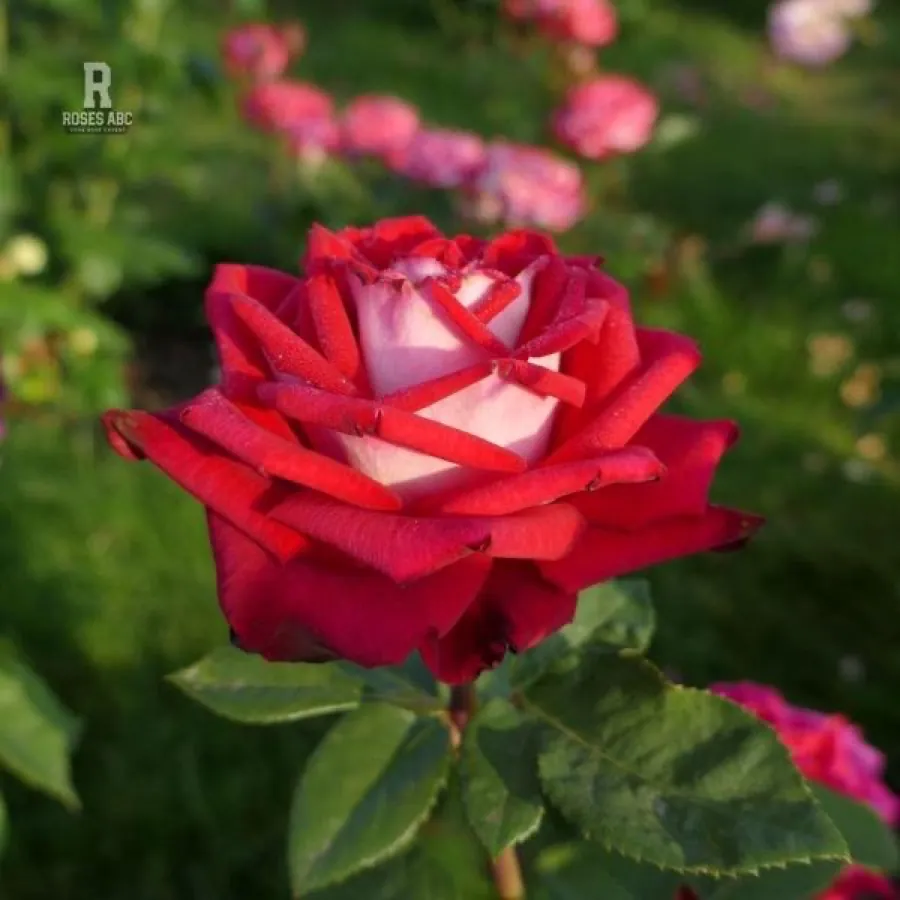
A MAJOR CORRECTION: this is a red-and-white bicolour (NOT the golden yellow that online shops often confuse it with!); a large 14–15 cm flower on an 80–90 cm stem; the 4th florist's cut rose in our catalogue.

De Ruiter · Dümmen Orange

Variety profile

Flowering

Continuous in greenhouse conditions

Purpose

Florist's Rose

De Ruiter florist HT line · now part of Dümmen Orange

Plant size

100–150 × 50–70 cm
person 170 cm100–150 cm
Habit
Upright, with long slender stems — typical of greenhouse roses
Dimensions
100–150 × 50–70 cm (in a greenhouse)
Support
Greenhouse «standardising» — support for the long stem
Shoots
Long stems of 80–90 cm — premium length for wedding floristry
Branching
Medium

Flower

14–15 cm
Bud shape
Elongated, high-centred, dark red with a visible white reverse
Open flower
A benchmark classic high-centred HT — large, 14–15 cm, show-quality, for a long stem
Centre
Tightly packed, velvety red
Fullness
26–40 petals (usually about 36, up to 50–55 under ideal conditions)
Flower carriage
Singly on a long stem — typical of cut roses

Fragrance

No fragrance

Absent — typical of cut roses (deliberately, for long vase life).

Disease resistance

4 out of 5
Black spotmoderatePowdery mildewmoderate

3–4/5 in greenhouse conditions; good against powdery mildew, moderate against black spot.

Sun

Warmth

Greenhouse lighting; controlled conditions.

Thorns

Moderate
thornlessfewmoderatemanyvery many

Moderate number, typical of cut HTs.

Foliage

Dark green, glossy, leathery — an extra decorative effect in a bouquet.

All characteristics in a table
Group
Hybrid Tea; florist's cut rose
Breeder
Henk C. A. de Groot; De Ruiter's Nieuwe Rozen, Netherlands, 2006
Bud shape
Elongated, high-centred, dark red with a visible white reverse
Open flower
A benchmark classic high-centred HT — large, 14–15 cm, show-quality, for a long stem
Centre
Tightly packed, velvety red
Colour
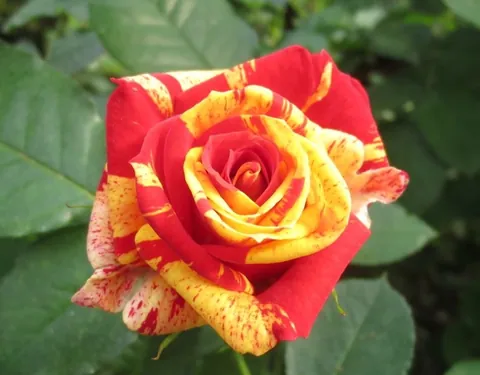
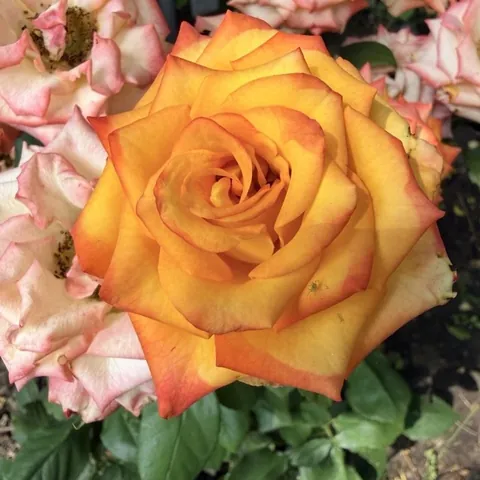
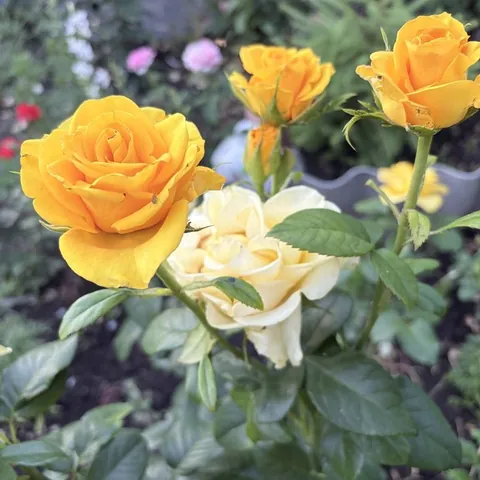
A MAJOR MYTH CORRECTED: red with a white reverse (bicolour — velvety red upper side of the petal + creamy-white underside). The description «golden yellow Luxor» on petaljet, moldavianrose, your-roses and other sites is a false AI-generated description; the real RUIY5991 is a red-and-white bicolour.
Fullness
26–40 petals (usually about 36, up to 50–55 under ideal conditions)
Flower carriage
Singly on a long stem — typical of cut roses
Flowering
Continuous in greenhouse conditions
Fragrance
Absent — typical of cut roses (deliberately, for long vase life)
Hips
Not documented — greenhouse roses do not produce hips
Habit
Upright, with long slender stems — typical of greenhouse roses
Branching
Medium
Shoots
Long stems of 80–90 cm — premium length for wedding floristry
Thorns
Moderate number, typical of cut HTs.
Dimensions
100–150 × 50–70 cm (in a greenhouse)
Support
Greenhouse «standardising» — support for the long stem
Foliage
Dark green, glossy, leathery — an extra decorative effect in a bouquet
Resistance
3–4/5 in greenhouse conditions; good against powdery mildew, moderate against black spot
Variations of the variety
Code RUIY5991; US PP 15,071 (3 August 2004); parentage unknown seedling × RUIZON; a frequent mix-up: Luxor is attributed to Kordes, Tantau or Schreurs — incorrect; no other historical Luxor roses by Tantau or Kordes have been found

Colour scheme

A MAJOR MYTH CORRECTED: red with a white reverse (bicolour — velvety red upper side of the petal + creamy-white underside). The description «golden yellow Luxor» on petaljet, moldavianrose, your-roses and other sites is a false AI-generated description; the real RUIY5991 is a red-and-white bicolour.

Rose neighbours

Perennials to plant nearby

Neighbouring roses

The 4th florist cut rose in the catalogue — a family of cut varieties for bouquets:

Companion perennials

A classic wedding-florist family for bouquets:

gypsophilacinerarialisianthusanemone

Availability worldwide

Premium cut variety from De Ruiter / Dümmen Orange:

  • 🇳🇱 Netherlands: high · Royal FloraHolland
  • 🇪🇨 Ecuador/🇰🇪 Kenya: high · greenhouse production
  • 🇺🇸 USA: high · florist wholesalers
  • 🇺🇦 Ukraine: high · as cut flowers via florist wholesalers

More about the variety

Hips
Not documented — greenhouse roses do not produce hips
Variations of the variety
Code RUIY5991; US PP 15,071 (3 August 2004); parentage unknown seedling × RUIZON; a frequent mix-up: Luxor is attributed to Kordes, Tantau or Schreurs — incorrect; no other historical Luxor roses by Tantau or Kordes have been found

How to grow

Where to plant. First and foremost a cut florist's rose — bred for greenhouses and wedding floristry (premium stem length of 80–90 cm). But it also grows well in the garden: in the Forest-Steppe and Steppe — outdoors or with light protection; in the north — with full protection. Sunny spot, fertile soil.

Climate. USDA 6b–9b. Bred for greenhouses, but it also overwinters in open ground: in the Forest-Steppe/Steppe — with light protection, in the north (zone 5) — with full protection. Winter hardiness is moderate; winters vary — in severe, snowless years, dieback is possible.

Care. In greenhouse conditions — control light and temperature; vase life 10–14 days with proper stem treatment.

About the name

Name. «Luxor», after the ancient Egyptian city of Luxor — an association with luxury and temple grandeur. Luxor is the centre of ancient Egypt, home to the temples of Luxor and Karnak and the Valley of the Kings. The name highlights the «luxurious» bicolour of the variety.

Breeding. Raised by Henk C. A. de Groot at De Ruiter's Nieuwe Rozen B.V. (the Netherlands); bred before 2003, on the market in 2006. Code RUIY5991. US Patent PP 15,071 (3 August 2004). Parentage: unknown seedling × RUIZON. De Ruiter is now part of Dümmen Orange (a union of Dutch breeding houses).

Significance. Part of the De Ruiter florist hybrid tea line of the early 2000s. The 4th florist's cut rose in our catalogue, alongside Fire Flash (Interplant), High Magic (Preesman), Kerio (Lex+ Voorn) — a separate group of cut varieties for wedding bouquets (bred for cutting, but they also grow in the garden). No major official awards (AARS/ADR/AGM) — it is not an award-type variety but a commercial florist's rose. The YELLOW LUXOR MYTH is a common AI-generated myth on online shops; the real RUIY5991 is a red-and-white bicolour.

Frequently asked questions about Luxor

How many times a season does Luxor flower?

Continuous in greenhouse conditions.

How big does Luxor grow?

100–150 cm tall, 50–70 cm wide.

Which diseases affect Luxor?

Overall resistance: 4 out of 5. 3–4 / 5; moderate to good; good against powdery mildew; moderate against black spot.

How much sun does Luxor need?

Warmth; greenhouse lighting; controlled conditions.

What does Luxor smell like?

Absent — typical of cut roses (deliberately, for long vase life).

Gardeners' photos and reviews

My climate

Choose a reference temperature to compare with the cultivar’s data. This is not an overwintering forecast or advice on winter protection; consider wind, moisture and the duration of frost.

Regional data are generalised. USDA describes average annual extreme minima, not a forecast; the values in the list are rounded. Check the conditions at your site. More information: Roses in Ukraine's climate.