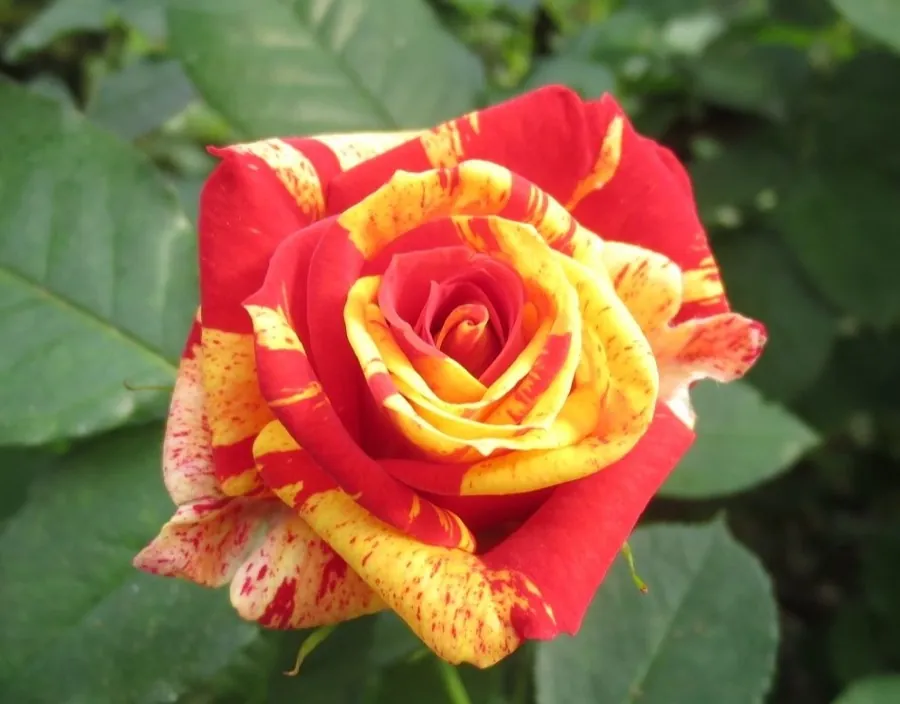
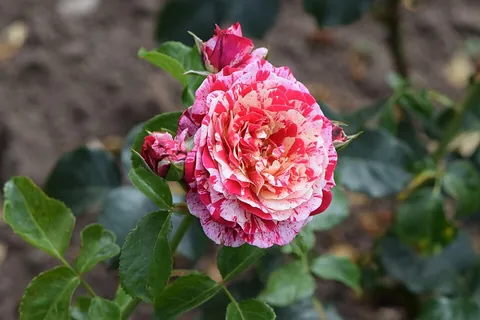





Fire Flash, close-up of the flower
Back to catalogue
Spray roseInterplant Roses BV, 2000Bicolour

Fire Flash

Do NOT confuse with the historic 'Fireflash' Le Grice (UK, 1960) — a different variety; in Ukraine, 'Fire Flash' refers to the Dutch spray rose.

Intertrofla · VBN 103246 · commercial cut-flower rose

Variety profile

Flowering

Repeat-flowering, profuse; in a greenhouse — all year round

Vase life

10–12

Days · commercial cut rose, standard stem length 60–70 cm

Winter hardiness

−18 °C

USDA zone 6b–7. Primarily a greenhouse rose; as a patio rose in the garden — with winter cover.

Compare reference temperatures

Plant size

70 × 50 cm
person 170 cm70 cm
Habit
Compact, upright — as a patio rose in the garden; in a greenhouse — a commercial bush up to 1.5 m tall with long stems for cutting
Dimensions
~70 cm tall × ~50 cm wide (in the garden as a patio rose); in a greenhouse — up to 1.5 m
Support
Not needed (as a patio rose)
Shoots
Strong, with long commercial stems of 60–70 cm (shorter in the garden)
Branching
Good

Flower

4–4,5 cm
Bud shape
Round-conical, mostly red with a noticeable yellow flash
Open flower
Classic goblet shape; when it opens, a yellow 'flame' appears in the centre — hence the name
Centre
Bright yellow heart
Fullness
Double to full, 25–30 petals
Flower carriage
A cluster-type inflorescence, 5–10 flowers per stem — a typical spray

Fragrance

Barely noticeable

Barely noticeable — typical of cut-flower varieties (Interplant breeds primarily for vase life and colour, not fragrance).

Disease resistance

4 out of 5

Good — a greenhouse commercial selection with improved resistance to diseases and pests.

Sun

Full sun to keep the bi-colour bright

Thorns

Few
thornlessfewmoderatemanyvery many

Few thorns — the commercial standard for cut flowers.

Foliage

Dark green, glossy, healthy.

All characteristics in a table
Group
Spray rose
Breeder
Interplant Roses BV, Netherlands, 2000
Bud shape
Round-conical, mostly red with a noticeable yellow flash
Open flower
Classic goblet shape; when it opens, a yellow 'flame' appears in the centre — hence the name
Centre
Bright yellow heart
Colour
Bi-colour — the yellow inner part of the petal with deep raspberry-red streaks and stripes along the edge; the colour changes from bud to full bloom
Fullness
Double to full, 25–30 petals
Flower carriage
A cluster-type inflorescence, 5–10 flowers per stem — a typical spray
Flowering
Repeat-flowering, profuse; in a greenhouse — all year round
Fragrance
Barely noticeable — typical of cut-flower varieties (Interplant breeds primarily for vase life and colour, not fragrance)
Hips
Not documented (constant cutting interrupts formation)
Habit
Compact, upright — as a patio rose in the garden; in a greenhouse — a commercial bush up to 1.5 m tall with long stems for cutting
Branching
Good
Shoots
Strong, with long commercial stems of 60–70 cm (shorter in the garden)
Thorns
Few thorns — the commercial standard for cut flowers.
Dimensions
~70 cm tall × ~50 cm wide (in the garden as a patio rose); in a greenhouse — up to 1.5 m
Support
Not needed (as a patio rose)
Foliage
Dark green, glossy, healthy
Resistance
Good — a greenhouse commercial selection with improved resistance to diseases and pests
Variations of the variety
Denomination Intertrofla; VBN-code 103246 (Royal FloraHolland's Dutch auction code); parentage not published (standard practice of commercial breeders)

Colour scheme

Bi-colour — the yellow inner part of the petal with deep raspberry-red streaks and stripes along the edge; the colour changes from bud to full bloom

Rose neighbours

Perennials to plant nearby

Rose neighbours

Spray varieties or bright bicolour Floribundas:

Perennial companions

Purple-silver accents for patio containers:

lavender 'Munstead'catmint 'Walker's Low'lamb's ear (Stachys byzantina)gaillardia

Availability worldwide

A global commercial spray rose with a broad presence in the florist trade:

  • 🇪🇺 Europe: HIGH · Royal FloraHolland · Florca
  • 🇺🇸 USA: high · Mayesh · PetalDriven
  • 🇯🇵 Asia: moderate · via the Dutch auction · Plants Rose World (India)
  • 🇺🇦 Ukraine: HIGH · pitomnik.kiev.ua · floraug · viaflor · as spray/patio young plants

More about the variety

Hips
Not documented (constant cutting interrupts formation)
Variations of the variety
Denomination Intertrofla; VBN-code 103246 (Royal FloraHolland's Dutch auction code); parentage not published (standard practice of commercial breeders)

How to grow

Where to plant. Containers on a terrace, small borders, the front of a display; as a patio rose it looks good in a pot by the entrance. In a greenhouse — as a commercial variety for cut bouquets.

Climate. To −18 °C — this is primarily a greenhouse variety; as a patio rose in Ukrainian gardens it needs winter cover in all regions except the south.

Care. Removing spent flowers every week extends flowering; standard prevention; in the garden, be sure to mound up the base of the bush and cover it for winter.

About the name

Name. 'Fire Flash' — English for 'flash of fire'. It conveys the character of a bi-colour flower: when a red bud opens, a deep yellow centre appears — as if it 'flashes' yellow flame from within. A classic descriptive marketing name for a cut-flower spray variety.

Breeding. Bred by Interplant Roses BV, Leisten, Netherlands — a world leader in breeding spray roses specifically (since 1962). Denomination Intertrofla, VBN-code 103246. The breeder's personal name is not given in open sources (standard for commercial houses). The exact year of introduction is not documented — commercially active in the Interplant catalogue since the 2010s. Parentage not published.

Significance. IMPORTANT CLARIFICATION: there is also another variety with a similar name — 'Fireflash' (one word), bred by E.B. Le Grice in the UK in 1960, a yellow-orange Hybrid Tea. These are DIFFERENT varieties. The old Le Grice 1960 is practically off the market; no public photos exist. In today's Ukrainian nurseries and among florists, 'Fire Flash' refers exclusively to this Dutch Interplant spray variety. Production — greenhouses in Ethiopia, Kenya and Ecuador; it reaches Europe and the USA through the Dutch flower auction Royal FloraHolland. This is the variety that is really available to the Ukrainian buyer.

Frequently asked questions about Fire Flash

Does Fire Flash need winter protection?

The cultivar’s reference temperature is −18 °C (USDA zone 6b–7). Overwintering depends on the conditions. Primarily a greenhouse rose; as a patio rose in the garden — with winter cover.

How many times a season does Fire Flash flower?

Repeat-flowering, profuse; in a greenhouse — all year round.

How big does Fire Flash grow?

About 70 cm tall, about 50 cm wide.

Which diseases affect Fire Flash?

Overall resistance: 4 out of 5. Good; a commercial greenhouse selection with improved resistance.

How much sun does Fire Flash need?

Sun; full sun to keep the bi-colour bright.

What does Fire Flash smell like?

Barely noticeable — typical of cut-flower varieties (Interplant breeds primarily for vase life and colour, not fragrance).

Gardeners' photos and reviews

My climate

Choose a reference temperature to compare with the cultivar’s data. This is not an overwintering forecast or advice on winter protection; consider wind, moisture and the duration of frost.

Regional data are generalised. USDA describes average annual extreme minima, not a forecast; the values in the list are rounded. Check the conditions at your site. More information: Roses in Ukraine's climate.