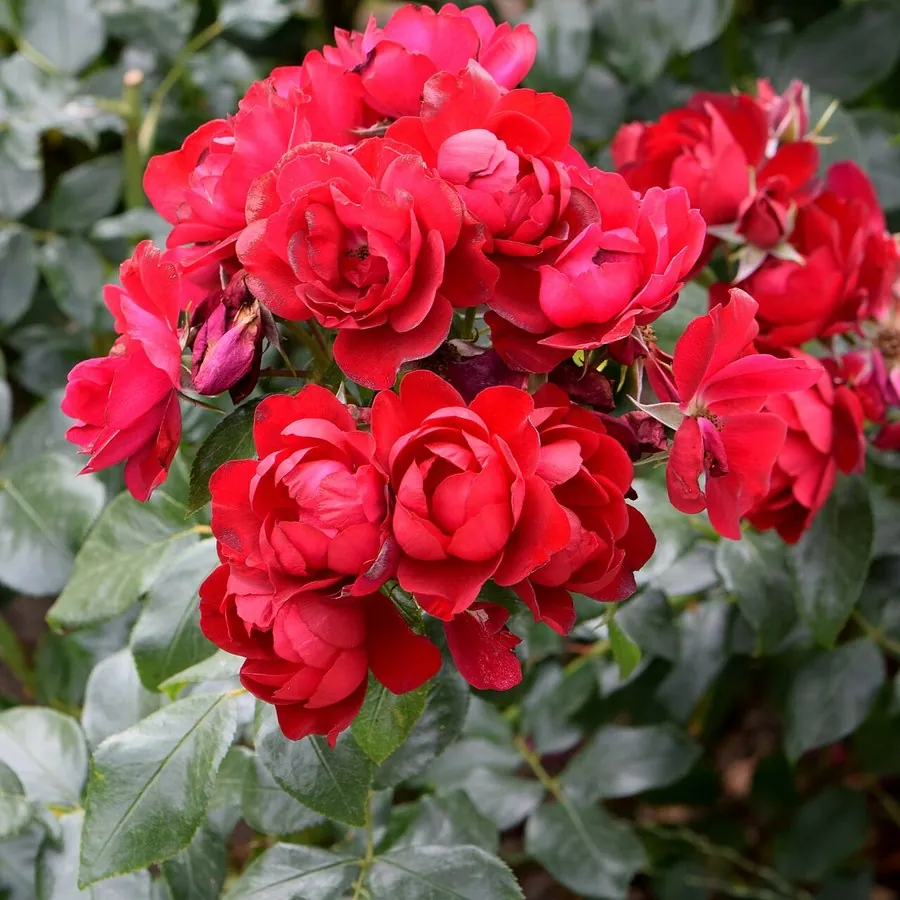
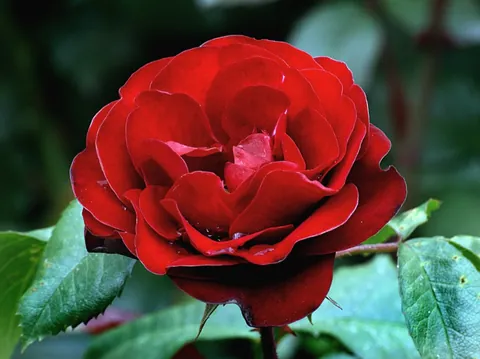




Milano, close-up of the flower
Photo: Krzysztof Ziarnek (Kenraiz), CC BY-SA 4.0
Back to catalogue
FloribundaTim Hermann Kordes; W. Kordes' SöhneRed

Milano

Bright scarlet red that does not turn blue or bleach (constant red). A reliable landscape shrub rose from the Kolorscape series; high disease resistance for mass planting; needs no support.

Landscape shrub from the Kolorscape series

Variety profile

Flowering

Abundant, in waves throughout the season

Awards

None

No confirmed awards · was on RHS trial 2021–2024

Plant size

60–120 × 40–75 cm
person 170 cm60–120 cm
Habit
A bushy, spreading form, the typical landscape shrub of the Kordes Kolorscape series
Dimensions
60–120 × 40–75 cm, from compact to fairly spreading depending on conditions
Size
Flower diameter about 7 cm
Support
Needs no support
Shoots
Sturdy, holding small clusters of flowers well
Branching
Good; spreading, forms a dense bush

Flower

≈ 7 cm

16–20 petals.

Bud shape
Long and pointed, bright red
Open flower
Semi-double, round and cup-shaped, about 16–20 petals; rich scarlet
Centre
Opens moderately, in the same bright red tone
Fullness
Semi-double, 16–20 petals
Flower carriage
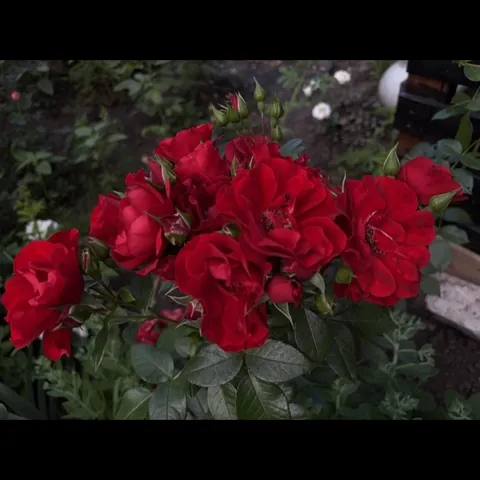
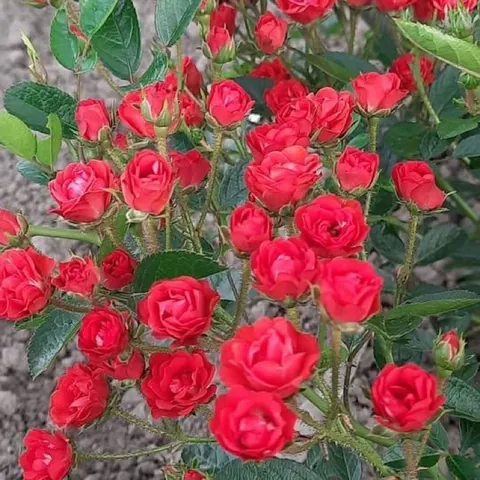
In small clusters, the typical floribunda form

Fragrance

Barely noticeable

Very light, from almost absent to a light fruity note. This is a decorative landscape variety, not grown for fragrance.

Disease resistance

5 out of 5

High disease resistance. The variety is meant for mass landscape planting with minimal care.

Sun

Full sun

The colour does NOT bleach in the sun.

Thorns

Moderate
thornlessfewmoderatemanyvery many

There is little data on the number of thorns; for Kordes-type landscape shrubs, a moderate number is typical.

Foliage

Healthy, glossy foliage, a decorative backdrop for the bright red flowers.

Other names

Milano Kolorscape
All characteristics in a table
Group
Floribunda
Breeder
Tim Hermann Kordes; W. Kordes' Söhne, Germany
Bud shape
Long and pointed, bright red
Open flower
Semi-double, round and cup-shaped, about 16–20 petals; rich scarlet
Centre
Opens moderately, in the same bright red tone
Colour
Bright scarlet red. A characteristic feature of the variety: constant red, meaning it does NOT turn blue as the flowers fade and does NOT bleach in the sun. It keeps a clean red the whole time.
Fullness
Semi-double, 16–20 petals
Size
Flower diameter about 7 cm
Flower carriage
In small clusters, the typical floribunda form
Flowering
Abundant, in waves throughout the season
Fragrance
Very light, from almost absent to a light fruity note. This is a decorative landscape variety, not grown for fragrance.
Hips
Not documented
Habit
A bushy, spreading form, the typical landscape shrub of the Kordes Kolorscape series
Branching
Good; spreading, forms a dense bush
Shoots
Sturdy, holding small clusters of flowers well
Thorns
There is little data on the number of thorns; for Kordes-type landscape shrubs, a moderate number is typical.
Dimensions
60–120 × 40–75 cm, from compact to fairly spreading depending on conditions
Support
Needs no support
Foliage
Healthy, glossy foliage, a decorative backdrop for the bright red flowers
Resistance
High disease resistance. The variety is meant for mass landscape planting with minimal care.
Variations of the variety
Code KORjuwko; patent PP23547; synonym Milano Kolorscape; Kolorscape series (Kordes line of landscape shrubs)

Colour scheme

Bright scarlet red. A characteristic feature of the variety: constant red, meaning it does NOT turn blue as the flowers fade and does NOT bleach in the sun. It keeps a clean red the whole time.

Rose neighbours

Perennials to plant nearby

Neighbouring roses

Bright red floribundas and landscape roses:

Companion perennials

A silver-blue family to contrast with the red:

Byzantine stachyslavendercatmintornamental grasses

Availability worldwide

A modern Kordes landscape shrub from the Kolorscape series:

🇩🇪 Germany: high · official Kordes🇪🇺 Europe: high · Kolorscape series🇺🇸 USA: moderate · patent PP23547🇺🇦 Ukraine: moderate · via European nurseries

More about the variety

Hips
Not documented
Variations of the variety
Code KORjuwko; patent PP23547; synonym Milano Kolorscape; Kolorscape series (Kordes line of landscape shrubs)

How to grow

Where to plant. Mass landscape planting, red borders, hedges, urban formal groups. Thanks to its stable 'constant red' colour and high disease resistance, it is a reliable choice for large areas with minimal care. Striking against a background of white or silver neighbours.

Climate. USDA 4b–9b, RHS H6 (about −20…−15 °C); overwinters well, and across most of Ukraine with light winter protection.

Care. An easy-going Kolorscape landscape shrub; prune in spring to shape the bush; its high disease resistance reduces the need for treatments.

About the name

Name. 🇮🇹 'Milano', after the Italian city of Milan. Kordes traditionally names its varieties after cities. The trade synonym is Milano Kolorscape, after the landscape series.

Breeding. Bred by Tim Hermann Kordes at the W. Kordes' Söhne house (Germany). Bred in 2001, introduced in 2011. Code KORjuwko, patent PP23547. Part of the Kolorscape series, a line of reliable Kordes landscape shrubs with high disease resistance.

Significance. A modern landscape red shrub whose main advantage is its 'constant red' colour, which does not turn blue as the flowers fade and does not bleach in the sun, plus high disease resistance for mass planting. No confirmed awards. The variety was in RHS trials in 2021–2024, and no results or awards are documented.

Frequently asked questions about Milano

How many times a season does Milano flower?

Abundant, in waves throughout the season.

How big does Milano grow?

60–120 cm tall, 40–75 cm wide.

Which diseases affect Milano?

Overall resistance: 5 out of 5. High resistance; for mass landscape planting.

How much sun does Milano need?

Sun; full sun; the colour does NOT bleach in the sun.

What does Milano smell like?

Very light, from almost absent to a light fruity note. This is a decorative landscape variety, not grown for fragrance.

Gardeners' photos and reviews

My climate

Choose a reference temperature to compare with the cultivar’s data. This is not an overwintering forecast or advice on winter protection; consider wind, moisture and the duration of frost.

Regional data are generalised. USDA describes average annual extreme minima, not a forecast; the values in the list are rounded. Check the conditions at your site. More information: Roses in Ukraine's climate.