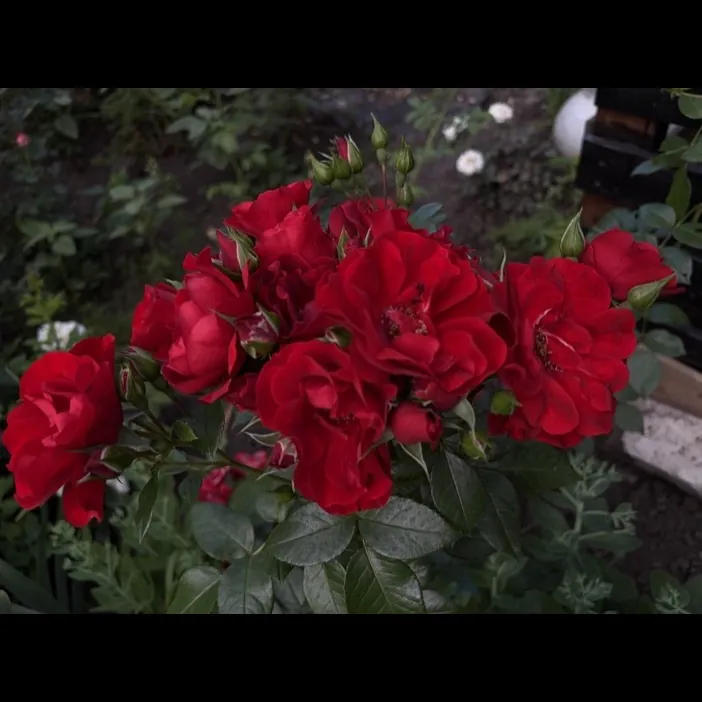
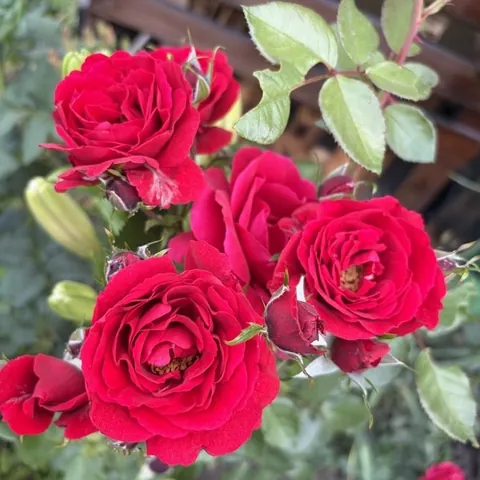
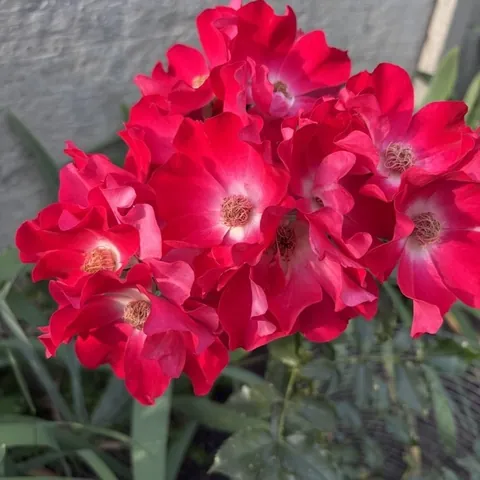
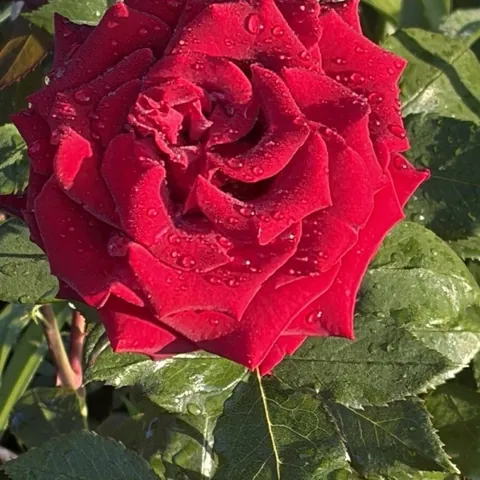



Roter Korsar, close-up of the flower
Back to catalogue
ShrubKordes, 2002Red

Roter Korsar

A fiery red ADR-shrub with abundant continuous flowering in clusters; ideal for arches, pergolas and fences.

Vigorous; in warm climates grown as a climber

Variety profile

Flowering

Repeat-flowering, profuse, in flushes throughout the whole season

Awards

ADR 2005

+ gold medal, international competition

Winter hardiness

−26 °C

USDA zone 5b–9. Reliable hardiness across Ukraine.

Compare reference temperatures

Plant size

200 × 200 cm
person 170 cm200 cm
Habit
Powerful, spreading shrub; in warm climates — as a small climber
Dimensions
Up to 200 cm tall × up to 200 cm wide
Support
As a shrub — not required; as a climber — needs a support (arch, pergola, fence). Tying long shoots gives continuous flowering.
Shoots
Sturdy, long; work well on a support
Branching
Strong, even; the bush is densely covered with flowers

Flower

20–25 petals
Bud shape
Round, saturated red
Open flower
Semi-double, cup-shaped; when open, a pale centre with stamens is visible
Centre
Open, with prominent yellow stamens
Fullness
Semi-double, 20–25 petals
Flower carriage
In large clusters (trusses) — creating the effect of continuous bloom over the whole bush

Fragrance

Light

Disease resistance

5 out of 5
Black spotresistantPowdery mildewresistant

High — ADR 2005 winner; good against powdery mildew and black spot.

Sun

Sun or light shade

Blooms profusely in sun; tolerates partial shade.

Thorns

Moderate
thornlessfewmoderatemanyvery many

Moderately thorny — typical for vigorous Kordes shrubs.

Foliage

Dark green, healthy, glossy.

Other names

Breeder's code KORromalu.

All characteristics in a table
Group
Shrub
Breeder
Kordes, 2002
Bud shape
Round, saturated red
Open flower
Semi-double, cup-shaped; when open, a pale centre with stamens is visible
Centre
Open, with prominent yellow stamens
Colour
Fiery red with a purple tinge, luminous; does not turn blue with age — rare colour stability for a red
Fullness
Semi-double, 20–25 petals
Flower carriage
In large clusters (trusses) — creating the effect of continuous bloom over the whole bush
Flowering
Repeat-flowering, profuse, in flushes throughout the whole season
Fragrance
Light
Habit
Powerful, spreading shrub; in warm climates — as a small climber
Branching
Strong, even; the bush is densely covered with flowers
Shoots
Sturdy, long; work well on a support
Thorns
Moderately thorny — typical for vigorous Kordes shrubs.
Dimensions
Up to 200 cm tall × up to 200 cm wide
Support
As a shrub — not required; as a climber — needs a support (arch, pergola, fence). Tying long shoots gives continuous flowering.
Foliage
Dark green, healthy, glossy
Resistance
High — ADR 2005 winner; good against powdery mildew and black spot
Winter hardiness
High, down to −26 °C (USDA 5b–9) — reliably overwinters in the Forest-Steppe and Steppe

Colour scheme

Fiery red with a purple tinge, luminous; does not turn blue with age — rare colour stability for a red

Rose neighbours

Perennials to plant nearby

Neighbouring roses

For a fiery red wall, other red climbers and shrub roses:

Perennials and clematis

A silver-blue carpet at the base softens the fiery red:

lavenderCatmint 'Faassen'gypsophilasilver wormwoodClematis 'Alba Luxurians'

Contrast accents

White verticals and silver foliage make an accent for the fiery red:

White phloxGypsophilaWhite veronicaBlue fescue

More about the variety

Winter hardiness
High, down to −26 °C (USDA 5b–9) — reliably overwinters in the Forest-Steppe and Steppe

How to grow

Where to plant. As an accent bush in a mixed border, as a hedge or as a specimen; as a climber — on an arch, pergola, fence, or a wall up to 2 m. Abundant continuous flowering makes it a striking focal point.

Climate. Withstands frost down to about −26 °C, USDA 5b–9. Reliably overwinters in the Forest-Steppe and Steppe; in the north, light protection is needed for the climbing form.

Care. Undemanding, rarely sick (ADR). Spring sanitary pruning; remove spent clusters for a new flush. As a climber, tie long shoots horizontally to the support.

About the name

Name. “Roter Korsar” in German — “Red Corsair” (a corsair is a pirate captain). The name emphasises the bold fiery red colour and the vigorous, profuse flowering. International trade name — Red Corsair™.

Breeding. Bred by the German nursery W. Kordes' Söhne. Breeding code — KORromalu. Classified as a vigorous shrub, which in warm climates is also grown as a climber.

Significance. Awarded the ADR 2005 (Germany's main standard of quality and robustness) and a gold medal at an international competition. Valued for its luminous red colour that does not turn blue, its abundant continuous flowering in clusters and its high disease resistance.

Frequently asked questions about Roter Korsar

Does Roter Korsar need winter protection?

The cultivar’s reference temperature is −26 °C (USDA zone 5b–9). Overwintering depends on the conditions. Reliable hardiness across Ukraine.

How many times a season does Roter Korsar flower?

Repeat-flowering, profuse, in flushes throughout the whole season.

How big does Roter Korsar grow?

About 200 cm tall, about 200 cm wide.

Which diseases affect Roter Korsar?

Overall resistance: 5 out of 5. High (ADR); resistant to powdery mildew and black spot.

How much sun does Roter Korsar need?

Sun or light shade; blooms profusely in sun; tolerates partial shade.

What does Roter Korsar smell like?

Light.

Gardeners' photos and reviews

My climate

Choose a reference temperature to compare with the cultivar’s data. This is not an overwintering forecast or advice on winter protection; consider wind, moisture and the duration of frost.

Regional data are generalised. USDA describes average annual extreme minima, not a forecast; the values in the list are rounded. Check the conditions at your site. More information: Roses in Ukraine's climate.