

Back to catalogue
Noisette; climbing; Tea-NoisetteJoseph Schwartz, 1879White and cream

Mme Alfred Carrière

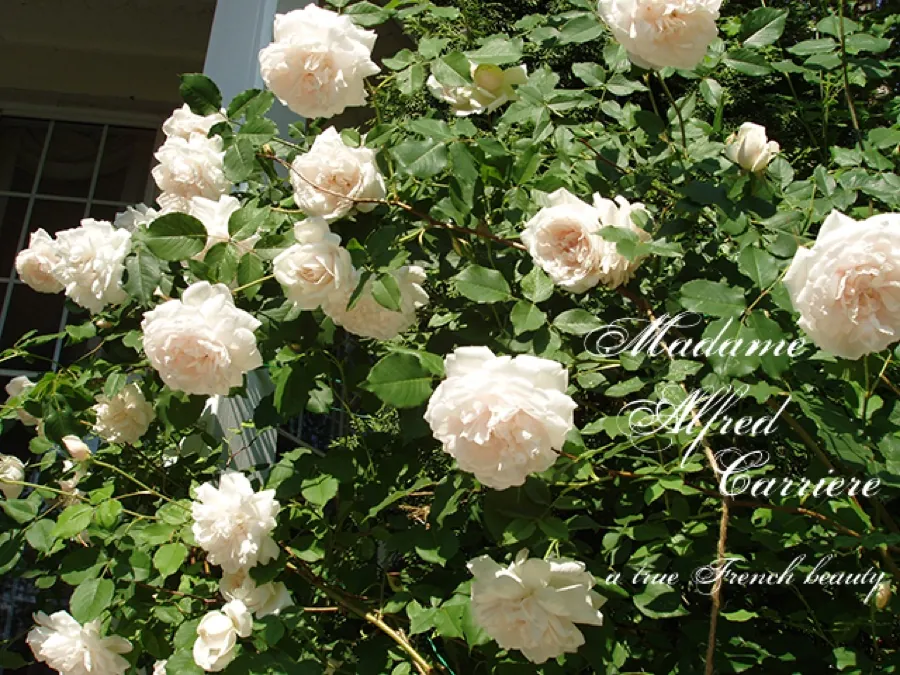
Creamy white climber with a tender pink centre in cool weather; repeat-flowering all season; WFRS HoF 2003 + RHS AGM 1993 + NRS UK 1908 ('the best white climber'); the first rose planted by Vita Sackville-West at Sissinghurst (1930), planted before the estate was bought; it blooms well on a north wall, which is unusual for a rose.

WFRS Old Rose Hall of Fame 2003 + RHS AGM 1993 + NRS 1908

Variety profile

Flowering

Repeat flowering

Repeat-blooming: one of the few old varieties that flowers from spring to the first frosts. Months are approximate, for the climate of Ukraine.

Awards

WFRS HoF 2003

Old Rose HoF · RHS AGM 1993 · NRS UK 1908

Winter hardiness

−26 °C

USDA zone 5b–10b. One of the hardiest Noisettes; all of Ukraine (Sumy and Chernihiv regions with protection). One of the most cold-hardy Noisettes · the whole of Ukraine (Sumy / Chernihiv regions — with cover).

Compare reference temperatures

Plant size

350–500 × 200–300 cm
person 170 cm350–500 cm
Habit
A large, springy climber with flexible canes; easy to train
Dimensions
350–500 cm tall × 200–300 cm wide; up to 600 cm in a warm climate
Support
Needed: a trellis, a pergola, or a south or north wall of the house; for smaller canes, an arch
Shoots
Flexible and easy to train, a typical Noisette trait
Branching
Abundant, with long flexible canes

Flower

7–8 cm
Bud shape
With a tender pink tint, a contrasting base for the cream flower
Open flower
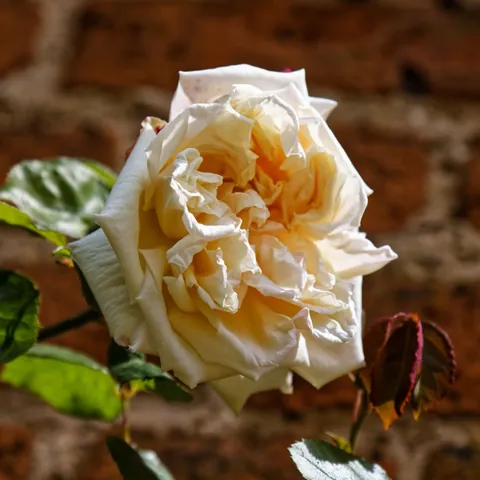
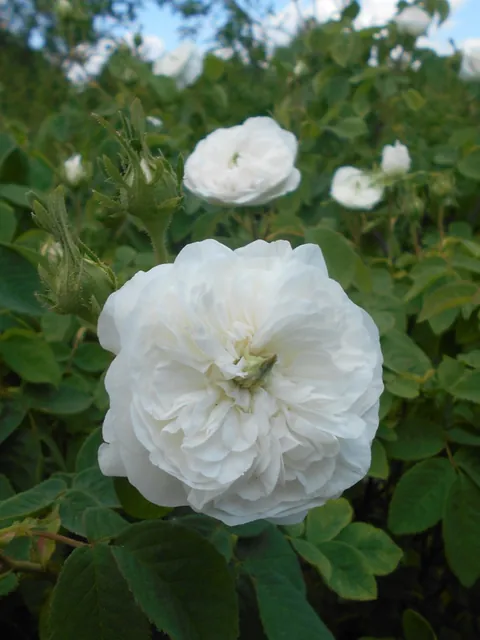
Cupped, 30–40 petals, about 7–8 cm, with a moderately dense rosette
Centre
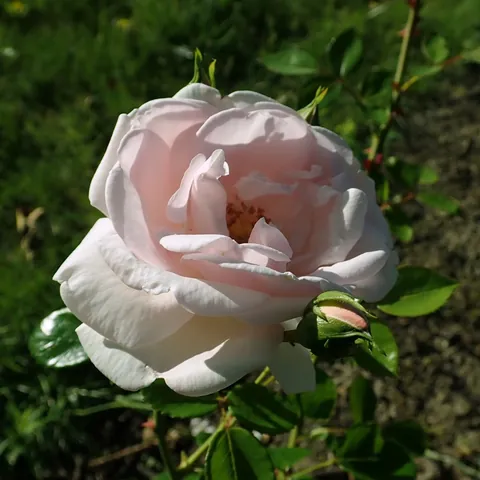
Tender pink or peach-pink in cool weather; in summer mostly creamy white
Fullness
30–40 petals (double)
Flower carriage
In clusters of 3–5 flowers; abundant blooming

Fragrance

Strong; sweet fruit + sweet pea

Strong, sweet, with notes of ripe fruit, sweet pea, raspberry and citrus; very distinctive.

Disease resistance

4 out of 5

One of the hardiest Noisettes (USDA 5b); good disease resistance; unusual for a rose: it blooms well on a north wall with minimal direct sun.

Sun

North wall!

Unusual: it blooms well on a north-facing wall with minimal sun.

Thorns

Thornless
thornlessfewmoderatemanyvery many

Almost thornless: a characteristic trait that makes it easy to train.

Foliage

Light green, soft, typical of Noisettes.

All characteristics in a table
Group
Noisette; climbing; Tea-Noisette
Breeder
Joseph Schwartz, France, 1879
Bud shape
With a tender pink tint, a contrasting base for the cream flower
Open flower
Cupped, 30–40 petals, about 7–8 cm, with a moderately dense rosette
Centre
Tender pink or peach-pink in cool weather; in summer mostly creamy white
Colour
Creamy white with a faint peach-pink centre. In heat it is pure white; in cool weather the pink centre becomes more distinct.
Fullness
30–40 petals (double)
Flower carriage
In clusters of 3–5 flowers; abundant blooming
Flowering
Repeat-blooming: one of the few old varieties that flowers from spring to the first frosts
Fragrance
Strong, sweet, with notes of ripe fruit, sweet pea, raspberry and citrus; very distinctive
Hips
Rarely sets small hips, mainly because of its high double-ness and repeat flowering
Habit
A large, springy climber with flexible canes; easy to train
Branching
Abundant, with long flexible canes
Shoots
Flexible and easy to train, a typical Noisette trait
Thorns
Almost thornless: a characteristic trait that makes it easy to train.
Dimensions
350–500 cm tall × 200–300 cm wide; up to 600 cm in a warm climate
Support
Needed: a trellis, a pergola, or a south or north wall of the house; for smaller canes, an arch
Foliage
Light green, soft, typical of Noisettes
Resistance
One of the hardiest Noisettes (USDA 5b); good disease resistance; unusual for a rose: it blooms well on a north wall with minimal direct sun
Variations of the variety
The breeder did not document the parentage; probably a seedling from a Tea-Noisette line. It has several sports (mutations), mostly pinker forms.

Colour scheme

Creamy white with a faint peach-pink centre. In heat it is pure white; in cool weather the pink centre becomes more distinct.

Rose neighbours

Perennials to plant nearby

Neighbouring roses

White and cream climbers and shrubs — for an 'English' cottage corner:

Companion perennials

A classic Sissinghurst palette — white, cream, violet:

white foxglovehostalady's mantlelavender

Availability worldwide

⭐⭐ A legendary variety, available at all the main nurseries:

  • 🇬🇧 UK: very high · Sissinghurst classic
  • 🇺🇸 USA: high · bestseller among old roses
  • 🇫🇷 France: high · home country
  • 🇺🇦 Ukraine: moderate · via collectors' nurseries

More about the variety

Hips
Rarely sets small hips, mainly because of its high double-ness and repeat flowering
Variations of the variety
The breeder did not document the parentage; probably a seedling from a Tea-Noisette line. It has several sports (mutations), mostly pinker forms.

How to grow

Where to plant. On a north wall of the house, a unique advantage among climbers (most need a south exposure); on a pergola, a large arch or a trellis; for a 'white garden' in the Sissinghurst style; as a 'living wall', covering up to 5 m high and 3 m wide; good for shady corners of the garden with no sun.

Climate. All of Ukraine (USDA 5b–10b); in Sumy and Chernihiv regions, light protection of the base; one of the hardiest Noisettes.

Care. Minimal formative pruning in early spring (remove only old canes over 5 years old); tying canes horizontally encourages flowering on the sides; feed 2–3 times a season; undemanding, it tolerates poor soils.

About the name

Name. 'Madame Alfred Carrière', named after Louise Élisa Marie Périer (1836–1903), the wife of Léon-Antoine Alfred Carrière, a cement manufacturer and president of the Dauphiné Horticultural Society (Dauphiné, south-eastern France). A touching tribute to a woman patron.

Breeding. Bred by Joseph Schwartz in Lyon, France; raised from seed in 1875 and introduced to commerce in 1879. Class: Noisette / Tea-Noisette (climbing). Parentage is not documented; it is probably a seedling from a Tea-Noisette line, which explains its strong fruity fragrance.

Significance. WFRS Old Rose Hall of Fame 2003, a worldwide recognition. RHS Award of Garden Merit 1993. National Rose Society UK, 1908: named 'the best white climbing rose'. The first rose of Vita Sackville-West at Sissinghurst: she planted it on the south wall of South Cottage in 1930, before the documents for buying the estate were signed (a touching detail: Vita was so sure of the purchase that she had already started planting!). The original bush died in 2019, but a descendant cutting was planted. Its unique trait is that it blooms well on a north wall, which made it a favourite of English gardeners. 146 years in cultivation, one of the few Noisette XIX-century roses still in active circulation.

Frequently asked questions about Mme Alfred Carrière

Does Mme Alfred Carrière need winter protection?

The cultivar’s reference temperature is −26 °C (USDA zone 5b–10b). Overwintering depends on the conditions. One of the hardiest Noisettes; all of Ukraine (Sumy and Chernihiv regions with protection).

How many times a season does Mme Alfred Carrière flower?

Repeat-blooming: one of the few old varieties that flowers from spring to the first frosts.

How big does Mme Alfred Carrière grow?

350–500 cm tall, 200–300 cm wide.

Which diseases affect Mme Alfred Carrière?

Overall resistance: 4 out of 5. Good; light to moderate blackspot in wet seasons.

How much sun does Mme Alfred Carrière need?

North wall!; unusual: it blooms well on a north-facing wall with minimal sun.

What does Mme Alfred Carrière smell like?

Strong, sweet, with notes of ripe fruit, sweet pea, raspberry and citrus; very distinctive.

Gardeners' photos and reviews

My climate

Choose a reference temperature to compare with the cultivar’s data. This is not an overwintering forecast or advice on winter protection; consider wind, moisture and the duration of frost.

Regional data are generalised. USDA describes average annual extreme minima, not a forecast; the values in the list are rounded. Check the conditions at your site. More information: Roses in Ukraine's climate.