

Back to catalogue
Tea-Noisette / Climbing Tea; WFRS Old Rose Hall of Fame 1988Henri Jacotot fils & Pierre Jacotot père; DijonPink

Gloire de Dijon

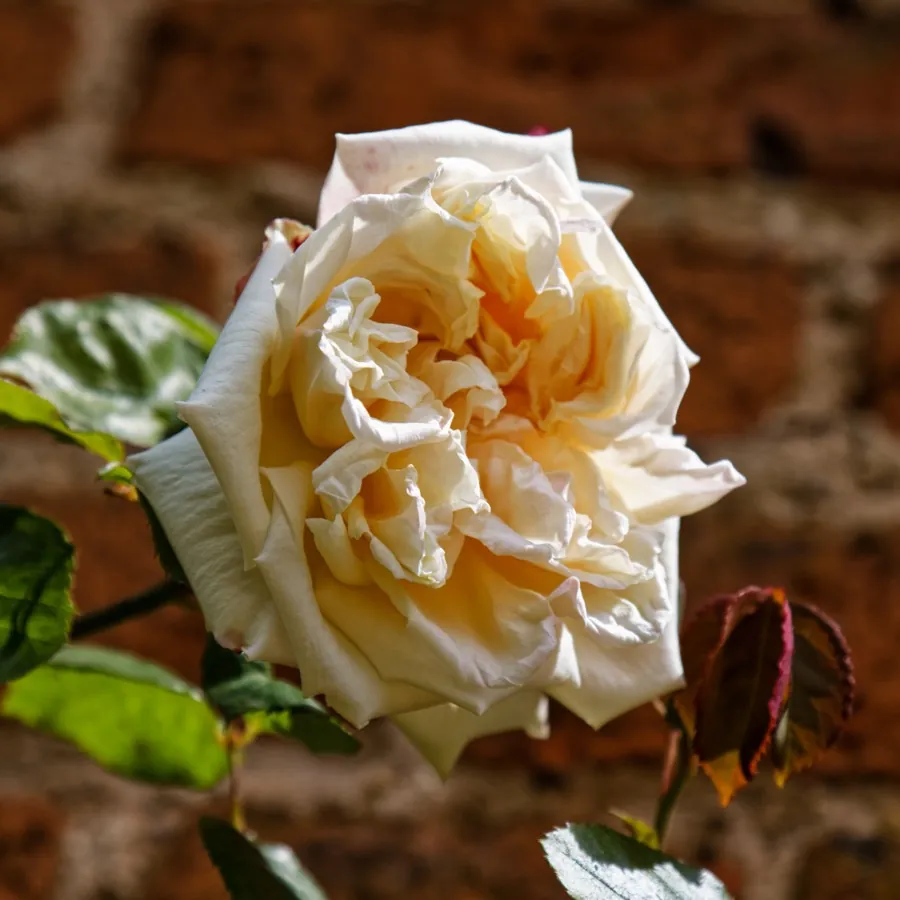
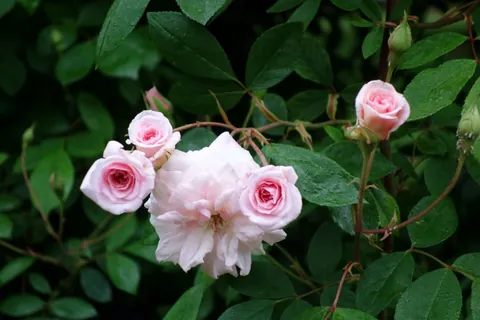
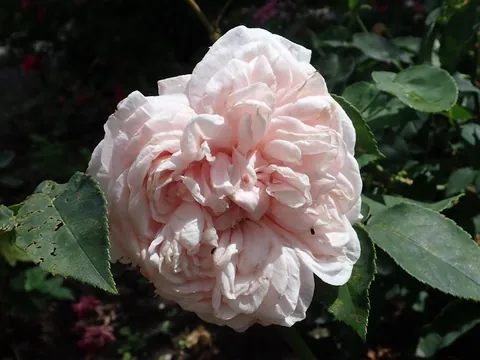
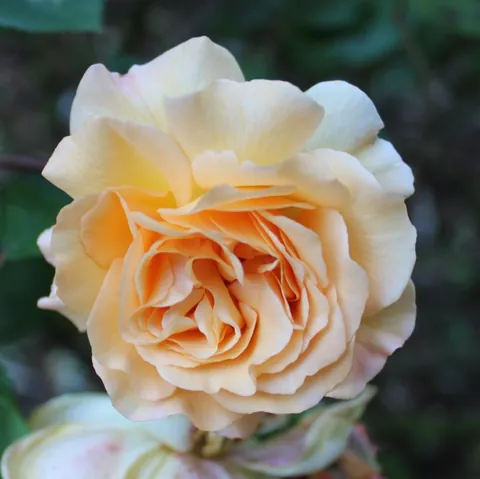
Salmon-yellow with pink tones, orange towards the centre — apricot-cream in a quartered form; WFRS Old Rose HoF 1988 — in the first group (together with Cécile Brünner, Old Blush, Souvenir de la Malmaison); one of the best-known climbing Tea-Noisette XIX-century roses; a favourite of Victorian gardens; 177 years in cultivation (1849-2026).

WFRS Old Rose HoF 1988 (first cohort) · a favourite of Victorian gardens · 177 years in cultivation

Variety profile

Flowering

Repeat-flowering, in flushes all season — a rare quality for a Tea-Noisette XIX-century rose

Legacy

WFRS Old Rose HoF

1988, first cohort

Winter hardiness

−20 °C

USDA zone 6b. South Ukraine — no cover.

Compare reference temperatures

Plant size

240–490 × 360–730 cm
person 170 cm240–490 cm
Habit
Vigorous climber
Dimensions
240-490 cm high × 360-730 cm wide — a vigorous climber for tall walls, pergolas and garden arbours
Support
Essential: a tall arch, pergola, or a warm south-facing wall (the typical position in Victorian gardens)
Shoots
Long, flexible
Branching
Widely branched

Flower

≈ 10 cm

41+ petals.

Bud shape
Round, golden apricot
Open flower
Very double quartered: ~10 cm, 41+ petals — a typical Tea-Noisette form
Centre
Quartered — petals in 4 'quarters', as in Old Garden Roses
Fullness
41+ petals (very full)
Flower carriage
Singly or in small clusters

Fragrance

Strong; classic tea

Strong classic tea scent — the benchmark for the Tea-Noisette fragrance.

Disease resistance

3 out of 5

Moderate 3/5 — typical of Tea-roses. USDA 6b — South Ukraine without cover, Centre with cover; in the north — warm, sheltered walls (warmth class).

Sun

Warm south-facing walls

Thorns

Few
thornlessfewmoderatemanyvery many

Few thorns — typical of Tea-roses.

Foliage

Dark green, glossy — typical of Tea-Noisettes.

Other names

Glory of Dijon, Old Glory Rose
All characteristics in a table
Group
Tea-Noisette / Climbing Tea; WFRS Old Rose Hall of Fame 1988
Breeder
Henri Jacotot fils & Pierre Jacotot père; Dijon, France
Bud shape
Round, golden apricot
Open flower
Very double quartered: ~10 cm, 41+ petals — a typical Tea-Noisette form
Centre
Quartered — petals in 4 'quarters', as in Old Garden Roses
Colour
Salmon-yellow with pink tones, orange towards the centre (apricot-cream) — a complex, aristocratic palette of the XIX century
Fullness
41+ petals (very full)
Flower carriage
Singly or in small clusters
Flowering
Repeat-flowering, in flushes all season — a rare quality for a Tea-Noisette XIX-century rose
Fragrance
Strong classic tea scent — the benchmark for the Tea-Noisette fragrance
Hips
Not documented — usually cut
Habit
Vigorous climber
Branching
Widely branched
Shoots
Long, flexible
Thorns
Few thorns — typical of Tea-roses.
Dimensions
240-490 cm high × 360-730 cm wide — a vigorous climber for tall walls, pergolas and garden arbours
Support
Essential: a tall arch, pergola, or a warm south-facing wall (the typical position in Victorian gardens)
Foliage
Dark green, glossy — typical of Tea-Noisettes
Resistance
Moderate 3/5 — typical of Tea-roses. USDA 6b — South Ukraine without cover, Centre with cover; in the north — warm, sheltered walls (warmth class)
Variations of the variety
No official code (historic). Bred before 1849, introduced in 1853. Breeders: Henri Jacotot fils (son) and Pierre Jacotot père (father), France, Dijon. Parentage: probably 'Desprez à Fleur Jaune' × 'Souvenir de la Malmaison' (not documented exactly). Tetraploid. Introduced to Australia in 1858. Synonyms: 'Glory of Dijon', 'Old Glory Rose'

Colour scheme

Salmon-yellow with pink tones, orange towards the centre (apricot-cream) — a complex, aristocratic palette of the XIX century

Rose neighbours

Perennials to plant nearby

Neighbouring roses

⭐⭐⭐ All 5 WFRS Old Rose HoF roses together — a complete historic collection:

Companion perennials

Classic Victorian garden palette:

lavenderhostalady's mantle (Alchemilla)columbine (Aquilegia)

Availability worldwide

⭐⭐⭐ One of the best-known Tea-Noisette climbers:

🇫🇷 France: high · homeland🇬🇧 UK: high · Victorian classic🇦🇺 Australia: high · since 1858🇺🇦 Ukraine: rare · collectors' nurseries

More about the variety

Hips
Not documented — usually cut
Variations of the variety
No official code (historic). Bred before 1849, introduced in 1853. Breeders: Henri Jacotot fils (son) and Pierre Jacotot père (father), France, Dijon. Parentage: probably 'Desprez à Fleur Jaune' × 'Souvenir de la Malmaison' (not documented exactly). Tetraploid. Introduced to Australia in 1858. Synonyms: 'Glory of Dijon', 'Old Glory Rose'

How to grow

Where to plant. On a warm south-facing wall — the typical Victorian position; on a tall arch or pergola; beside a bench, because of the strong tea scent; in a 'Victorian' corner with a historical theme; in Old Garden Roses collections; not on north walls — it needs warmth.

Climate. USDA 6b — South Ukraine without cover, Centre with cover; in the north only on warm, sheltered walls.

Care. Full sun; moderate disease prevention; feed 3× per season; remove weak canes in spring; keep the main framework canes for 3-5 years.

About the name

Name. 'Gloire de Dijon' = 'Glory of Dijon' (French). Named after the city of Dijon in Burgundy (France), the home of the Jacotot breeders. A poetic dedication to their home city. Synonyms in other countries: 'Glory of Dijon' (English), 'Old Glory Rose' (folk name in Victorian gardens).

Breeding. Bred by Henri Jacotot fils (son) and Pierre Jacotot père (father) in Dijon (France). Bred before 1849, introduced in 1853. Parentage: probably 'Desprez à Fleur Jaune' × 'Souvenir de la Malmaison' (not documented exactly). Tetraploid. Introduced to Australia in 1858.

Significance. WFRS OLD ROSE HALL OF FAME 1988 — in the first group, together with Cécile Brünner, Old Blush, Souvenir de la Malmaison, Gruss an Teplitz. One of the best-known climbing Tea-Noisette XIX-century roses. A favourite of Victorian gardens — the parent of many later climbing Tea-Noisettes. 177 years in cultivation without a break (1849-2026). A strong classic tea scent — the benchmark of the tea fragrance. Repeat flowering in flushes all season — a rare quality for a Tea-Noisette XIX-century rose. Tetraploidy — a genetic feature. A poetic place-name, a favourite form of dedication among XIX-century French breeders. USDA 6b — limited hardiness: in northern Ukraine only on warm walls. Moderate disease resistance — typical of Tea roses.

Frequently asked questions about Gloire de Dijon

Does Gloire de Dijon need winter protection?

The cultivar’s reference temperature is −20 °C (USDA zone 6b). Overwintering depends on the conditions. South Ukraine — no cover.

How many times a season does Gloire de Dijon flower?

Repeat-flowering, in flushes all season — a rare quality for a Tea-Noisette XIX-century rose.

How big does Gloire de Dijon grow?

240–490 cm tall, 360–730 cm wide.

Which diseases affect Gloire de Dijon?

Overall resistance: 3 out of 5. Moderate — typical of Tea-roses.

How much sun does Gloire de Dijon need?

Sun; warm south-facing walls.

What does Gloire de Dijon smell like?

Strong classic tea scent — the benchmark for the Tea-Noisette fragrance.

Gardeners' photos and reviews

My climate

Choose a reference temperature to compare with the cultivar’s data. This is not an overwintering forecast or advice on winter protection; consider wind, moisture and the duration of frost.

Regional data are generalised. USDA describes average annual extreme minima, not a forecast; the values in the list are rounded. Check the conditions at your site. More information: Roses in Ukraine's climate.