


Back to catalogue
Hybrid Musk; LambertianaPeter Lambert; TrierPink

Mozart

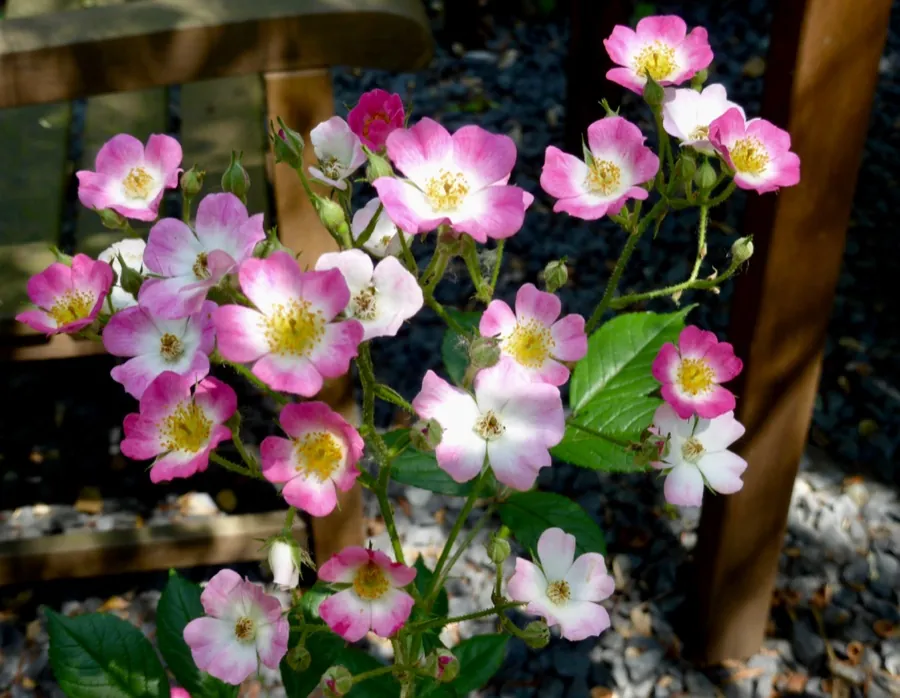
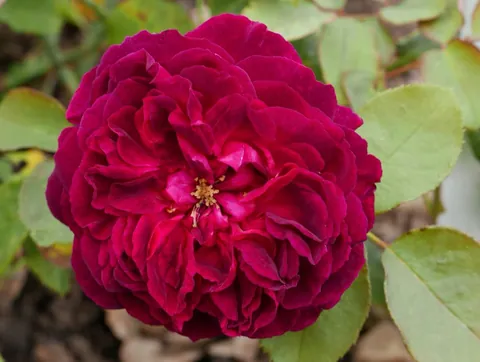
Single pink with a white eye and golden-yellow stamens; airy clusters of 20–50+ flowers; up to 250 cm, a large shrub or climber; parentage: Robin Hood × Rote Pharisäer; the 13th Hybrid Musk in the catalogue.

2nd Peter Lambert in the catalogue (alongside Goethe 1911)

Variety profile

Flowering

Repeat-flowering

Legacy

Lambert 1937

Late Lambertiana · sport: Rote Mozart (Kordes 1989)

Winter hardiness

−26 °C

USDA zone 5b. All of Ukraine without protection.

Compare reference temperatures

Plant size

150–250 × 150–250 cm
person 170 cm150–250 cm
Habit
A spreading, arching shrub: the typical Hybrid Musk 'fountain' form
Dimensions
150–250 × 150–250 cm
Support
Needs no support, but can be trained as a small climber
Shoots
Long, flexible, arching
Branching
Strong, from the base

Flower

≈ 3 cm

5-8 petals.

Bud shape
Round, bright pink
Open flower
Single '5–8 petals', with a contrasting white eye in the centre and visible golden stamens
Centre
Pure white 'eye' with a tuft of golden-yellow stamens: the signature feature of the variety
Fullness
Single, 5–8 petals
Flower carriage
In large airy clusters of 20–50+ flowers: the typical Hybrid Musk cluster

Fragrance

Light; musky

Light musk, 'subtle' compared with other Hybrid Musks (opinions vary).

Disease resistance

4 out of 5
Black spotresistantPowdery mildewresistantRustresistant

4/5. Good resistance to powdery mildew, blackspot and rust.

Sun

Sun + shade

Tolerates partial shade (typical of Hybrid Musks).

Thorns

Moderate
thornlessfewmoderatemanyvery many

Medium number, typical of Hybrid Musks.

Foliage

Medium, dark green, healthy.

All characteristics in a table
Group
Hybrid Musk; Lambertiana
Breeder
Peter Lambert; Trier, Germany
Bud shape
Round, bright pink
Open flower
Single '5–8 petals', with a contrasting white eye in the centre and visible golden stamens
Centre
Pure white 'eye' with a tuft of golden-yellow stamens: the signature feature of the variety
Colour
Bright pink 'crimson' with a pure white eye in the centre and golden-yellow stamens. A contrasting, graphic flower.
Fullness
Single, 5–8 petals
Flower carriage
In large airy clusters of 20–50+ flowers: the typical Hybrid Musk cluster
Flowering
Repeat-flowering
Fragrance
Light musk, 'subtle' compared with other Hybrid Musks (opinions vary)
Hips
Small hips
Habit
A spreading, arching shrub: the typical Hybrid Musk 'fountain' form
Branching
Strong, from the base
Shoots
Long, flexible, arching
Thorns
Medium number, typical of Hybrid Musks.
Dimensions
150–250 × 150–250 cm
Support
Needs no support, but can be trained as a small climber
Foliage
Medium, dark green, healthy
Resistance
4/5. Good resistance to powdery mildew, blackspot and rust.
Variations of the variety
No patent code (1937, before the modern system); parentage 'Robin Hood' (Hybrid Musk, Pemberton 1927) × 'Rote Pharisäer' (HT, Hinner 1916); sport: 'Rote Mozart' (Kordes 1989, red). The year is often given wrongly as 1937; the correct dates are: bred in 1936, on the market in 1937.

Colour scheme

Bright pink 'crimson' with a pure white eye in the centre and golden-yellow stamens. A contrasting, graphic flower.

Rose neighbours

Perennials to plant nearby

Neighbouring roses

A classic Hybrid Musk family — 13 varieties in the catalogue:

Companion perennials

A classic cottage-garden family for a 'wild' Hybrid Musk:

lavenderdelphiniumsoft lady's mantleevening primrose

Availability worldwide

A historic variety from 1937, in cultivation for 90+ years:

🇩🇪 Germany: high · classic Lambertianas🇪🇺 Europe: high · collectors' nurseries🇺🇸 USA: moderate🇺🇦 Ukraine: moderate · via collectors

More about the variety

Hips
Small hips
Variations of the variety
No patent code (1937, before the modern system); parentage 'Robin Hood' (Hybrid Musk, Pemberton 1927) × 'Rote Pharisäer' (HT, Hinner 1916); sport: 'Rote Mozart' (Kordes 1989, red). The year is often given wrongly as 1937; the correct dates are: bred in 1936, on the market in 1937.

How to grow

Where to plant. As a specimen in the garden, like a 'fountain', or in groups of Hybrid Musks (Felicia, Cornelia, Moonlight, Danaë); tolerates partial shade, which is rare for roses.

Climate. Down to −26 °C; all of Ukraine without protection; exceptional hardiness for a Hybrid Musk.

Care. Minimal; selective pruning as for shrubs; standard seasonal disease prevention.

About the name

Name. The rose is named after Wolfgang Amadeus Mozart (1756–1791), the Austrian composer of the Classical era and one of the most influential composers of all time. Author of more than 600 works, including the operas 'The Magic Flute', 'Don Giovanni' and 'The Marriage of Figaro', and 41 symphonies. He died at 35.

Breeding. Bred by Peter Lambert (1859–1939) in the city of Trier, Germany; bred in 1936, on the market in 1937. No patent code (1937 predates the modern patent system). Parentage: 'Robin Hood' (Hybrid Musk, Pemberton 1927) × 'Rote Pharisäer' (HT, Hinner 1916). Sport: 'Rote Mozart' (Kordes 1989), the red version.

Significance. One of the late Lambertianas, a typical Hybrid Musk with a distinct 'single and classic' design, used in modern breeding for health and the structure of its clusters. The 2nd Peter Lambert rose in our catalogue, next to Goethe (1911). Peter Lambert was one of the founding German breeders of the late XIX to early XX century; his Lambertianas were the forerunners of the Hybrid Musks Pemberton's. It is the 13th Hybrid Musk in our catalogue, the largest 'wild' family (next to Felicia, Cornelia, Buff Beauty, Ballerina, Danaë, Heavenly Pink, Bouquet Parfait, Guirlande d'Amour, Grand-Duc Jean, Heimatmelodie, Lichterloh and Moonlight). It is often confused with 'Rote Mozart', the red sport of Kordes (1989).

Frequently asked questions about Mozart

Does Mozart need winter protection?

The cultivar’s reference temperature is −26 °C (USDA zone 5b). Overwintering depends on the conditions. All of Ukraine without protection.

How many times a season does Mozart flower?

Repeat-flowering.

How big does Mozart grow?

150–250 cm tall, 150–250 cm wide.

Which diseases affect Mozart?

Overall resistance: 4 out of 5. Good: against powdery mildew, blackspot and rust.

How much sun does Mozart need?

Sun + shade; tolerates partial shade (typical of Hybrid Musks).

What does Mozart smell like?

Light musk, 'subtle' compared with other Hybrid Musks (opinions vary).

Gardeners' photos and reviews

My climate

Choose a reference temperature to compare with the cultivar’s data. This is not an overwintering forecast or advice on winter protection; consider wind, moisture and the duration of frost.

Regional data are generalised. USDA describes average annual extreme minima, not a forecast; the values in the list are rounded. Check the conditions at your site. More information: Roses in Ukraine's climate.