





Back to catalogue
Climber (large-flowered)Poulsen (the Olesen couple), 1997Red

Naheglut

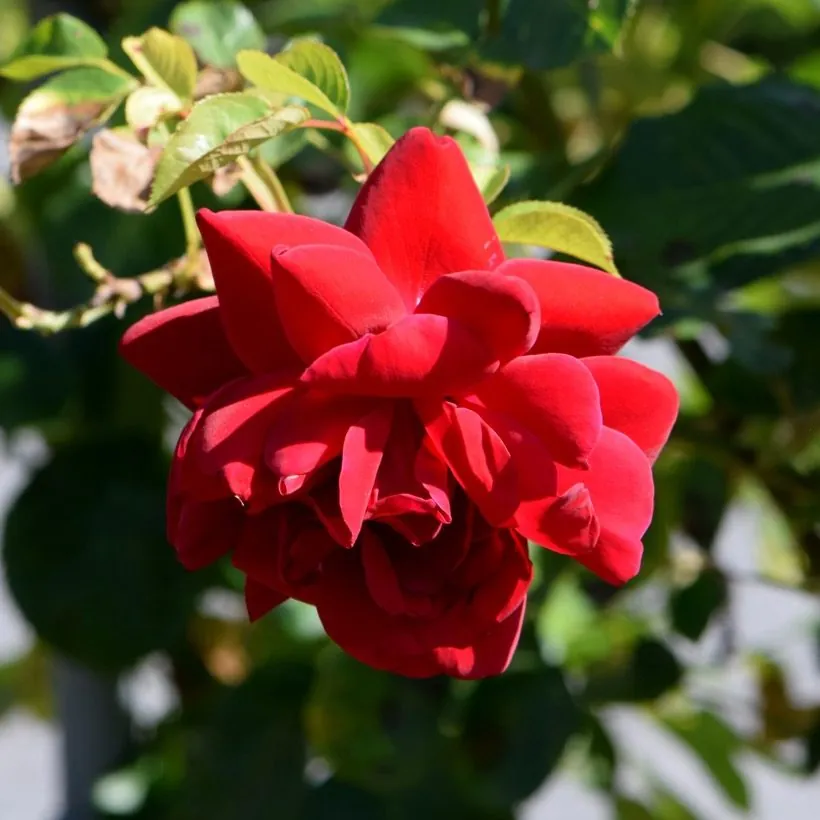
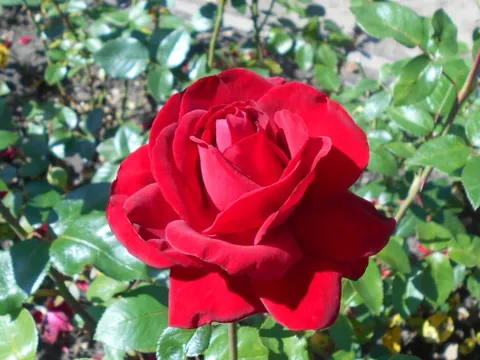
Velvety dark red, almost black-red, 'blazing'; rain-resistant; a climber for arches, walls and pergolas.

= 'That's Jazz' · German name after the Nahe wine region

Variety profile

Flowering

Repeat, in flushes

Repeat-flowering in flushes, from June to the first frosts. Months are approximate, for the climate of Ukraine.

Legacy

Poulsen

Danish variety (= 'That's Jazz'); German name — 'glow' of the Nahe wine region

Winter hardiness

−20 °C

USDA zone 6b–9. Southern and central Ukraine; in the north, with winter protection. South and central Ukraine · in the north, with winter protection.

Compare reference temperatures

Plant size

250–300 × 100–200 cm
person 170 cm250–300 cm
Habit
Vigorous, upright, well-branched climber
Dimensions
250–300 cm tall (up to ~420 cm) × 100–200 cm
Support
Needs support: arch, wall, trellis, pergola
Shoots
Long and flexible; bend them into arches and tie them in
Branching
Good

Flower

9–10 cm
Bud shape
Pointed, Hybrid Tea type (high centre)
Open flower
From goblet-shaped, high-centred to flattened, slightly reflexed; diameter 9–10 cm (up to ~12)
Centre
Full, tall (from its Hybrid Tea parent)
Fullness
Fully double (~45–50 petals)
Flower carriage
Mostly in small clusters, sometimes singly

Fragrance

Light; with a hint of old rose and light spice

Light: soft, with a hint of old rose and light spice.

Disease resistance

4 out of 5
Black spotresistantPowdery mildewresistant

Good resistance to black spot and powdery mildew; rain-resistant.

Sun

Full sun

A sunny, airy spot; not bothered by rain.

Thorns

Moderate
thornlessfewmoderatemanyvery many

The canes are prickly; the exact level is not stated in the sources.

Foliage

Dark green, glossy, leathery, healthy.

Other names

Breeder's code POULnorm.

All characteristics in a table
Group
Climber (large-flowered)
Breeder
Poulsen (the Olesen couple), Denmark, 1997
Bud shape
Pointed, Hybrid Tea type (high centre)
Open flower
From goblet-shaped, high-centred to flattened, slightly reflexed; diameter 9–10 cm (up to ~12)
Centre
Full, tall (from its Hybrid Tea parent)
Colour
Velvety dark red, almost black-red, 'blazing'; the colour is stable and does not fade
Fullness
Fully double (~45–50 petals)
Flower carriage
Mostly in small clusters, sometimes singly
Flowering
Repeat-flowering in flushes, from June to the first frosts
Fragrance
Light: soft, with a hint of old rose and light spice
Hips
Not known (they advise removing spent blooms)
Habit
Vigorous, upright, well-branched climber
Branching
Good
Shoots
Long and flexible; bend them into arches and tie them in
Thorns
The canes are prickly; the exact level is not stated in the sources.
Dimensions
250–300 cm tall (up to ~420 cm) × 100–200 cm
Support
Needs support: arch, wall, trellis, pergola
Foliage
Dark green, glossy, leathery, healthy
Resistance
Good resistance to black spot and powdery mildew; rain-resistant
Variations of the variety
The same variety code (POULnorm) is sold as 'That's Jazz' / 'Jazz', 'Schloss Rosenburg' and others

Colour scheme

Velvety dark red, almost black-red, 'blazing'; the colour is stable and does not fade

Rose neighbours

Perennials to plant nearby

Neighbouring roses

Red and crimson varieties keep the same deep 'wine' palette around Naheglut.

Perennial companions

Silver, lime and blue spires 'light up' the dark red flower:

catmint (Nepeta)sage 'Caradonna'lamb's ear (Stachys)lady's mantle (Alchemilla)

Contrast accents

Silver and lime add light to the deep red palette:

Stachys byzantinaAlchemilla mollisNepeta Six Hills Giant

More about the variety

Hips
Not known (they advise removing spent blooms)
Variations of the variety
The same variety code (POULnorm) is sold as 'That's Jazz' / 'Jazz', 'Schloss Rosenburg' and others

How to grow

Where to plant. On an arch, pergola, trellis or wall, as a flowering vertical accent. The deep 'blazing' red stands out against a pale wall and beside silver perennials.

Climate. Southern and central Ukraine, grows without cover; in the north it needs winter protection (USDA zone 6b).

Care. Full sun, an airy spot and fertile, well-drained soil; bend the canes into arches and tie them to the support (this gives more flowers).

About the name

Name. The German trade name 'Naheglut' honours the Nahe wine region (on the Nahe river, Rhineland-Palatinate). 'Glut' means glow or embers, so the name means 'the glow of the Nahe', describing the blazing red colour (a nod to red wine).

Breeding. Bred by L. Pernille and Mogens Nygaard Olesen for the Poulsen Roser nursery (Denmark); crossed in 1986, on sale from 1997. Code: POULnorm. Parentage: an unnamed seedling × 'Norita' (a dark red Hybrid Tea), which gives the deep colour.

Significance. One Poulsen variety code that reached different markets under several names ('That's Jazz', 'Jazz' and others); in German-speaking countries the regional 'wine' name 'Naheglut' has stuck.

Frequently asked questions about Naheglut

Does Naheglut need winter protection?

The cultivar’s reference temperature is −20 °C (USDA zone 6b–9). Overwintering depends on the conditions. Southern and central Ukraine; in the north, with winter protection.

How many times a season does Naheglut flower?

Repeat-flowering in flushes, from June to the first frosts.

How big does Naheglut grow?

250–300 cm tall, 100–200 cm wide.

Which diseases affect Naheglut?

Overall resistance: 4 out of 5. Good resistance to black spot and powdery mildew; rain-resistant.

How much sun does Naheglut need?

Full sun; a sunny, airy spot; not bothered by rain.

What does Naheglut smell like?

Light: soft, with a hint of old rose and light spice.

Gardeners' photos and reviews

My climate

Choose a reference temperature to compare with the cultivar’s data. This is not an overwintering forecast or advice on winter protection; consider wind, moisture and the duration of frost.

Regional data are generalised. USDA describes average annual extreme minima, not a forecast; the values in the list are rounded. Check the conditions at your site. More information: Roses in Ukraine's climate.