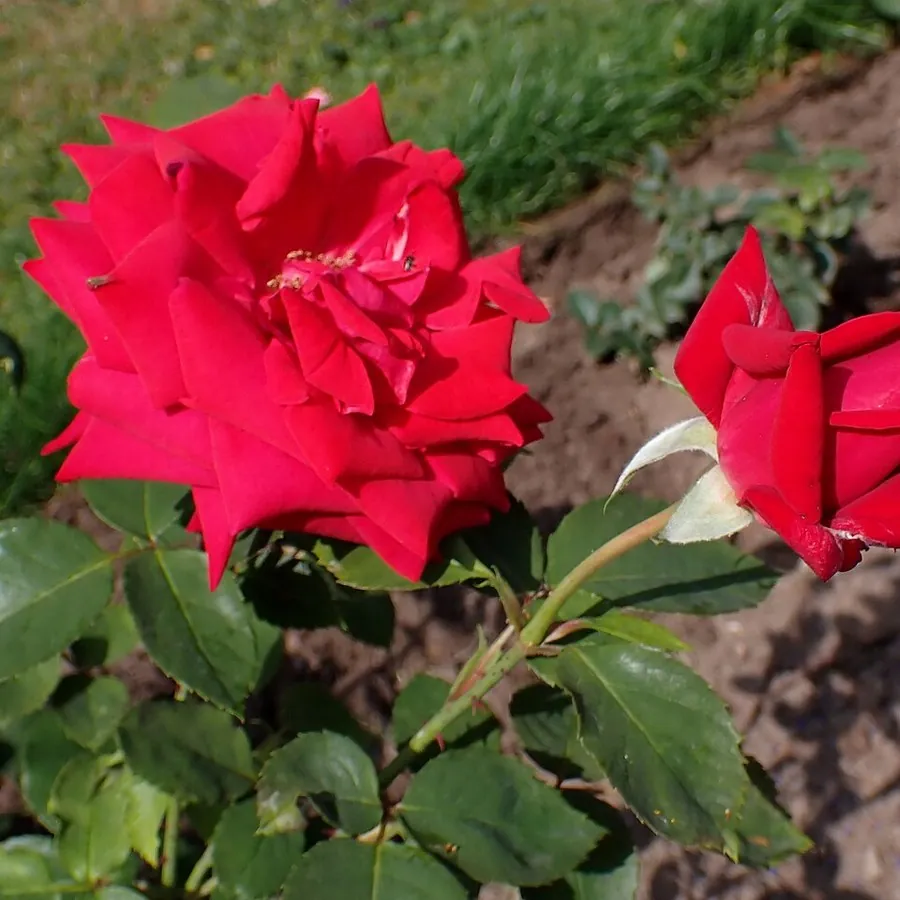
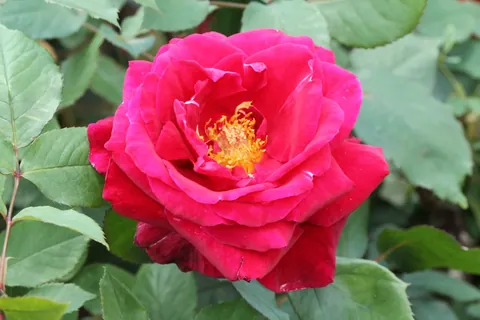
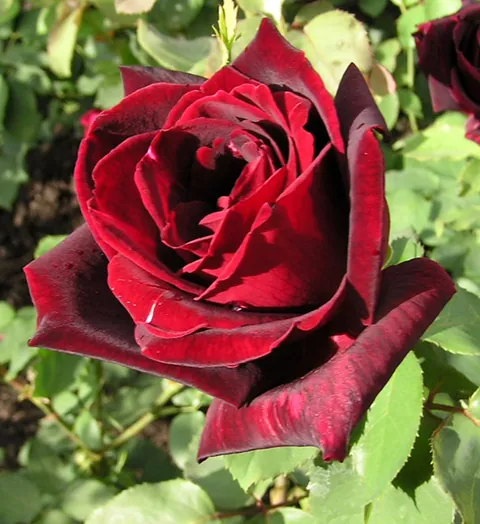
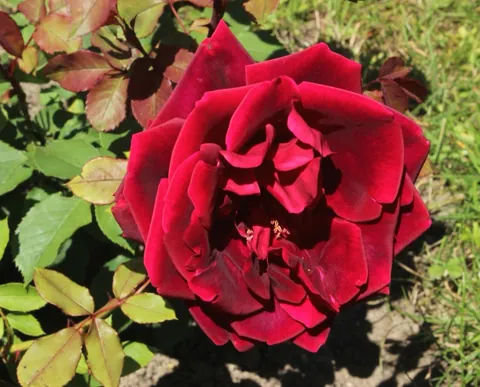




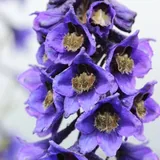
National Trust, close-up of the flower
Photo: Krzysztof Ziarnek (Kenraiz), CC BY-SA 4.0
Back to catalogue
Hybrid TeaSam McGredy IVRed

National Trust

Bright red (scarlet) Hybrid Tea; a very double, high-centred exhibition flower; compact upright bush 60–90 cm; flowers abundantly and repeatedly from summer to autumn.

Variety profile

Flowering

Repeat flowering

Abundant, repeat flowering from summer to autumn. Months are approximate, for the climate of Ukraine.

Plant size

60–90 × 60 cm
person 170 cm60–90 cm
Habit
Compact, upright, bushy
Dimensions
60–90 cm tall × up to 60 cm wide
Support
Not needed — an upright, self-supporting bush
Shoots
Sturdy and upright, holding the flowers without flopping
Branching
Good — an even, dense bush

Flower

≈ 10 cm

53–60 petals.

Bud shape
Classic Hybrid Tea, elongated, bright red
Open flower
High-centred exhibition form with a spiral centre; diameter ~10 cm; very neat, show-quality build
Centre
Tightly curled spiral centre — the stamens are hidden
Fullness
53–60 petals — very double
Flower carriage
Mostly flowers borne singly on the stem

Fragrance

Barely noticeable

Light, barely noticeable — the flower is valued mainly for its form and colour rather than its scent.

Disease resistance

3 out of 5
Black spotmoderatePowdery mildewmoderateRustmoderate

Medium (~3/5): the RHS notes susceptibility to black spot, rust and powdery mildew, while nurseries praise its resistance — we show both assessments honestly.

Sun

Stable

No strong fading; the colour holds, only turning slightly crimson as the flowers fade.

Thorns

Moderate
thornlessfewmoderatemanyvery many

Typical prickle level for Hybrid Teas.

Foliage

Healthy, green; see the 'Resistance' section.

Other names

Bad Nauheim, Nationalstolz
All characteristics in a table
Group
Hybrid Tea
Breeder
Sam McGredy IV, Northern Ireland
Bud shape
Classic Hybrid Tea, elongated, bright red
Open flower
High-centred exhibition form with a spiral centre; diameter ~10 cm; very neat, show-quality build
Centre
Tightly curled spiral centre — the stamens are hidden
Colour
Bright red, scarlet; the petals take on a slightly crimson tint as they fade; there is no strong sun-fading, so the colour stays clean
Fullness
53–60 petals — very double
Flower carriage
Mostly flowers borne singly on the stem
Flowering
Abundant, repeat flowering from summer to autumn
Fragrance
Light, barely noticeable — the flower is valued mainly for its form and colour rather than its scent
Hips
No data available
Habit
Compact, upright, bushy
Branching
Good — an even, dense bush
Shoots
Sturdy and upright, holding the flowers without flopping
Thorns
Typical prickle level for Hybrid Teas.
Dimensions
60–90 cm tall × up to 60 cm wide
Support
Not needed — an upright, self-supporting bush
Foliage
Healthy, green; see the 'Resistance' section
Resistance
Medium (~3/5): the RHS notes susceptibility to black spot, rust and powdery mildew, while nurseries praise its resistance — we show both assessments honestly
Synonyms
Code MACcy; also sold as 'Bad Nauheim' and 'Nationalstolz'

Colour scheme

Bright red, scarlet; the petals take on a slightly crimson tint as they fade; there is no strong sun-fading, so the colour stays clean

Rose neighbours

Perennials to plant nearby

Neighbouring roses

Classic red Hybrid Teas — a family of deep reds:

Perennial companions

Blue and silver neighbours set off the scarlet red:

lavendercatmint (Nepeta)lamb's ear (Stachys)delphinium

Variety name

Named after the British organisation The National Trust:

🇬🇧 The National Trust · founded 1895Synonym: Bad NauheimSynonym: Nationalstolz

More about the variety

Hips
No data available
Synonyms
Code MACcy; also sold as 'Bad Nauheim' and 'Nationalstolz'

How to grow

Where to plant. A compact upright Hybrid Tea, 60–90 cm — holds its shape well in a border, a bed or a formal group of identical varieties. Needs no support. The bright red flower stands out beside blue and silver perennials (lavender, catmint, lamb's ear, delphinium).

Climate. USDA 6b–9b, RHS H6 (about −20…−15 °C). In colder areas, light winter protection is advisable.

Care. Moderate health — the RHS notes susceptibility to black spot, rust and powdery mildew (although nurseries praise the variety's resistance). Plan for preventive care and a sunny, well-ventilated spot. Flowers abundantly and repeatedly from summer to autumn.

About the name

Name. The variety is named after The National Trust, a British organisation founded in 1895 to protect historic buildings and natural landscapes. It was also sold under the synonyms 'Bad Nauheim' and 'Nationalstolz'.

Breeding. Bred by Sam McGredy IV in Northern Ireland (before he moved to New Zealand); a variety from 1964, on sale from 1970. Breeder's code: MACcy. Character: a bright red (scarlet) Hybrid Tea with a very double (53–60 petals), high-centred exhibition flower of ~10 cm with a spiral centre. The colour stays clean — there is no strong sun-fading; only on fading flowers does it take on a slight crimson tint. The bush is compact and upright, 60–90 × up to 60 cm, and needs no support; it flowers abundantly and repeatedly from summer to autumn. Health: moderate. No official awards for this variety are confirmed.

Frequently asked questions about National Trust

How many times a season does National Trust flower?

Abundant, repeat flowering from summer to autumn.

How big does National Trust grow?

60–90 cm tall, about 60 cm wide.

Which diseases affect National Trust?

Overall resistance: 3 out of 5. ~3/5; moderate; the RHS notes susceptibility to black spot, rust and powdery mildew.

How much sun does National Trust need?

Stable; no strong fading; the colour holds, only turning slightly crimson as the flowers fade.

What does National Trust smell like?

Light, barely noticeable — the flower is valued mainly for its form and colour rather than its scent.

Gardeners' photos and reviews

My climate

Choose a reference temperature to compare with the cultivar’s data. This is not an overwintering forecast or advice on winter protection; consider wind, moisture and the duration of frost.

Regional data are generalised. USDA describes average annual extreme minima, not a forecast; the values in the list are rounded. Check the conditions at your site. More information: Roses in Ukraine's climate.