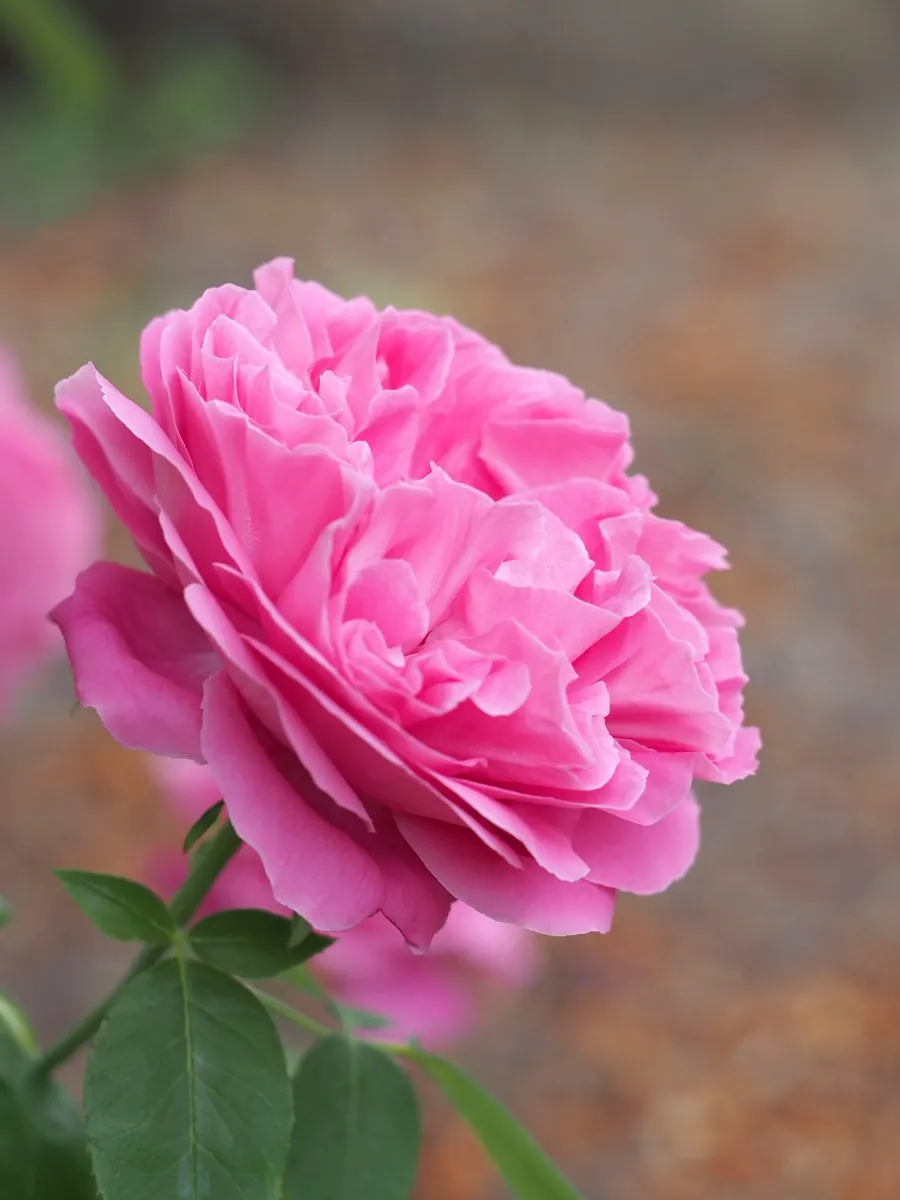
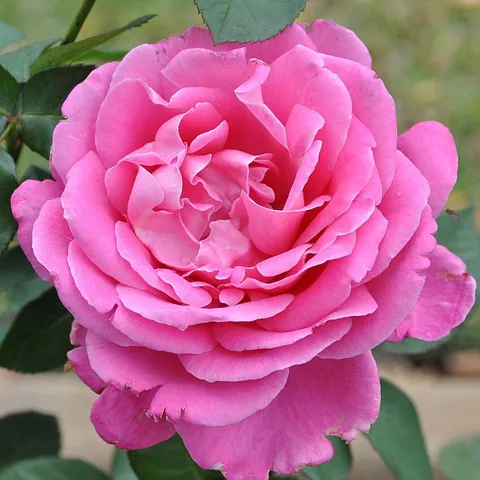
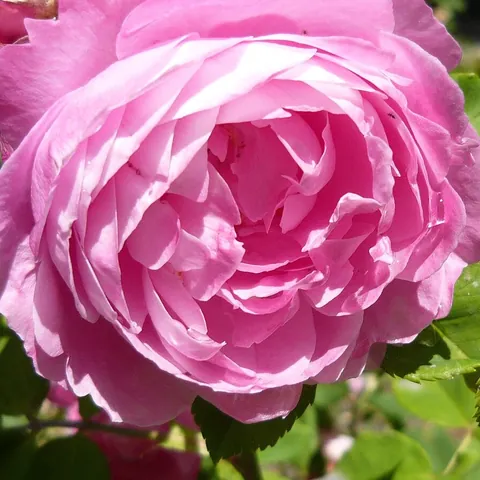
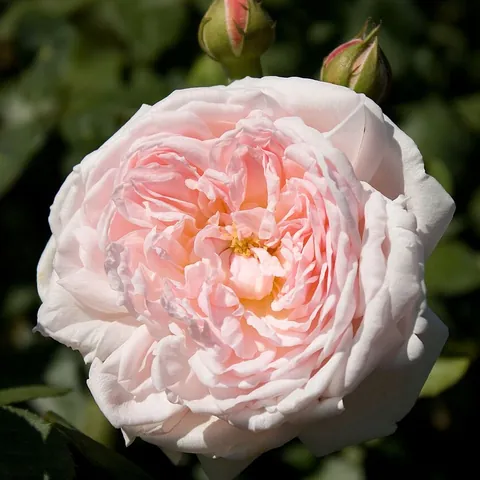



Paul Neyron, close-up of the flower
Back to catalogue
Hybrid Perpetual; old garden rosePink

Paul Neyron

Giant blooms up to 18 cm — it was called "the largest rose" of the nineteenth century.

Synonyms: Paul Neyron

Variety profile

Flowering

Repeat flowering, in waves through the season

Plant size

120–200 cm
person 170 cm120–200 cm
Habit
Upright, sturdy, with thick canes
Dimensions
1.2–2 m tall
Support
Support is advisable — heavy flowers bend thin necks

Flower

15–18 cm
Flower shape
Globular to cupped, very double, often quartered
Flower size
Huge — 15–18 cm across, 50+ petals
Clusters
Singly or 2–3 on a sturdy stem

Fragrance

Moderate, fresh

Pleasant, fresh rose — moderate strength.

Sun

Sun or light shade in the heat

Foliage

Large, matt green.

All characteristics in a table
Group
Hybrid Perpetual; old garden rose
Flower shape
Globular to cupped, very double, often quartered
Colour
Deep pink with a delicate lilac tint
Flower size
Huge — 15–18 cm across, 50+ petals
Clusters
Singly or 2–3 on a sturdy stem
Flowering
Repeat flowering, in waves through the season
Fragrance
Pleasant, fresh rose — moderate strength
Habit
Upright, sturdy, with thick canes
Dimensions
1.2–2 m tall
Foliage
Large, matt green
Resistance
Almost thornless; moderate disease resistance
Support
Support is advisable — heavy flowers bend thin necks
Use
Specimen, old-fashioned rose garden, back of a border, cut flowers
Care
Feeding, tidying up pruning, winter covering in harsh winters

Colour scheme

Deep pink with a delicate lilac tint

Rose neighbours

Perennials to plant nearby

More about the variety

Use
Specimen, old-fashioned rose garden, back of a border, cut flowers
Care
Feeding, tidying up pruning, winter covering in harsh winters

How to grow

Where to plant. As a specimen in a prominent spot, in an old-fashioned rose garden, at the back of a mixed border; striking and also good as a cut rose for large bouquets. Highlight: huge globular flowers — among the largest of all roses; at its peak the bush looks like a peony garden.

Care. Likes rich soil and feeding; thin flower stems should be supported, and in harsh winters the plant should be covered. Watch the foliage in wet summers.

About the name

Name. Named after Paul Neyron, a young medical student; in Ukraine it is called "Pol Neron". Origin: bred by Antoine Levet in France, 1869. One of the most free-flowering Hybrid Perpetuals; still valued by collectors of old garden roses today. Photo: Wikimedia Commons

Frequently asked questions about Paul Neyron

How many times a season does Paul Neyron flower?

Repeat flowering, in waves through the season.

How big does Paul Neyron grow?

120–200 cm tall.

How much sun does Paul Neyron need?

Sun; sun or light shade in the heat.

What does Paul Neyron smell like?

Pleasant, fresh rose — moderate strength.

Gardeners' photos and reviews

My climate

Choose a reference temperature to compare with the cultivar’s data. This is not an overwintering forecast or advice on winter protection; consider wind, moisture and the duration of frost.

Regional data are generalised. USDA describes average annual extreme minima, not a forecast; the values in the list are rounded. Check the conditions at your site. More information: Roses in Ukraine's climate.