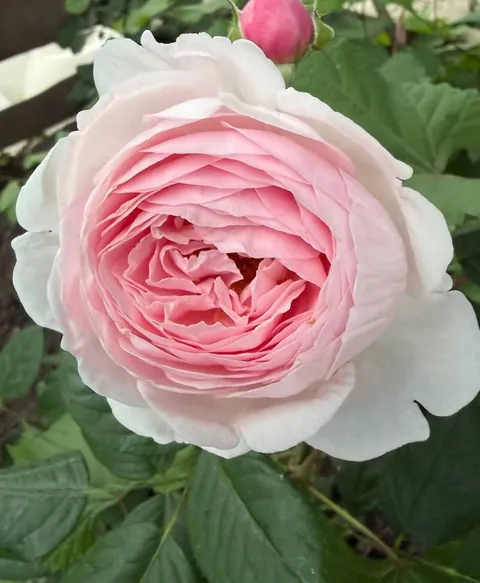
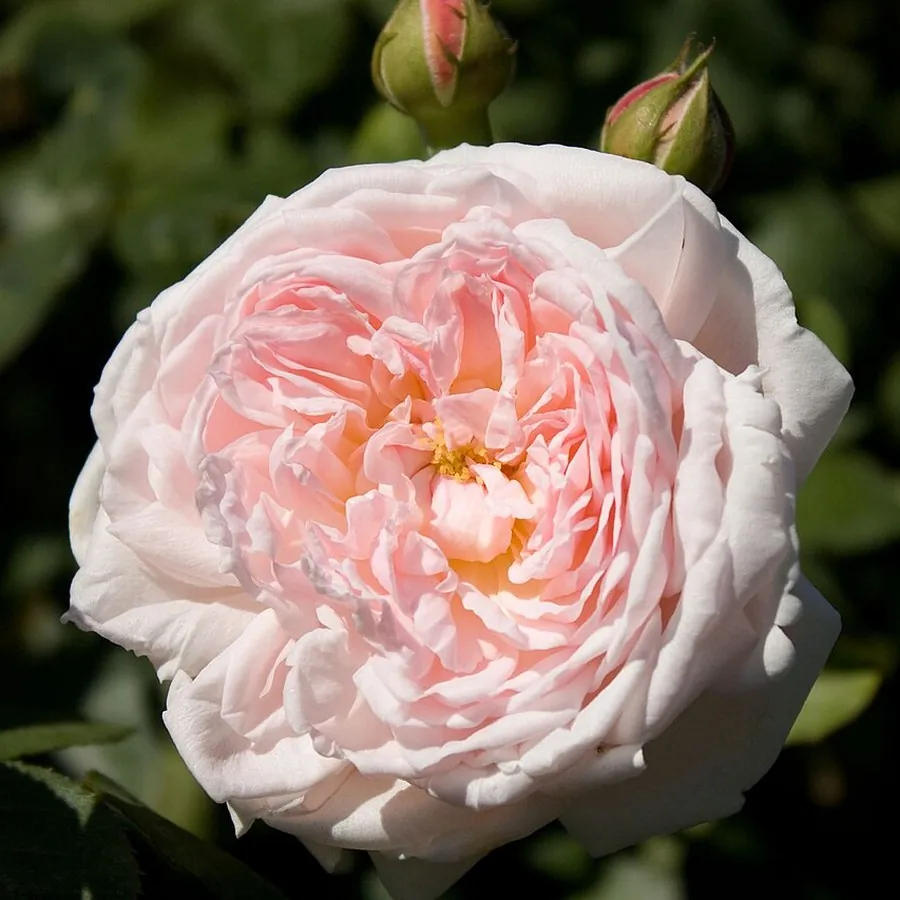
Eglantyne, close-up of the flower
Photo: Rexness, CC BY-SA 2.0
Back to catalogue
English rose (Shrub)David Austin, 1994Pink

Eglantyne

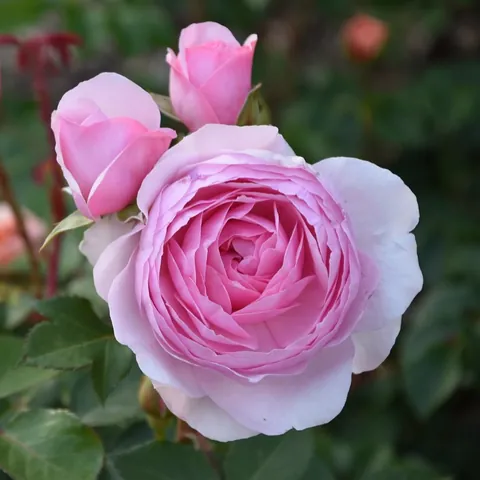
Classic pale pink English rose with a quartered rosette; synonym Masako; named after Eglantyne Jebb, founder of Save the Children.

Variety profile

Flowering

Repeat, in waves through the season

Awards

RHS AGM

According to reference guides — 2001

Plant size

105–150 × 90–120 cm
person 170 cm105–150 cm
Habit
Bushy, upright, rounded form
Dimensions
105–150 × 90–120 cm
Support
Does not need support
Shoots
No data
Branching
No data

Flower

7,5–10 cm
Bud shape
No data — the exact shape of the bud is not documented
Open flower
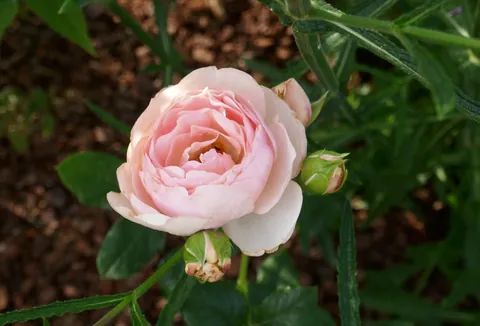
Very full quartered rosette with a button eye; cup-shaped at first, later opening to a flat form
Fullness
Very double, 130–140 petals
Flower carriage
No data

Fragrance

Moderate, in the old tea-rose style (sources differ)

Sun

Full sun

Thorns

Moderate
thornlessfewmoderatemanyvery many

The sources give no exact number of prickles; roughly moderate, typical of Austin varieties.

Foliage

No data.

Other names

Masako
All characteristics in a table
Group
English rose (Shrub)
Breeder
David Austin, United Kingdom, 1994
Bud shape
No data — the exact shape of the bud is not documented
Open flower
Very full quartered rosette with a button eye; cup-shaped at first, later opening to a flat form
Colour
Pale pink, petal edges fade almost to white; a warmer cream tone near the base
Fullness
Very double, 130–140 petals
Flower carriage
No data
Flowering
Repeat, in waves through the season
Fragrance
Moderate, in the old tea-rose style (sources differ)
Hips
No data
Habit
Bushy, upright, rounded form
Branching
No data
Shoots
No data
Thorns
The sources give no exact number of prickles; roughly moderate, typical of Austin varieties.
Dimensions
105–150 × 90–120 cm
Support
Does not need support
Foliage
No data
Resistance
No exact data — typical rose risks
Variations of the variety
Code AUSmak; synonym Masako (Japan); parentage — an unknown seedling × Mary Rose
Colour scheme

Delicate pink; the petal edges fade almost to white; a warmer cream tone near the base

Rose neighbours

Perennials to plant nearby

Rose neighbours

Soft pink roses — one colour family:

Companion perennials

Blue, lilac and silver neighbours bring out the soft pink:

lavendercatmintStachysgypsophila

Variety features

A few defining traits of Eglantyne worth knowing right away:

English (David Austin)quarteredsynonym 'Masako'AUSmak

More about the variety

Hips
No data
Variations of the variety
Code AUSmak; synonym Masako (Japan); parentage — an unknown seedling × Mary Rose
How to grow

Where to plant. A classic English border, a group planting or an accent in a mixed border — the rounded shrub form holds its outline well without support.

Climate. USDA 5b–10b; in spring protection from late frosts is desirable; in Ukraine light protection is enough.

Care. In spring — remove the protection and do formative pruning; through the season — removing spent flowers encourages a new wave of flowering; prevention of common rose diseases.

About the name

Name. The rose is named after Eglantyne Jebb, founder of the charity Save the Children. In Japan the variety is known as Masako, after the crown princess.

Breeding. Bred by David Austin (UK) in 1994, code AUSmak. Parentage: an unknown seedling × Mary Rose.

Significance. A classic pale pink English rose of old-fashioned form with a quartered rosette.

Frequently asked questions about Eglantyne

How many times a season does Eglantyne flower?

Repeat, in waves through the season.

How big does Eglantyne grow?

105–150 cm tall, 90–120 cm wide.

How much sun does Eglantyne need?

Sun; full sun.

What does Eglantyne smell like?

Moderate, in the old tea-rose style (sources differ).

Gardeners' photos and reviews

My climate

Choose a reference temperature to compare with the cultivar’s data. This is not an overwintering forecast or advice on winter protection; consider wind, moisture and the duration of frost.

Regional data are generalised. USDA describes average annual extreme minima, not a forecast; the values in the list are rounded. Check the conditions at your site. More information: Roses in Ukraine's climate.