

Back to catalogue
Hybrid Musk; the Pemberton classicRev. Joseph Pemberton; Havering-atte-Bower, 1919White and cream

Prosperity

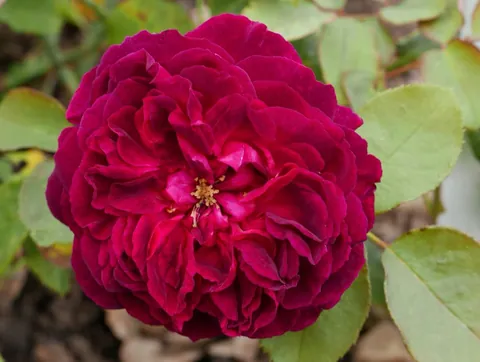
One of the best-known Hybrid Musks Pemberton; RHS AGM and Gold Medal RNRS 1919; 'Prosperity' (meaning 'prosperity') — a symbol of optimism during post-war reconstruction; massive dense clusters and young purplish-bronze leaves.

RHS AGM + Gold Medal RNRS 1919 · one of Pemberton's top 3

Variety profile

Flowering

Repeat flowering

Repeat-flowering from June to November. Months are approximate, for the climate of Ukraine.

Legacy

AGM+RNRS Gold

Top-3 Pemberton · classic of 1919

Winter hardiness

−26 °C

USDA zone 5–9. All of Ukraine, no winter protection needed.

Compare reference temperatures

Plant size

120–300 × 120–150 cm
person 170 cmon a supportup to 3 m120–300 cm
Habit
A large spreading bush, or a short climber up to 3 m
Dimensions
120–300 cm high × 120–150 cm wide (as a shrub about 1.5 × 1.2 m, as a climber up to 3 m)
Support
As a climber up to 3 m if you wish; as a bush — needs no support
Shoots
Flexible, arching; easily trained into an arch
Branching
Well branched, with flexible canes

Flower

7–10 cm
Bud shape
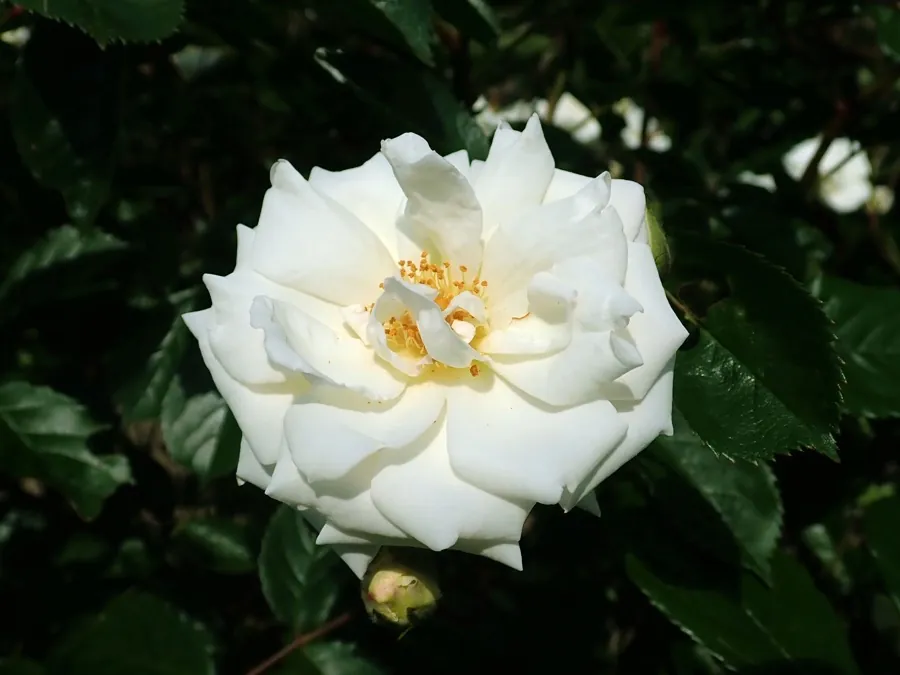
Round, cream-white with a soft pink centre
Open flower
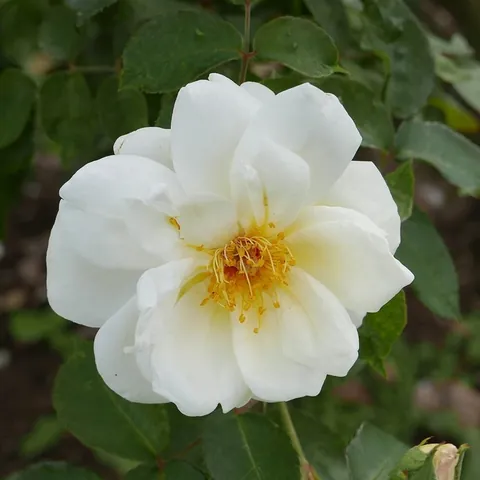
Semi-double to double (10–20 petals), in large clusters
Centre
Open, with yellow stamens and a soft pink tint — a typical Hybrid Musk
Fullness
10–20 petals (semi-double to double)
Flower carriage
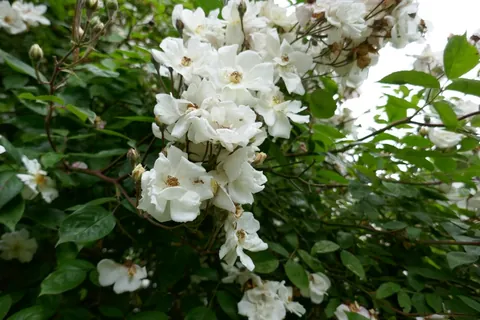
In massive dense clusters — a special feature of this variety, the largest cluster among Pemberton roses

Fragrance

Strong; musky

Strong musky scent — especially intense in the cool part of the day.

Disease resistance

4 out of 5

High, 4/5: over 105 years of commercial success; tolerates poor soils and partial shade.

Sun

Sun and shade

Tolerates partial shade; recommended for shady spots.

Thorns

Few
thornlessfewmoderatemanyvery many

Few thorns — typical of Pemberton Hybrid Musks.

Foliage

Young leaves purplish-bronze — mature leaves dark green and glossy — two-stage ornamental interest.

All characteristics in a table
Group
Hybrid Musk; the Pemberton classic
Breeder
Rev. Joseph Pemberton; Havering-atte-Bower, United Kingdom, 1919
Bud shape
Round, cream-white with a soft pink centre
Open flower
Semi-double to double (10–20 petals), in large clusters
Centre
Open, with yellow stamens and a soft pink tint — a typical Hybrid Musk
Colour
Pearly white and cream, with a soft pink tint in the centre and yellow stamens; young leaves purplish-bronze, mature leaves dark green and glossy (two-stage ornamental interest)
Fullness
10–20 petals (semi-double to double)
Flower carriage
In massive dense clusters — a special feature of this variety, the largest cluster among Pemberton roses
Flowering
Repeat-flowering from June to November
Fragrance
Strong musky scent — especially intense in the cool part of the day
Hips
Not documented — usually cut
Habit
A large spreading bush, or a short climber up to 3 m
Branching
Well branched, with flexible canes
Shoots
Flexible, arching; easily trained into an arch
Thorns
Few thorns — typical of Pemberton Hybrid Musks.
Dimensions
120–300 cm high × 120–150 cm wide (as a shrub about 1.5 × 1.2 m, as a climber up to 3 m)
Support
As a climber up to 3 m if you wish; as a bush — needs no support
Foliage
Young leaves purplish-bronze — mature leaves dark green and glossy — two-stage ornamental interest
Resistance
High, 4/5: over 105 years of commercial success; tolerates poor soils and partial shade
Variations of the variety
No official code (bred before the code system). HMF ID 1.5005. Parentage: 'Marie-Jeanne' (Polyantha, Turbat 1913) × 'Perle des Jardins' (Tea, Levet 1874)

Colour scheme

Pearly white and cream, with a soft pink tint in the centre and yellow stamens; young leaves are purplish-bronze, mature leaves dark green and glossy (two-stage ornamental interest)

Rose neighbours

Perennials to plant nearby

Neighbouring roses

The Pemberton Hybrid Musk family creates a 'classic shrub corner':

Companion perennials

Shade-loving and cottage perennials:

lavenderhostalady's mantle (Alchemilla)gypsophila

Availability worldwide

A classic on offer from specialist nurseries:

  • 🇬🇧 UK: high · Peter Beales, Trevor White
  • 🇪🇺 Europe: high · 'classic shrub'
  • 🇺🇸 USA: high · Antique Rose Emporium, Rogue Valley
  • 🇺🇦 Ukraine: rare · collector nurseries

More about the variety

Hips
Not documented — usually cut
Variations of the variety
No official code (bred before the code system). HMF ID 1.5005. Parentage: 'Marie-Jeanne' (Polyantha, Turbat 1913) × 'Perle des Jardins' (Tea, Levet 1874)

How to grow

Where to plant. In English cottage gardens; recommended for shady spots (one of the best roses for partial shade); as a hedge or a climber up to 3 m; in 'symbolic' corners of the garden — a symbol of prosperity and optimism.

Climate. All of Ukraine, no winter protection needed (USDA 5–9); tolerates summer heat, drought and poor soils well.

Care. Full sun or partial shade; minimal care — tolerates poor conditions; feed 1–2 times a season; prune by 1/4 in spring (Hybrid Musks do not like heavy pruning).

About the name

Name. 'Prosperity' — meaning 'prosperity'. A symbol of optimism during the post-war reconstruction after the First World War (1918). A typical Latin-literary name from Pemberton (like Pax, 'peace', Felicia, 'happy', Cornelia, Penelope). Pax (1918) and Prosperity (1919) form a 'peace–prosperity' pair, a deliberate Pemberton-series of post-war hope.

Breeding. Bred by Rev. Joseph Hardwick Pemberton at Havering-atte-Bower (Essex, Great Britain). Introduced 1919. Parentage: 'Marie-Jeanne' (Polyantha, Turbat 1913) × 'Perle des Jardins' (Tea, Levet 1874). Parentage from Polyantha and Tea gives a unique combination of massive clusters and fresh fragrance.

Significance. RHS Award of Garden Merit and Gold Medal RNRS 1919. One of the top-3 Pemberton roses (along with Pax 1918 and Penelope 1924). One of the best varieties for shady spots — recommended by the classics for partial-shade cottage corners. Massive dense clusters — the largest in the Pemberton family, a striking visual accent. Two-stage ornamental interest: purplish-bronze young leaves, dark green glossy mature leaves and pearly white flowers with yellow stamens. The scent is especially strong in the cool part of the day — good for morning and evening walks in the garden.

Frequently asked questions about Prosperity

Does Prosperity need winter protection?

The cultivar’s reference temperature is −26 °C (USDA zone 5–9). Overwintering depends on the conditions. All of Ukraine, no winter protection needed.

How many times a season does Prosperity flower?

Repeat-flowering from June to November.

How big does Prosperity grow?

120–300 cm tall, 120–150 cm wide. On a support — up to 300 cm.

Which diseases affect Prosperity?

Overall resistance: 4 out of 5. High; tolerates poor soils.

How much sun does Prosperity need?

Sun and shade; tolerates partial shade; recommended for shady spots.

What does Prosperity smell like?

Strong musky scent — especially intense in the cool part of the day.

Gardeners' photos and reviews

My climate

Choose a reference temperature to compare with the cultivar’s data. This is not an overwintering forecast or advice on winter protection; consider wind, moisture and the duration of frost.

Regional data are generalised. USDA describes average annual extreme minima, not a forecast; the values in the list are rounded. Check the conditions at your site. More information: Roses in Ukraine's climate.