



Back to catalogue
Floribunda; nostalgic garden-and-cut type; Topcut seriesChristian Evers; Rosen TantauRed

Piano

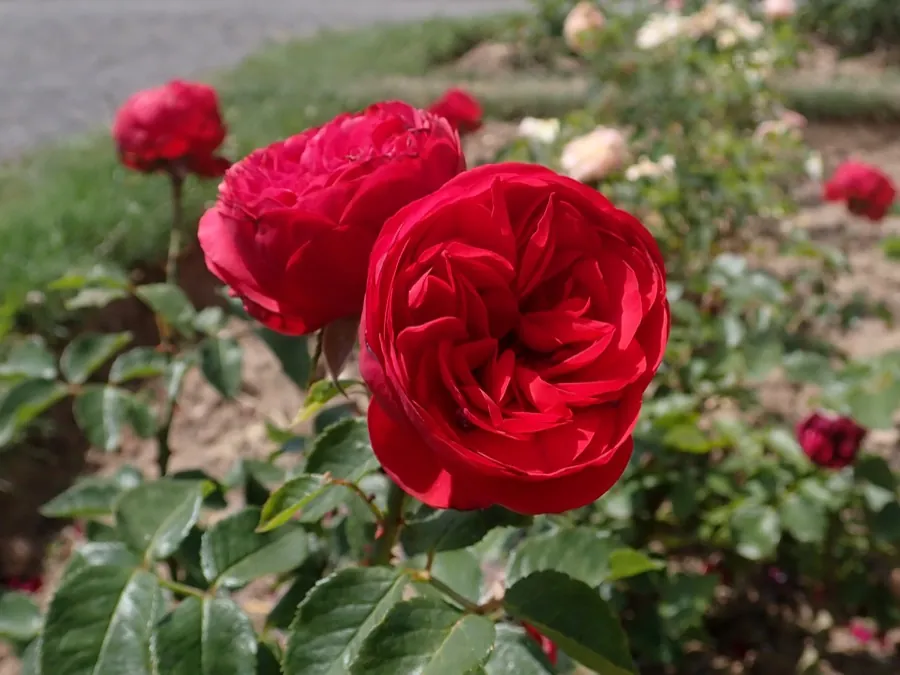
Deep red globular-cupped "peony-like" rose with 80–100 petals; the basis of the Topcut Tantau series — for gardens and cutting; it started a whole family: Charming Piano, Wedding Piano, Royal Piano; one of Europe's most popular cut red roses.

Breeder: Tantau (NOT Schmitz-Hübsch) · gave rise to a whole family

Variety profile

Flowering

Repeat flowering

Repeat flowering from June to October. Months are approximate, for the climate of Ukraine.

Legacy

Topcut

Founder of the Tantau Piano family

Winter hardiness

−18 °C

USDA zone 6b–9b. Central / southern Ukraine; the north with cover. Centre/South of Ukraine · North with winter protection.

Compare reference temperatures

Plant size

80–100 × 50 cm
person 170 cm80–100 cm
Habit
Upright, compact — typical of Floribunda Tantau
Dimensions
80–100 cm high × ~50 cm wide (garden form); cut-flower variant — stem 50–70 cm
Support
Not needed — self-supporting
Shoots
Strong, straight — good for cutting on 50–70 cm stems
Branching
Well branched with strong stems

Flower

≈ 9 cm

80–100 petals.

Bud shape
Round, deep red
Open flower
Globular-cupped "nostalgic" / "peony-like": ~9 cm, very double, resembles a peony
Centre
Densely packed with curled petals
Fullness
80–100 petals — very double, typical of nostalgic Tantau roses
Flower carriage
Mostly singly on long stems — good for cutting

Fragrance

Moderate; fruity with raspberry

Moderate fruity with raspberry notes.

Disease resistance

4 out of 5

High, 4/5: ADR-tested; typical of modern Tantau roses.

Sun

Full sun

The colour is brighter in cool weather.

Thorns

Few
thornlessfewmoderatemanyvery many

Few prickles — typical of Tantau cut roses.

Foliage

Dark green, glossy — healthy.

Other names

Red Piano
All characteristics in a table
Group
Floribunda; nostalgic garden-and-cut type; Topcut series
Breeder
Christian Evers; Rosen Tantau, Germany
Bud shape
Round, deep red
Open flower
Globular-cupped "nostalgic" / "peony-like": ~9 cm, very double, resembles a peony
Centre
Densely packed with curled petals
Colour
Saturated medium red — stable in the sun
Fullness
80–100 petals — very double, typical of nostalgic Tantau roses
Flower carriage
Mostly singly on long stems — good for cutting
Flowering
Repeat flowering from June to October
Fragrance
Moderate fruity with raspberry notes
Hips
Not documented — cut for repeat flowering
Habit
Upright, compact — typical of Floribunda Tantau
Branching
Well branched with strong stems
Shoots
Strong, straight — good for cutting on 50–70 cm stems
Thorns
Few prickles — typical of Tantau cut roses.
Dimensions
80–100 cm high × ~50 cm wide (garden form); cut-flower variant — stem 50–70 cm
Support
Not needed — self-supporting
Foliage
Dark green, glossy — healthy
Resistance
High, 4/5: ADR-tested; typical of modern Tantau roses
Variations of the variety
Code TAN01360. Synonym: Red Piano. Breeding 2001, introduction 2007. Parentage: RT 98-097 × 'Mein München'. Breeder — Christian Evers / Rosen Tantau (NOT Schmitz-Hübsch — a common error). It started the whole Piano-family: Charming Piano, Wedding Piano, Royal Piano, Pink Piano and others

Colour scheme

Saturated medium red — stable in the sun

Rose neighbours

Perennials to plant nearby

Neighbouring roses

Red classics and the Piano family create a 'red collection':

Companion perennials

Neutral violet-silver perennials soften the bright red:

lavenderwoundwortgypsophilacatmint

Availability worldwide

One of Europe's most popular red cut roses:

🇩🇪 Germany: very high · Rosen-Tantau🇪🇺 Europe: high · cut-flower and garden🇺🇸 USA: moderate🇺🇦 Ukraine: high · florist and garden use

More about the variety

Hips
Not documented — cut for repeat flowering
Variations of the variety
Code TAN01360. Synonym: Red Piano. Breeding 2001, introduction 2007. Parentage: RT 98-097 × 'Mein München'. Breeder — Christian Evers / Rosen Tantau (NOT Schmitz-Hübsch — a common error). It started the whole Piano-family: Charming Piano, Wedding Piano, Royal Piano, Pink Piano and others

How to grow

Where to plant. In "peony-like" borders, as an accent among neutral perennials; as a shrub rose for cutting for wedding and festive bouquets; ideal for a Piano collection together with Wedding Piano, Charming Piano and Royal Piano.

Climate. Central / southern Ukraine without cover (USDA 6b), the north — with light cover.

Care. Full sun; a well-ventilated spot; high disease resistance — minimal prevention; feed 2–3 times per season; prune by ⅓ in spring; for cutting for home bouquets — a stem of 50–70 cm.

About the name

Name. "Piano" — a metaphor for piano and music: nostalgic, "classical" — an association with classical music and the peony-like form typical of the nineteenth century. Tantau chose a marketing strategy of "classical / musical / artistic" for the Topcut series. It started the Piano-family — Charming Piano (pink), Wedding Piano (white), Royal Piano (burgundy), Pink Piano and others — the line grew to around ten colours.

Breeding. Bred by Christian Evers at Rosen Tantau (Uetersen, Germany) — one of the largest European rose houses. Code TAN01360. Breeding 2001, introduction 2007. Parentage: 'RT 98-097' × 'Mein München' (both parents are in-house Tantau-seedlings). A common myth: it is sometimes attributed to Schmitz-Hübsch — this is wrong; the true breeder is Christian Evers for Tantau.

Significance. One of the most popular cut red roses in Europe — the basis of the Topcut Tantau series, which positions the variety as both a garden rose and a cut rose. It started the whole Piano family: dozens of colour variations for different wedding and floristry themes. 80–100 petals — a rare level of doubleness among modern red roses; resembles a peony. The nostalgic form is part of the "old rose look" trend among modern breeders. ADR-tested; a public ADR certificate is not confirmed, but 15+ years of commercial success confirm its value.

Frequently asked questions about Piano

Does Piano need winter protection?

The cultivar’s reference temperature is −18 °C (USDA zone 6b–9b). Overwintering depends on the conditions. Central / southern Ukraine; the north with cover.

How many times a season does Piano flower?

Repeat flowering from June to October.

How big does Piano grow?

80–100 cm tall, about 50 cm wide.

Which diseases affect Piano?

Overall resistance: 4 out of 5. High; ADR-tested.

How much sun does Piano need?

Sun; full sun; the colour is brighter in cool weather.

What does Piano smell like?

Moderate fruity with raspberry notes.

Gardeners' photos and reviews

My climate

Choose a reference temperature to compare with the cultivar’s data. This is not an overwintering forecast or advice on winter protection; consider wind, moisture and the duration of frost.

Regional data are generalised. USDA describes average annual extreme minima, not a forecast; the values in the list are rounded. Check the conditions at your site. More information: Roses in Ukraine's climate.