





Back to catalogue
Hybrid MuskMathias Tantau Jr.; Rosen Tantau, 1955Red

Lichterloh

«Blazing with flames» — German description of the intensity of red; deep red semi-double; 11th Hybrid Musk in our catalogue; founding post-war form of Tantau.

Reclassified ARS 2007 · parentage R. multiflora via New Dawn

Variety profile

Flowering

Repeat-flowering with pauses

Era

Tantau 1955

Early post-war Hybrid Musk · ADR 1957 (not verified in HMF)

Winter hardiness

−20 °C

USDA zone 6b. In Ukraine with light protection in the north.

Compare reference temperatures

Plant size

90–120 × 80–100 cm
person 170 cm90–120 cm
Habit
Upright, moderately spreading — a transitional form between shrub roses and the floribundas of the 1950s
Dimensions
90–120 × 80–100 cm
Support
No support needed
Shoots
Sturdy, straight
Branching
Good

Flower

6–8 cm
Bud shape
Round-oval, deep red
Open flower
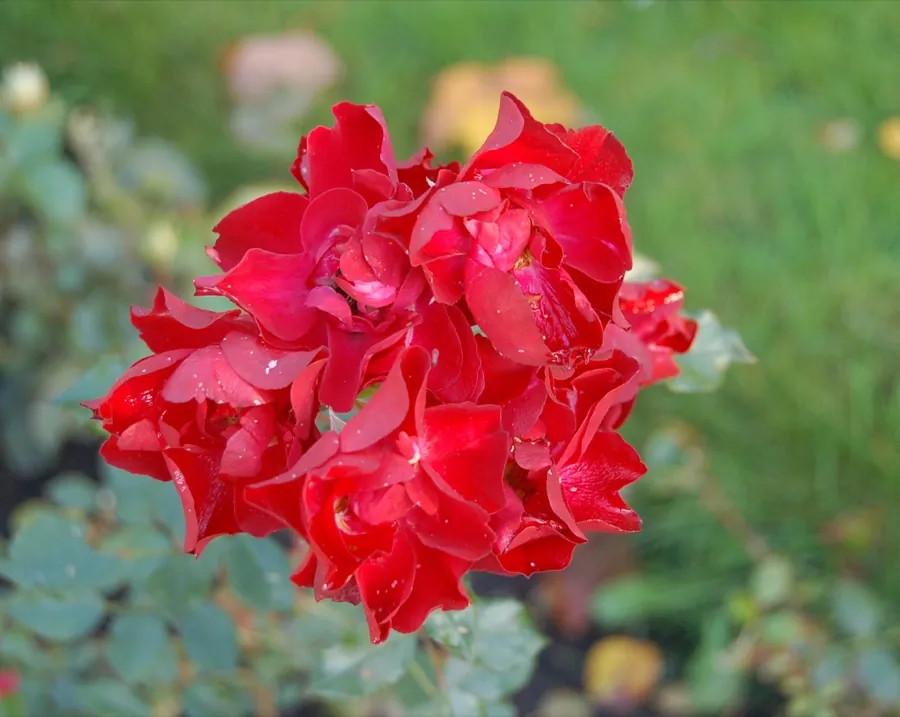
Semi-open cup with visible stamens — the typical semi-double Hybrid Musk form
Centre
Visible, with yellow stamens against a dark red background — dramatic contrast
Fullness
Semi-double, 9–16 petals — typical for Hybrid Musk
Flower carriage
Flowers in clusters — abundant sprays like classic Hybrid Musks

Fragrance

Light; no pronounced notes

Light — no pronounced notes; do not confuse with a «musk» scent — the name Hybrid Musk refers only to the genetic family, not necessarily to a musky fragrance.

Disease resistance

3 out of 5

Not systematically documented — 3/5 based on indirect observations.

Sun

Full sun

Thorns

Moderate
thornlessfewmoderatemanyvery many

Moderate number, typical for post-war Tantau roses.

Foliage

Dark green, leathery.

All characteristics in a table
Group
Hybrid Musk
Breeder
Mathias Tantau Jr.; Rosen Tantau, Germany, 1955
Bud shape
Round-oval, deep red
Open flower
Semi-open cup with visible stamens — the typical semi-double Hybrid Musk form
Centre
Visible, with yellow stamens against a dark red background — dramatic contrast
Colour
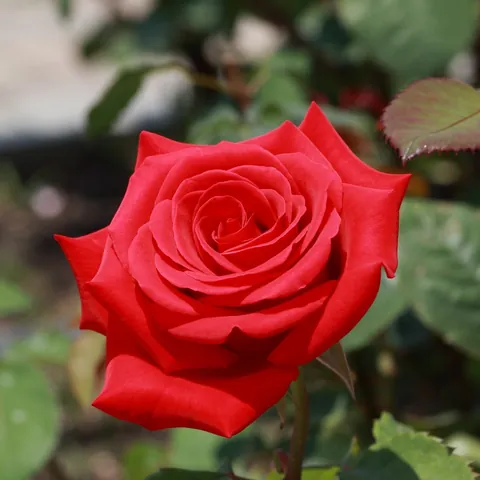
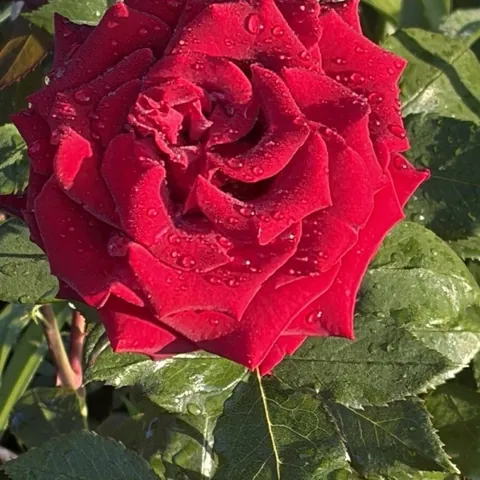
Intense medium red («medium red»), bright — without ink or maroon overtones, no ombré. The German name «Lichterloh» describes «blazing with flames» precisely, matching the intensity of the colour.
Fullness
Semi-double, 9–16 petals — typical for Hybrid Musk
Flower carriage
Flowers in clusters — abundant sprays like classic Hybrid Musks
Flowering
Repeat-flowering with pauses
Fragrance
Light — no pronounced notes; do not confuse with a «musk» scent — the name Hybrid Musk refers only to the genetic family, not necessarily to a musky fragrance
Hips
Not documented
Habit
Upright, moderately spreading — a transitional form between shrub roses and the floribundas of the 1950s
Branching
Good
Shoots
Sturdy, straight
Thorns
Moderate number, typical for post-war Tantau roses.
Dimensions
90–120 × 80–100 cm
Support
No support needed
Foliage
Dark green, leathery
Resistance
Not systematically documented — 3/5 based on indirect observations
Variations of the variety
Patent code not registered (the variety predates Tantau's modern code system); parentage Red Favorite × New Dawn (Somerset Rose Nursery 1930, the first patented plant in the USA); no international synonyms — «Lichterloh» is used in all countries

Colour scheme

Intense medium red («medium red»), bright — without ink or maroon overtones, no ombré. The German name «Lichterloh» describes «blazing with flames» precisely, matching the intensity of the colour.

Rose neighbours

Perennials to plant nearby

Neighbouring roses

The classic Hybrid Musk family — the largest 'wild' group in the catalogue:

Companion perennials

The classic cottage family — purple-blue tones soften the red:

lavenderdelphiniumsoft lady's mantleevening primrose

Availability worldwide

A historic variety from 1955, rarely found in modern nurseries:

🇩🇪 Germany: moderate · classic Tantau🇪🇺 Europe: low · collector's variety🇺🇸 USA: low🇺🇦 Ukraine: low · survives in old collections

More about the variety

Hips
Not documented
Variations of the variety
Patent code not registered (the variety predates Tantau's modern code system); parentage Red Favorite × New Dawn (Somerset Rose Nursery 1930, the first patented plant in the USA); no international synonyms — «Lichterloh» is used in all countries

How to grow

Where to plant. Historic and wild gardens, groups of Hybrid Musks (Felicia, Cornelia, Buff Beauty), collection gardens; as a specimen against a dark stone wall for contrast.

Climate. To −20 °C — in Ukraine with light protection in the north.

Care. Minimal — selective pruning as for shrub roses; standard seasonal disease prevention.

About the name

Name. «Lichterloh» — German adverb «blazing with flames, burning brightly». A purely descriptive name conveying the intensity of the flower's red colour. Unusual for Tantau, where most varieties carry melodious women's names (Landora, Anna Pavlova, Heidetraum). Here it is a dramatic, poetic epithet.

Breeding. Raised by Mathias Tantau Jr. at Rosen Tantau (Uetersen, Germany), 1955. No patent code registered — the variety predates Tantau's modern code system (TANxxx). Parentage: Red Favorite (Tantau 1951) × New Dawn (Somerset Rose Nursery 1930) — a daughter of the legendary «New Dawn», the first patented plant in the USA (US PP1, 1931). Through New Dawn it carries R. multiflora blood — hence its place among the Hybrid Musks.

Significance. One of the early post-war red Hybrid Musk Tantau varieties, a transitional form between shrub roses and the floribundas of the 1950s. The 11th Hybrid Musk in our catalogue, alongside Felicia (1928), Cornelia (1925), Buff Beauty (1939), Ballerina (1937), Danaë (1913), Heavenly Pink (Lens 1989), Bouquet Parfait (Lens 1989), Guirlande d'Amour (Lens 1993), Grand-Duc Jean (Lens 2010), Heimatmelodie (Tantau 2000) — the largest «wild» family in the catalogue. The ARS officially reclassified it from Floribunda back to Hybrid Musk in 2007. The ADR 1957 is often cited but is not documented in HMF. It has historical value and is now rarely found in modern nurseries.

Frequently asked questions about Lichterloh

Does Lichterloh need winter protection?

The cultivar’s reference temperature is −20 °C (USDA zone 6b). Overwintering depends on the conditions. In Ukraine with light protection in the north.

How many times a season does Lichterloh flower?

Repeat-flowering with pauses.

How big does Lichterloh grow?

90–120 cm tall, 80–100 cm wide.

Which diseases affect Lichterloh?

Overall resistance: 3 out of 5. Not systematically documented; typical of post-war HM Tantau roses.

How much sun does Lichterloh need?

Sun; full sun.

What does Lichterloh smell like?

Light — no pronounced notes; do not confuse with a «musk» scent — the name Hybrid Musk refers only to the genetic family, not necessarily to a musky fragrance.

Gardeners' photos and reviews

My climate

Choose a reference temperature to compare with the cultivar’s data. This is not an overwintering forecast or advice on winter protection; consider wind, moisture and the duration of frost.

Regional data are generalised. USDA describes average annual extreme minima, not a forecast; the values in the list are rounded. Check the conditions at your site. More information: Roses in Ukraine's climate.