



Back to catalogue
English Shrub; English Old Rose HybridDavid C. H. Austin Sr.; David Austin Roses, 2007Pink

Princess Alexandra of Kent

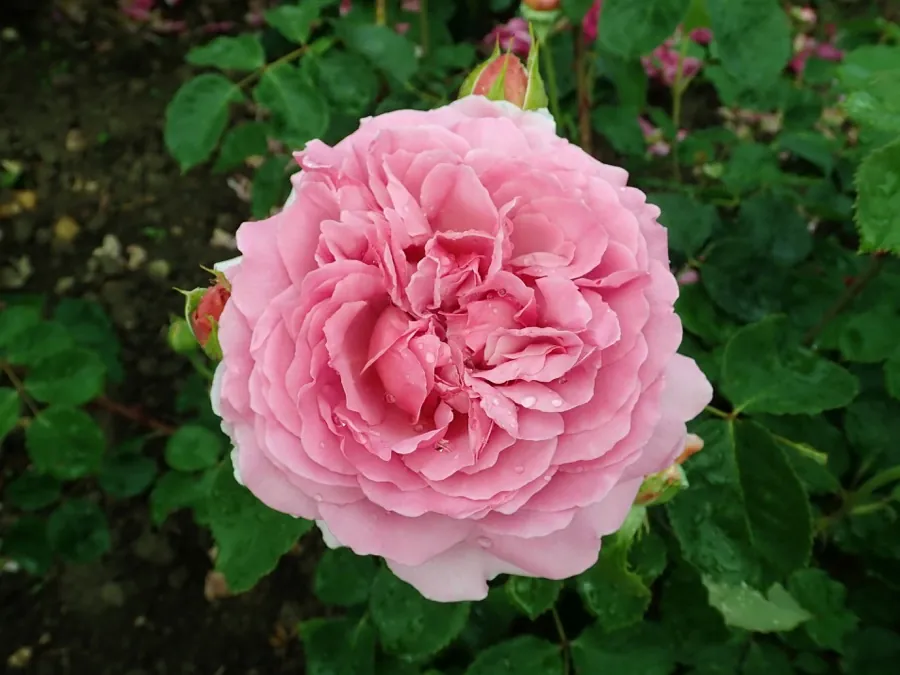
One of Austin's top bestsellers; about 130 petals — among the largest flowers of all English Roses; one of the most complex Austin scents: fresh tea, then lemon, and blackcurrant with age; named after Princess Alexandra of Kent (born 1936), a cousin of Queen Elizabeth II.

Austin bestseller · ~130 petals — among the largest Austin blooms

Variety profile

Flowering

Repeat, in flushes

Repeat-flowering from June to October, with a pronounced first flush. Months are approximate, for the climate of Ukraine.

Legacy

Austin 2007

Top bestseller · Austin 5-year guarantee

Winter hardiness

−34 °C

USDA zone 4–11. All of Ukraine; no winter protection needed.

Compare reference temperatures

Plant size

105–150 × 90–120 cm
person 170 cm105–150 cm
Habit
Rounded, well branched — a typical English Shrub
Dimensions
105–150 cm high × 90–120 cm wide — a medium-large English Shrub
Support
Not needed — self-supporting; the large, heavy flowers sometimes droop, so they can be tied in
Shoots
Strong, straight — they hold the large flowers well
Branching
Well branched, with strong stems

Flower

9–13 cm
Bud shape
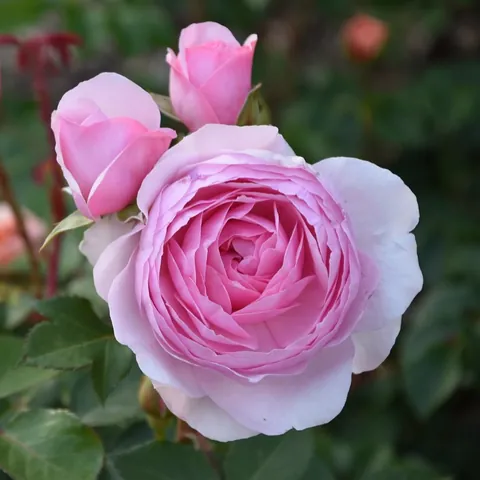
Rounded, warm light pink
Open flower
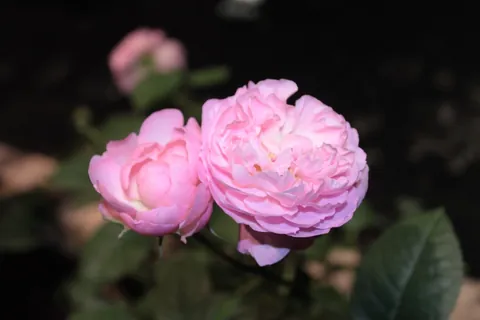
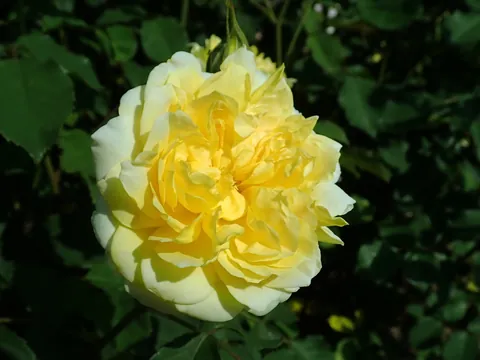
A deep cup with about 130 petals — among the largest flowers of all English Roses; a slow 'metamorphosis' opening
Centre
Tightly packed, with curled 'quartered' petals
Fullness
About 130 petals — a record among Austin roses
Flower carriage
In small clusters or singly on strong stems

Fragrance

Strong; complex; tea – lemon – blackcurrant

Strong and complex (5/5): it starts with a fresh tea note, moves to lemon, and as the flower ages, blackcurrant notes appear. One of the most complex and distinctive Austin-style scents.

Disease resistance

4 out of 5

Good, 4/5 — typical of modern Austins; USDA 4–11 according to Austin's data — suitable across Ukraine without winter protection.

Sun

Sun and shade

Full sun or light shade.

Thorns

Few
thornlessfewmoderatemanyvery many

Few thorns — typical of modern Austin-varieties.

Foliage

Dark green, semi-glossy — typical of modern Austins.

All characteristics in a table
Group
English Shrub; English Old Rose Hybrid
Breeder
David C. H. Austin Sr.; David Austin Roses, United Kingdom, 2007
Bud shape
Rounded, warm light pink
Open flower
A deep cup with about 130 petals — among the largest flowers of all English Roses; a slow 'metamorphosis' opening
Centre
Tightly packed, with curled 'quartered' petals
Colour
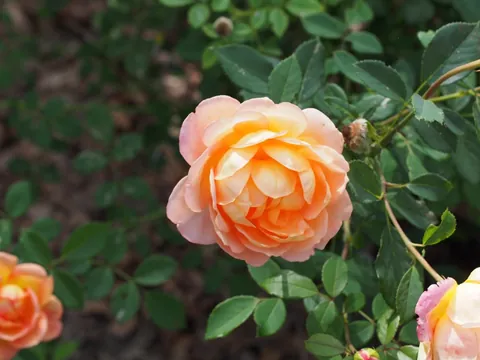
Warm 'glowing pink': the outer ring of petals is soft pink, the inner petals are a deeper pink. A layered colour gradation is a special feature of this variety
Fullness
About 130 petals — a record among Austin roses
Flower carriage
In small clusters or singly on strong stems
Flowering
Repeat-flowering from June to October, with a pronounced first flush
Fragrance
Strong and complex (5/5): it starts with a fresh tea note, moves to lemon, and as the flower ages, blackcurrant notes appear. One of the most complex and distinctive Austin-style scents
Hips
Not documented — spent flowers are removed to encourage repeat blooming
Habit
Rounded, well branched — a typical English Shrub
Branching
Well branched, with strong stems
Shoots
Strong, straight — they hold the large flowers well
Thorns
Few thorns — typical of modern Austin-varieties.
Dimensions
105–150 cm high × 90–120 cm wide — a medium-large English Shrub
Support
Not needed — self-supporting; the large, heavy flowers sometimes droop, so they can be tied in
Foliage
Dark green, semi-glossy — typical of modern Austins
Resistance
Good, 4/5 — typical of modern Austins; USDA 4–11 according to Austin's data — suitable across Ukraine without winter protection
Variations of the variety
Code AUSmerchant. Introduced 2007. Parentage not published (an Austin trade secret). A 5-year guarantee from David Austin Roses — a further sign of reliability

Colour scheme

Warm 'glowing pink': the outer ring of petals is soft pink, the inner petals are a deeper pink. A layered colour gradation is a special feature of this variety

Rose neighbours

Perennials to plant nearby

Neighbouring roses

Other Austin English Roses create one 'Austin corner':

Companion perennials

Classic English cottage palette:

lavenderlady's mantle (Alchemilla)catmint (Nepeta)lamb's ears (Stachys)

Availability worldwide

A top Austin bestseller of the last decade:

🇬🇧 UK: very high · home country🇺🇸 USA: high · Austin USA🇪🇺 Europe: high · via Austin Europe🇺🇦 Ukraine: high · via Austin partners

More about the variety

Hips
Not documented — spent flowers are removed to encourage repeat blooming
Variations of the variety
Code AUSmerchant. Introduced 2007. Parentage not published (an Austin trade secret). A 5-year guarantee from David Austin Roses — a further sign of reliability

How to grow

Where to plant. In English cottage gardens, at the front of borders (the flowers are large, so they are best seen up close); beside paths, terraces and benches, to enjoy its complex scent; a cutting shrub for romantic bouquets — the large rosette looks striking in a vase.

Climate. All of Ukraine without winter protection (USDA 4–11 according to Austin); one of the hardiest Austin roses; tolerates summer heat well.

Care. Full sun or light shade; a well-ventilated spot; feed 2× per season; prune about ⅓ in spring; tie in the large flowers if you wish; for cutting — the large rosette makes a fragrant arrangement.

About the name

Name. 'Princess Alexandra of Kent' — after Princess Alexandra of Kent (born 25.12.1936), a cousin of Queen Elizabeth II and daughter of Prince George, Duke of Kent. A well-known passionate gardener and rose lover. Her personal recommendation as patron of the British National Trust and the Royal Horticultural Society — in line with Austin's typical tradition of naming roses after British aristocratic women gardeners.

Breeding. Bred by David C. H. Austin Sr. at David Austin Roses (Albrighton, Great Britain). Code AUSmerchant. Introduced 2007. Parentage not published (a commercial secret for most Austin varieties). A 5-year guarantee from the grower — a further sign of reliability.

Significance. One of David Austin's top bestsellers, alongside Olivia Rose Austin, Lady of Shalott and Roald Dahl. About 130 petals — among the largest flowers of all English Roses — a record for fullness. One of the most complex Austin scents: a multi-stage change from tea to lemon to blackcurrant; a benchmark for a 'complex' Austin fragrance. A top example of 'glowing pink' in the Austin-series — a warm, bright pink with colour gradation. No major official awards (RHS AGM, ADR), but its bestseller status and Austin's 5-year guarantee confirm its practical value.

Frequently asked questions about Princess Alexandra of Kent

Does Princess Alexandra of Kent need winter protection?

The cultivar’s reference temperature is −34 °C (USDA zone 4–11). Overwintering depends on the conditions. All of Ukraine; no winter protection needed.

How many times a season does Princess Alexandra of Kent flower?

Repeat-flowering from June to October, with a pronounced first flush.

How big does Princess Alexandra of Kent grow?

105–150 cm tall, 90–120 cm wide.

Which diseases affect Princess Alexandra of Kent?

Overall resistance: 4 out of 5. Good; typical of modern Austin roses.

How much sun does Princess Alexandra of Kent need?

Sun and shade; full sun or light shade.

What does Princess Alexandra of Kent smell like?

Strong and complex (5/5): it starts with a fresh tea note, moves to lemon, and as the flower ages, blackcurrant notes appear. One of the most complex and distinctive Austin-style scents.

Gardeners' photos and reviews

My climate

Choose a reference temperature to compare with the cultivar’s data. This is not an overwintering forecast or advice on winter protection; consider wind, moisture and the duration of frost.

Regional data are generalised. USDA describes average annual extreme minima, not a forecast; the values in the list are rounded. Check the conditions at your site. More information: Roses in Ukraine's climate.