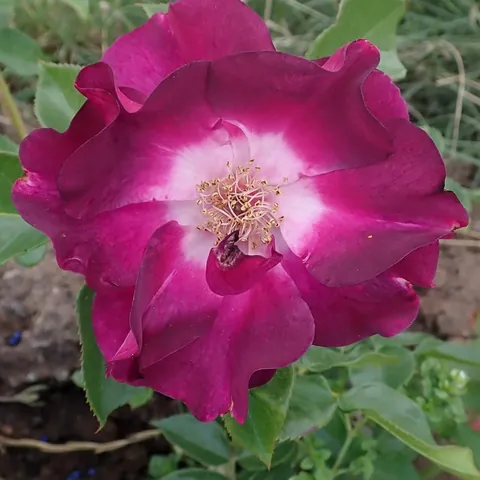
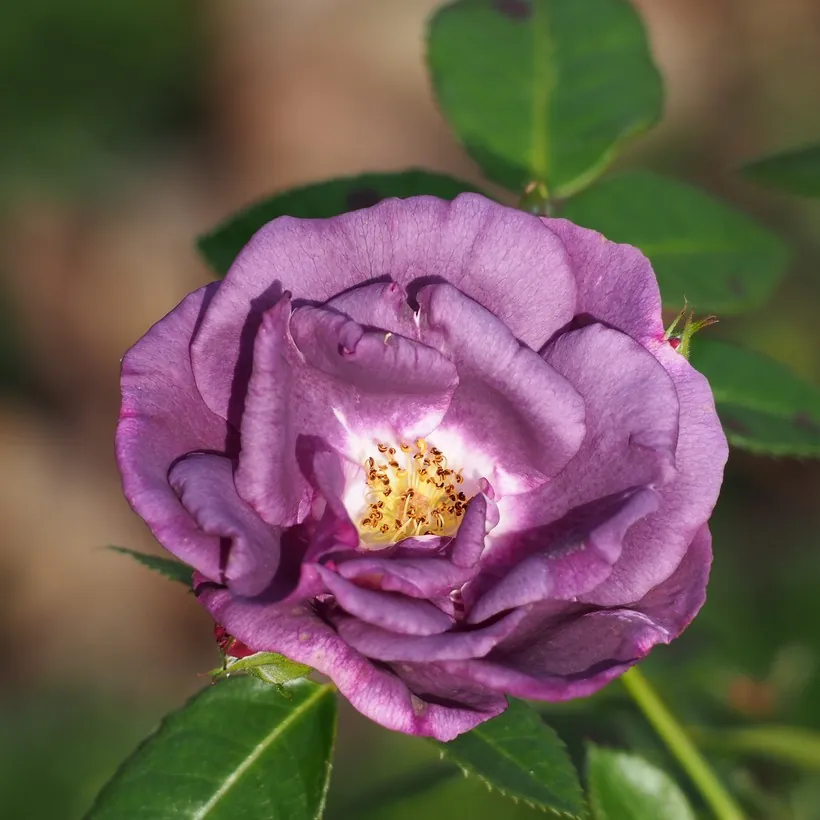
Rhapsody in Blue, close-up of the flower
Back to catalogue
Shrub (unusual colour)Cowlishaw, 2003Lilac and purple

Rhapsody in Blue

Smoky violet — one of the closest roses to 'blue'.

The 'almost blue' rose

Variety profile

Flowering

Repeat flowering

Repeat-flowering in summer and autumn. Months are approximate, for the climate of Ukraine.

Awards

Rose of the Year

2003 (Britain) · RHS AGM

Winter hardiness

−20 °C

To ≈ −20 °C; best in a cool climate.

Compare reference temperatures

Plant size

100–150 × 50–100 cm
person 170 cm100–150 cm
Habit
Upright, spreading, bushy
Dimensions
100–150 cm × 50–100 cm
Support
Not needed
Shoots
Straight
Branching
Good

Flower

≈ 7 cm

13–17 petals.

Bud shape
Pointed, dark purple
Open flower
Semi-double, cup-shaped, in small clusters; ~7 cm
Centre
A whitish 'eye' with yellow stamens
Fullness
Semi-double, 13–17 petals
Flower carriage
In small clusters
Flower durability
A unique 'almost blue' colour — rare among roses

Fragrance

Strong

Strong, spicy — clove and spice.

Disease resistance

3 out of 5
Black spotsusceptible

Susceptible to black spot; grows better in a temperate, cool climate.

Sun

Sun + partial shade

The colour holds better in partial shade.

Thorns

Moderate
thornlessfewmoderatemanyvery many

Thorn data incomplete.

Foliage

Glossy, medium green, deciduous.

Other names

Breeder's code FRAntasia.

All characteristics in a table
Group
Shrub (unusual colour)
Breeder
Cowlishaw, Britain, 2003
Bud shape
Pointed, dark purple
Open flower
Semi-double, cup-shaped, in small clusters; ~7 cm
Centre
A whitish 'eye' with yellow stamens
Colour
Smoky plum-purple, fading to grey-lilac ('slate blue')
Fullness
Semi-double, 13–17 petals
Flower carriage
In small clusters
Flowering
Repeat-flowering in summer and autumn
Fragrance
Strong, spicy — clove and spice
Flower durability
A unique 'almost blue' colour — rare among roses
Habit
Upright, spreading, bushy
Branching
Good
Shoots
Straight
Thorns
Thorn data incomplete.
Dimensions
100–150 cm × 50–100 cm
Support
Not needed
Foliage
Glossy, medium green, deciduous
Resistance
Susceptible to black spot; grows better in a temperate, cool climate
Use
Mixed borders, groups, planted along a fence as an unusual violet accent
Colour scheme

Smoky plum-purple, fading to grey-lilac ('slate blue')

Rose neighbours

Perennials to plant nearby

Neighbouring roses

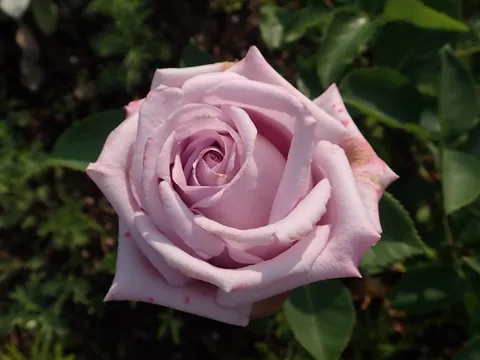
Violet and lavender roses keep a single 'twilight' palette around Rhapsody in Blue.

Perennial companions

Blue perennials intensify the violet-blue shimmer:

catmint (Nepeta)sageRussian sage (Perovskia)lavender

Contrasting accents

For contrast beside the violet, white or yellow accents:

white roseyellow accentsilver foliage

More about the variety

Use
Mixed borders, groups, planted along a fence as an unusual violet accent
How to grow

Where to plant. Mixed borders, groups, planted along a fence — an unusual violet accent that draws attention. Along a fence: plant no closer than ~1 m from a neighbouring bush, so the bushes have enough light and air.

Climate. Hardy (RHS H6, to ≈ −20 °C); best in a temperate, cool climate.

Care. Susceptible to black spot — preventive care and good ventilation are needed. The colour holds better in light partial shade.

About the name

Name. Named after George Gershwin's musical work 'Rhapsody in Blue' (1924).

Breeding. Bred by the amateur breeder Frank Cowlishaw (Britain), code FRAntasia; on sale from about 2003. Rose of the Year 2003, RHS AGM.

Significance. One of the closest garden roses to 'blue' without genetic modification — a smoky violet colour that almost no other variety has.

Frequently asked questions about Rhapsody in Blue

Does Rhapsody in Blue need winter protection?

The cultivar’s reference temperature is −20 °C. Overwintering depends on the conditions.

How many times a season does Rhapsody in Blue flower?

Repeat-flowering in summer and autumn.

How big does Rhapsody in Blue grow?

100–150 cm tall, 50–100 cm wide.

Which diseases affect Rhapsody in Blue?

Overall resistance: 3 out of 5. Susceptible to black spot — preventive care needed.

How much sun does Rhapsody in Blue need?

Sun + partial shade; the colour holds better in partial shade.

What does Rhapsody in Blue smell like?

Strong, spicy — clove and spice.

Gardeners' photos and reviews

My climate

Choose a reference temperature to compare with the cultivar’s data. This is not an overwintering forecast or advice on winter protection; consider wind, moisture and the duration of frost.

Regional data are generalised. USDA describes average annual extreme minima, not a forecast; the values in the list are rounded. Check the conditions at your site. More information: Roses in Ukraine's climate.