




About the name
Name. Named after Cardinal Armand-Jean du Plessis, Duke of Richelieu (1585–1642) — the powerful French statesman, chief minister of Louis XIII.
Breeding. Bred by Louis-Joseph-Ghislain Parmentier in Belgium (before 1847). The spread to France is credited to Jean Laffay (1840 — the year of introduction, not breeding). Parentage unknown — probably a triploid hybrid with Chinese rose blood, which explains the unusually dark colour among Gallicas.
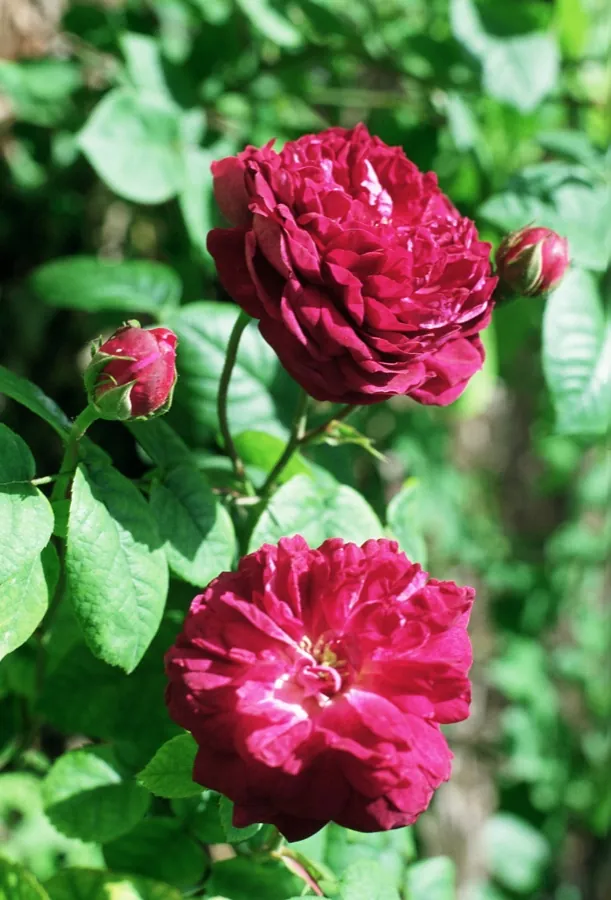
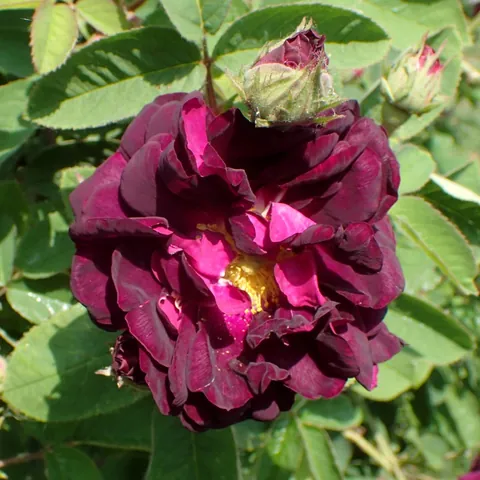
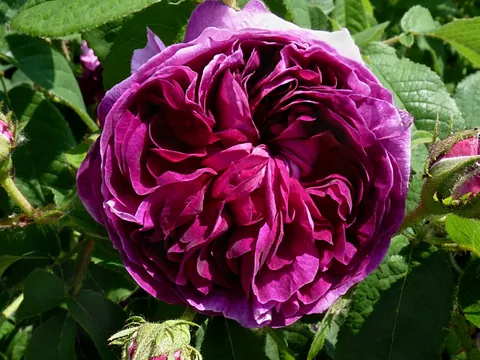
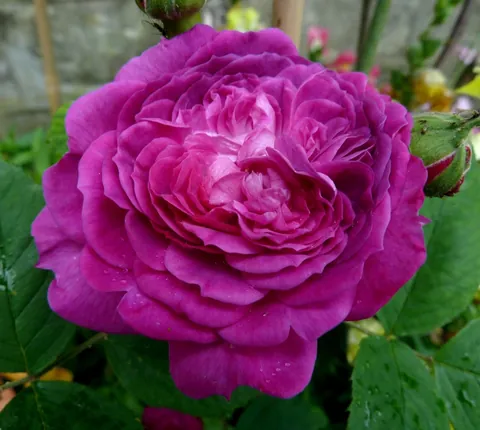
Significance. One of the classic 'dark' old garden roses. In the XIX century it was prized by the Parisian aristocracy for its 'revolutionary' dark colour. In the late XIX and early XX century the variety risked disappearing along with most old Gallicas, as fashion shifted to remontant and hybrid tea roses. Revival: in the mid-XX century Graham Stuart Thomas (1909–2003) saved the variety from extinction while working at the Hilling and Sunningdale nurseries, including it in the National Trust collection and in his classic book 'The Old Shrub Roses' (1955). Later Peter Beales included Cardinal de Richelieu in his English collection and in his book 'Classic Roses' (1985) as one of the darkest Gallicas. Today the variety is in all the canonical collections of old garden roses — Sangerhausen, L'Haÿ-les-Roses, Mottisfont Abbey. It won the ARS Dowager Rose Queen (2001) and the ARS Old Garden Rose Bloom Award (2020); it held the RHS Award of Garden Merit from 1993, but the award was later withdrawn.