


Back to catalogue
Hybrid Perpetual; Old Garden Rose; a historic classic of 1860Mille-Mallet, 1860Lilac and purple

Reine des Violettes

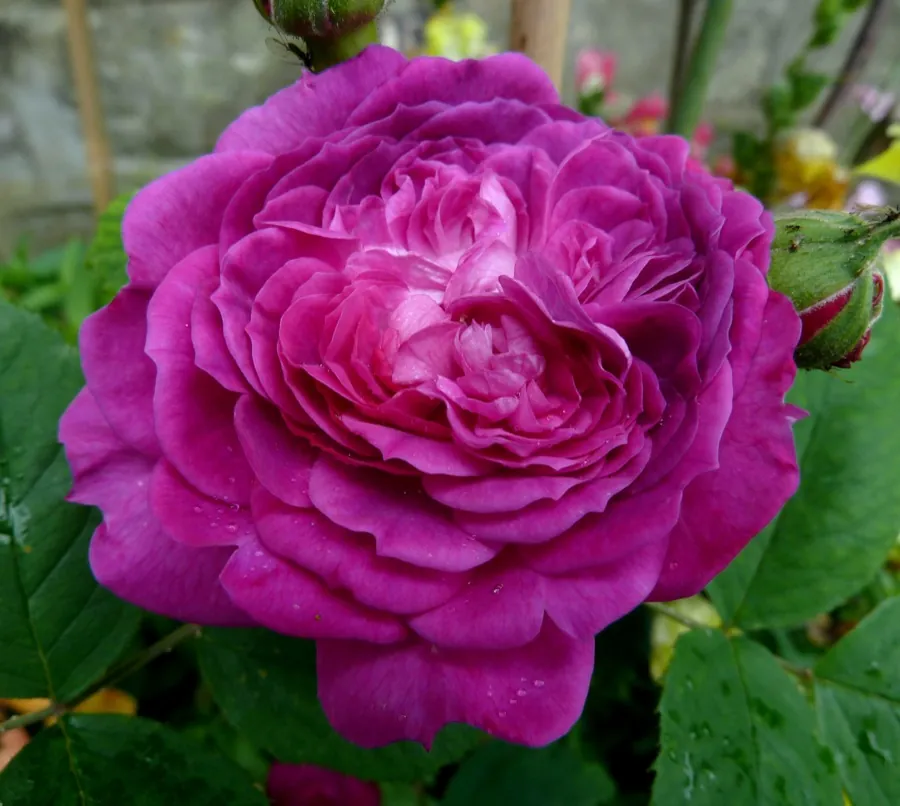
Violet-purple, fading to a moiré lilac / lilac-grey-pink as it finishes; one of the most fragrant old garden roses; 'Queen of the Violets' — for its unique violet colour; it replaced 'Red Piano' in the catalogue (Red Piano = a marketing synonym of Piano, a duplicate).

165 years of legendary status · a must in every collection of old garden roses

Variety profile

Flowering

Repeat flowering

Repeat-flowering from June to October — typical of Hybrid Perpetuals. Months are approximate, for the climate of Ukraine.

Legacy

Classic of 1860

Heritage Rose Foundation

Winter hardiness

−34 °C

USDA zone 4. All of Ukraine without protection!

Compare reference temperatures

Plant size

150–180 × 120 cm
person 170 cm150–180 cm
Habit
Vertical and vigorous; can be trained on a trellis up to 3 m
Dimensions
150–180 cm tall × 120 cm wide; up to 3 m when trained on a trellis
Support
Optionally — trellis, fence; as a bush it needs no support
Shoots
Flexible, almost thornless — rare for Old Garden Roses
Branching
Well branched, with flexible canes

Flower

7–9 cm
Bud shape
Round, dark violet
Open flower
Flat quartered: 7–9 cm, 60–75 petals, velvety texture
Centre
Tightly packed, with the characteristic 'quartered' petals — a typical Old Garden Rose form
Fullness
60–75 petals (very full)
Flower carriage
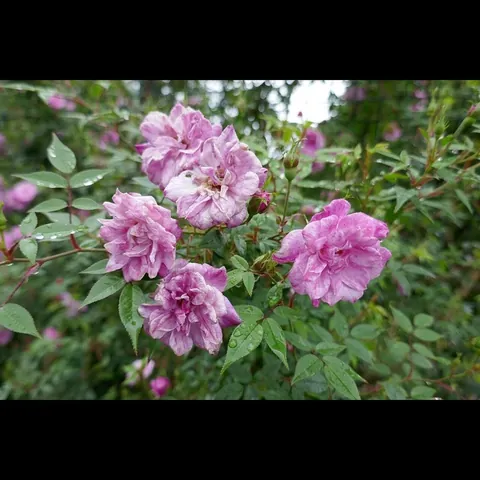
In small clusters of 3–5

Fragrance

Very strong; classic damask

Very strong, rich classic damask — one of the most fragrant of the old roses.

Disease resistance

3 out of 5
Black spotmoderate

Medium, 3/5 against black spot; needs good air circulation; USDA 4–9 hardiness — exceptional (to −34 °C), ideal for all of Ukraine without protection.

Sun

Sun + shade

Full sun or light shade.

Thorns

Thornless
thornlessfewmoderatemanyvery many

Almost thornless — a distinctive feature.

Foliage

Grey-green — an unusual combination with the violet-purple, typical of the Hybrid Perpetual XIX-century.

All characteristics in a table
Group
Hybrid Perpetual; Old Garden Rose; a historic classic of 1860
Breeder
Mille-Mallet, France, 1860
Bud shape
Round, dark violet
Open flower
Flat quartered: 7–9 cm, 60–75 petals, velvety texture
Centre
Tightly packed, with the characteristic 'quartered' petals — a typical Old Garden Rose form
Colour
Violet-purple, fading to a moiré lilac / lilac-grey-pink as it finishes; velvety texture. One of the most violet among old roses — a rarity among roses
Fullness
60–75 petals (very full)
Flower carriage
In small clusters of 3–5
Flowering
Repeat-flowering from June to October — typical of Hybrid Perpetuals
Fragrance
Very strong, rich classic damask — one of the most fragrant of the old roses
Hips
Not documented — typically cut
Habit
Vertical and vigorous; can be trained on a trellis up to 3 m
Branching
Well branched, with flexible canes
Shoots
Flexible, almost thornless — rare for Old Garden Roses
Thorns
Almost thornless — a distinctive feature.
Dimensions
150–180 cm tall × 120 cm wide; up to 3 m when trained on a trellis
Support
Optionally — trellis, fence; as a bush it needs no support
Foliage
Grey-green — an unusual combination with the violet-purple, typical of the Hybrid Perpetual XIX-century
Resistance
Medium, 3/5 against black spot; needs good air circulation; USDA 4–9 hardiness — exceptional (to −34 °C), ideal for all of Ukraine without protection
Variations of the variety
No official code (a historic variety of 1860, predating the code system). Breeder: Mille-Mallet (France). Introduced 1860. Parentage: a seedling of 'Pius IX' (Vibert 1849). The entry replaced 'Red Piano' in the catalogue — Red Piano turned out to be a marketing synonym of Piano (TAN01360, Tantau 2007), a duplicate of an existing entry

Colour scheme

Violet-purple, fading to a moiré lilac / lilac-grey-pink as it finishes; velvety texture. One of the most violet among old roses — a rarity among roses

Rose neighbours

Perennials to plant nearby

Neighbouring roses

Old Garden Roses + violet family — they create a 'historic violet corner':

Perennial companions

A classic violet, silver-grey palette:

lavenderlamb's ear (Stachys)Russian sage (Perovskia)lady's mantle (Alchemilla)

Availability worldwide

A legendary variety, a must in every collection of old garden roses:

  • 🇫🇷 France: high · origin 1860
  • 🇬🇧 UK: high · Peter Beales, David Austin Heritage
  • 🇺🇸 USA: high · Heirloom Roses, Rogue Valley
  • 🇺🇦 Ukraine: moderate · specialist Old Roses nurseries

More about the variety

Hips
Not documented — typically cut
Variations of the variety
No official code (a historic variety of 1860, predating the code system). Breeder: Mille-Mallet (France). Introduced 1860. Parentage: a seedling of 'Pius IX' (Vibert 1849). The entry replaced 'Red Piano' in the catalogue — Red Piano turned out to be a marketing synonym of Piano (TAN01360, Tantau 2007), a duplicate of an existing entry

How to grow

Where to plant. In historic cottage-style plantings; as a 'central' fragrant accent; on a trellis or fence up to 3 m; in 'Victorian' corners of the garden; an essential part of an Old Garden Roses collection, together with Old Blush, Ophelia and Souvenir de la Malmaison.

Climate. All of Ukraine without protection (USDA 4–9, to −34 °C — exceptionally hardy among Old Garden Roses); copes well with summer heat.

Care. Full sun or light shade; good air circulation is essential (prevention of black spot); feed 2× per season; prune ¼ in spring (Hybrid Perpetuals do not like hard pruning); fragrant — plant beside paths and benches.

About the name

Name. 'Reine des Violettes' = 'Queen of the Violets'. For its unique violet-mauve colour, rare among roses (most 'purple' varieties are actually lilac or lavender). A poetic French name from the Old Garden Roses XIX-century tradition. Synonym 'Queen of the Violets' in English-language catalogues.

Breeding. Bred by Mille-Mallet (France) in 1860. Parentage: a seedling of 'Pius IX' (Vibert 1849) — Pius IX was the Pope (1846–1878). Classification: Hybrid Perpetual — one of the leading groups of XIX-century old roses (the precursors of modern HTs). The entry replaced 'Red Piano' in the catalogue: Red Piano turned out to be a marketing synonym of Piano (TAN01360, Tantau 2007), a duplicate of an existing Piano-entry.

Significance. One of the most fragrant old garden roses — a classic rich damask scent that shaped the whole of modern rose perfumery. A legendary variety, essential in every old-rose collection — recommended by most Old Garden Roses societies (Heritage Rose Foundation). Exceptional USDA 4–9 hardiness — ideal for all of Ukraine without protection, rare among Old Garden Roses. The 'Pewter' fading from violet to lilac / grey-pink is a distinctive feature, valued by florists for 'vintage' bouquets. 165 years of legendary status — one of the few XIX-century varieties that remains popular today. NOT in the WFRS Old Rose Hall of Fame (the Old Rose HoF list has only 5 varieties — Cécile Brünner, Gloire de Dijon, Gruss an Teplitz, Old Blush, Souvenir de la Malmaison) — a common myth in secondary catalogues.

Frequently asked questions about Reine des Violettes

Does Reine des Violettes need winter protection?

The cultivar’s reference temperature is −34 °C (USDA zone 4). Overwintering depends on the conditions. All of Ukraine without protection!

How many times a season does Reine des Violettes flower?

Repeat-flowering from June to October — typical of Hybrid Perpetuals.

How big does Reine des Violettes grow?

150–180 cm tall, about 120 cm wide.

Which diseases affect Reine des Violettes?

Overall resistance: 3 out of 5. Medium; needs good air circulation.

How much sun does Reine des Violettes need?

Sun + shade; full sun or light shade.

What does Reine des Violettes smell like?

Very strong, rich classic damask — one of the most fragrant of the old roses.

Gardeners' photos and reviews

My climate

Choose a reference temperature to compare with the cultivar’s data. This is not an overwintering forecast or advice on winter protection; consider wind, moisture and the duration of frost.

Regional data are generalised. USDA describes average annual extreme minima, not a forecast; the values in the list are rounded. Check the conditions at your site. More information: Roses in Ukraine's climate.