

Back to catalogue
Shrub / Floribunda; Vigorosa® groundcover seriesReimer Kordes; W. Kordes' Söhne, 1991Lilac and purple

Roseberry Blanket

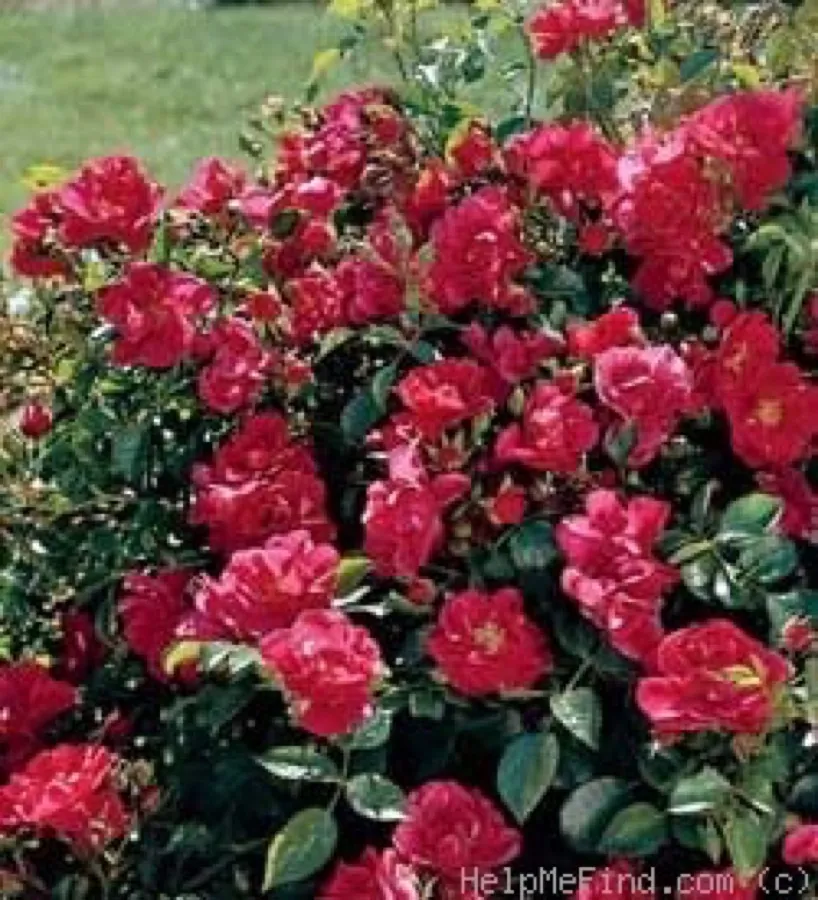
A purple-raspberry groundcover shrub; Vigorosa® Kordes series — high-resistance landscape varieties; a “berry-pink blanket”; breeder Reimer Kordes 1991 (NOT Mehring 1999 — a common myth in catalogues).

Kordes 1991 (NOT Mehring 1999)

Variety profile

Flowering

Repeat flowering

Repeat-flowering from June to October — generous. Months are approximate, for the climate of Ukraine.

Use

Landscape

Vigorosa® · borders, slopes, containers

Winter hardiness

−26 °C

USDA zone 5b-9. All of Ukraine, no cover needed.

Compare reference temperatures

Plant size

60–90 × 50–70 cm
person 170 cm60–90 cm
Habit
Groundcover habit — low and spreading
Dimensions
60–90 cm tall × 50–70 cm wide — groundcover
Support
Not needed — self-supporting
Shoots
Flexible, arching
Branching
Well branched

Flower

≈ 7.5 cm

15-20 petals.

Bud shape
Round, purple-raspberry
Open flower
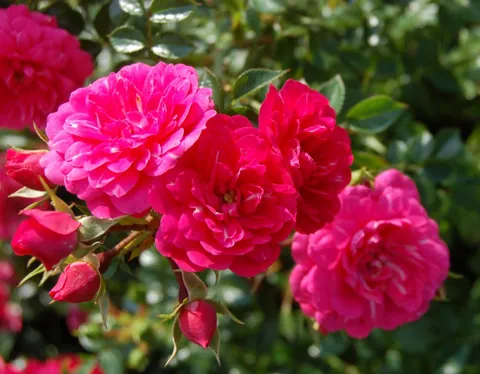
Semi-double: 15–20 petals, ~7.5 cm, in dense clusters
Centre
Open, with visible yellow stamens — a contrast to the purple-raspberry
Fullness
15–20 petals (semi-double)
Flower carriage
In dense clusters — typical of Floribunda Kordes

Fragrance

Light; a mild spicy scent

Light, mildly spicy / almost none.

Disease resistance

5 out of 5

Maximum 5/5: the Kordes Vigorosa® series — a line of high-resistance landscape varieties; drought- and heat-tolerant.

Sun

Drought-tolerant

Heat-tolerant.

Thorns

Few
thornlessfewmoderatemanyvery many

Few thorns — typical of Kordes Vigorosa®.

Foliage

Dark green, glossy — healthy, typical of Vigorosa®.

Other names

Purple Kiss, Raspberry Balconia, Raspberry Blanket, Raspberry Vigorosa
All characteristics in a table
Group
Shrub / Floribunda; Vigorosa® groundcover series
Breeder
Reimer Kordes; W. Kordes' Söhne, Germany, 1991
Bud shape
Round, purple-raspberry
Open flower
Semi-double: 15–20 petals, ~7.5 cm, in dense clusters
Centre
Open, with visible yellow stamens — a contrast to the purple-raspberry
Colour
Violet-red to rich fuchsia-pink with yellow stamens — a deep berry tone
Fullness
15–20 petals (semi-double)
Flower carriage
In dense clusters — typical of Floribunda Kordes
Flowering
Repeat-flowering from June to October — generous
Fragrance
Light, mildly spicy / almost none
Hips
Not documented — usually cut
Habit
Groundcover habit — low and spreading
Branching
Well branched
Shoots
Flexible, arching
Thorns
Few thorns — typical of Kordes Vigorosa®.
Dimensions
60–90 cm tall × 50–70 cm wide — groundcover
Support
Not needed — self-supporting
Foliage
Dark green, glossy — healthy, typical of Vigorosa®
Resistance
Maximum 5/5: the Kordes Vigorosa® series — a line of high-resistance landscape varieties; drought- and heat-tolerant
Variations of the variety
Code KORtwente (other: KO 91/2520-01). Synonyms: Purple Kiss, Raspberry Balconia®, Raspberry Blanket, Raspberry Vigorosa™. Breeder: Reimer Kordes. Introduced 1991. Common myth: sometimes attributed to Mehring 1999 — this is wrong; the true data are Kordes 1991

Colour scheme

Violet-red to rich fuchsia-pink with yellow stamens — a deep berry tone

Rose neighbours

Perennials to plant nearby

Neighbouring roses

Kordes landscape roses + Meidiland create a 'low-maintenance carpet':

Perennial companions

Violet-silver perennials set off the fuchsia-raspberry:

lavenderlamb's ears (Stachys)Perovskiasedum

Availability worldwide

The Kordes Vigorosa® series:

🇩🇪 Germany: high · Rosen.de🇪🇺 Europe: high · landscape segment🇺🇸 USA: moderate · Stark Bro's, Weston, Wasco🇺🇦 Ukraine: moderate · through Kordes partners

More about the variety

Hips
Not documented — usually cut
Variations of the variety
Code KORtwente (other: KO 91/2520-01). Synonyms: Purple Kiss, Raspberry Balconia®, Raspberry Blanket, Raspberry Vigorosa™. Breeder: Reimer Kordes. Introduced 1991. Common myth: sometimes attributed to Mehring 1999 — this is wrong; the true data are Kordes 1991

How to grow

Where to plant. As groundcover on slopes and in shaded spots; in borders; in containers; in park plantings; ideal for low-maintenance mass planting.

Climate. All of Ukraine without cover (USDA 5b–9); drought- and heat-tolerant — undemanding.

Care. Full sun; minimal care thanks to the Vigorosa® series; feed 2× per season; prune ⅓ in spring.

About the name

Name. “Roseberry Blanket” = “berry-pink blanket”. The name combines “rose-berry” (berry-pink, like raspberry or blackberry) and “blanket” — it captures the character of the variety: a landscape groundcover with a purple-raspberry colour.

Breeding. Bred by Reimer Kordes at W. Kordes' Söhne (Sparrieshoop, Germany). Code KORtwente (another internal code: KO 91/2520-01). Introduced 1991. Parentage not published. The Vigorosa® series is Kordes' line of landscape high-resistance varieties (Pink Vigorosa, White Vigorosa, Lupo, Innocencia). A common myth in catalogues: sometimes it is attributed to Mehring 1999 — this is wrong; the true data are Kordes 1991.

Significance. One of the key varieties of Kordes' Vigorosa® series — the flagship landscape shrub line of the 1990s. 4 synonyms in different markets: Roseberry Blanket, Purple Kiss, Raspberry Balconia®, Raspberry Blanket, Raspberry Vigorosa™ — typical for Kordes' landscape series. Very high resistance, 5/5 — typical for Vigorosa®. A unique fuchsia-purple colour — rare for groundcovers (most are pink or white). Heat- and drought-tolerant — good for southern regions. An ADR mark is not documented specifically for this variety, but the Vigorosa® series is positioned as an ADR-quality range.

Frequently asked questions about Roseberry Blanket

Does Roseberry Blanket need winter protection?

The cultivar’s reference temperature is −26 °C (USDA zone 5b−9). Overwintering depends on the conditions. All of Ukraine, no cover needed.

How many times a season does Roseberry Blanket flower?

Repeat-flowering from June to October — generous.

How big does Roseberry Blanket grow?

60–90 cm tall, 50–70 cm wide.

Which diseases affect Roseberry Blanket?

Overall resistance: 5 out of 5. Vigorosa® series; very high.

How much sun does Roseberry Blanket need?

Sun; drought-tolerant; heat-tolerant.

What does Roseberry Blanket smell like?

Light, mildly spicy / almost none.

Gardeners' photos and reviews

My climate

Choose a reference temperature to compare with the cultivar’s data. This is not an overwintering forecast or advice on winter protection; consider wind, moisture and the duration of frost.

Regional data are generalised. USDA describes average annual extreme minima, not a forecast; the values in the list are rounded. Check the conditions at your site. More information: Roses in Ukraine's climate.