



Back to catalogue
Hybrid Tea; quartered “old-fashioned” formMeilland International, 2000Red

Rouge Royale

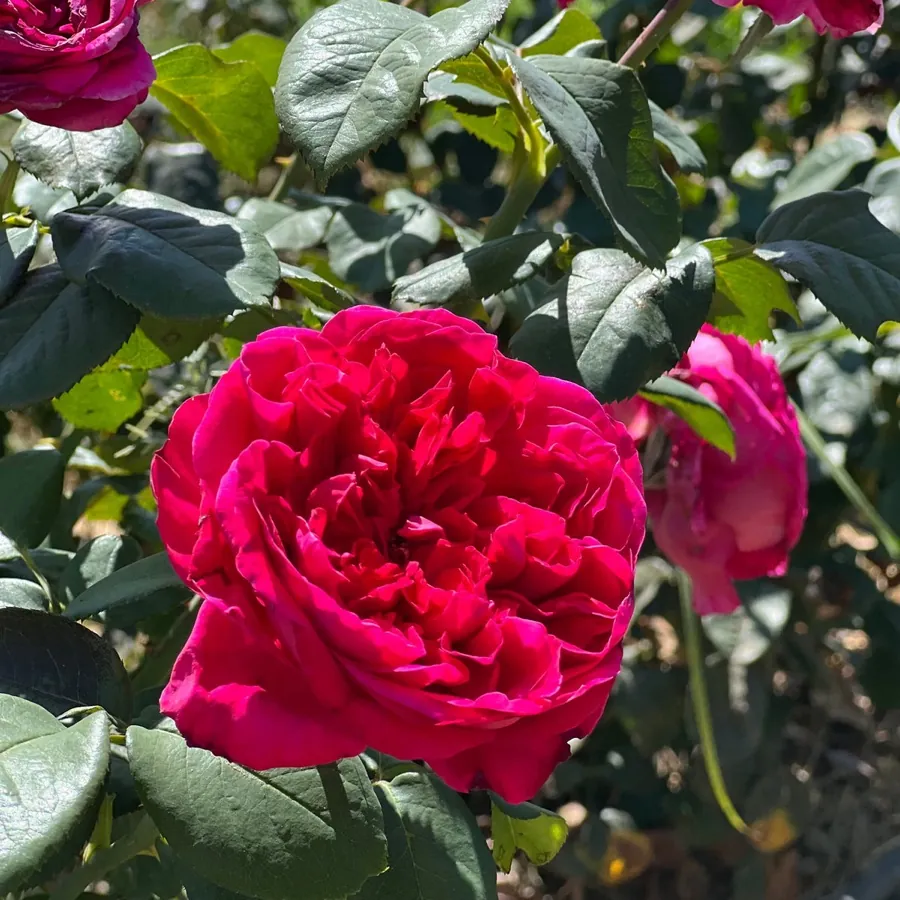
Raspberry-red with a quartered “old-fashioned” form; Rose Hills International Fragrance Award 2003; 75–80 petals — record fullness; strong fruity fragrance — citrus plus fresh berries; replaced the phantom rhodos (a variety from De Ruiter, bred for cutting but also grown in gardens).

US PP14039 · Rose Hills International Fragrance Award 2003

Variety profile

Flowering

Repeat, in flushes

Repeat-flowering from spring to autumn — generous flushes. Months are approximate, for the climate of Ukraine.

Legacy

Rose Hills Fragrance 2003

US PP14039 · Meilland couture line

Winter hardiness

−20 °C

USDA zone 6-10. Central/South, without cover.

Compare reference temperatures

Plant size

120–150 × 60–90 cm
person 170 cm120–150 cm
Habit
Upright, bushy
Dimensions
120–150 cm tall × 60–90 cm wide — a typical HT for borders
Support
Not needed — self-supporting
Shoots
Sturdy, upright
Branching
Well branched with sturdy stems

Flower

≈ 12 cm

75-80 petals.

Bud shape
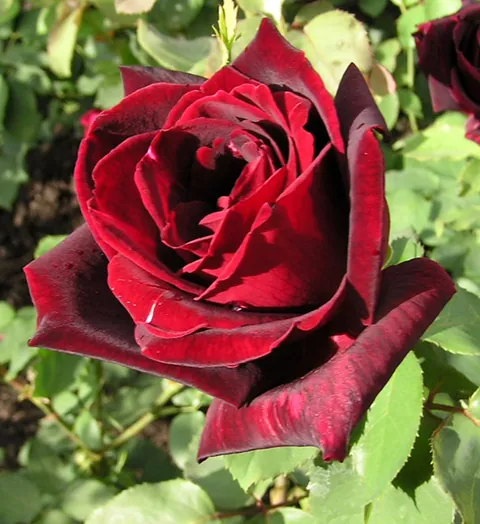
Deep burgundy, dark — a contrasting base
Open flower
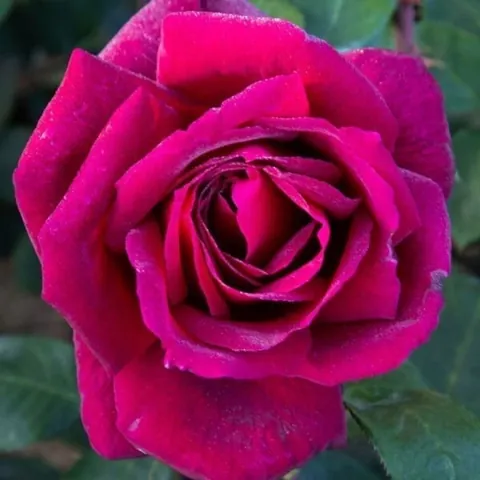
Quartered old-fashioned form: ~12 cm, very double, with curled petals. Classic romantic look
Centre
Tightly packed, with “quartered” curled petals
Fullness
75–80 petals — record fullness among modern HTs
Flower carriage
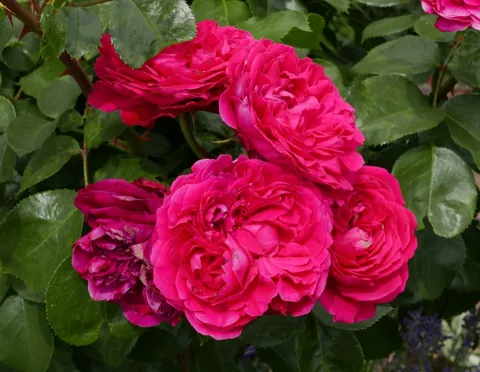
Singly or in small clusters

Fragrance

Strong; fruity citrus-berry

Strong fruity — citrus and fresh berries — winner of the Rose Hills International Fragrance Award 2003. One of the most complex scents among modern HTs.

Disease resistance

4 out of 5

Good 4/5: glossy foliage stable in heat and rain; USDA 6–10.

Sun

Good in heat and rain

Thorns

Moderate
thornlessfewmoderatemanyvery many

Moderate number of thorns — typical of modern HTs.

Foliage

Glossy dark green — healthy, good contrast to the dark raspberry.

All characteristics in a table
Group
Hybrid Tea; quartered “old-fashioned” form
Breeder
Meilland International, France, 2000
Bud shape
Deep burgundy, dark — a contrasting base
Open flower
Quartered old-fashioned form: ~12 cm, very double, with curled petals. Classic romantic look
Centre
Tightly packed, with “quartered” curled petals
Colour
Raspberry-red — bright raspberry-red; opens from burgundy buds. Classic romantic colour
Fullness
75–80 petals — record fullness among modern HTs
Flower carriage
Singly or in small clusters
Flowering
Repeat-flowering from spring to autumn — generous flushes
Fragrance
Strong fruity — citrus and fresh berries — winner of the Rose Hills International Fragrance Award 2003. One of the most complex scents among modern HTs
Hips
Not documented — cut for repeat blooming
Habit
Upright, bushy
Branching
Well branched with sturdy stems
Shoots
Sturdy, upright
Thorns
Moderate number of thorns — typical of modern HTs.
Dimensions
120–150 cm tall × 60–90 cm wide — a typical HT for borders
Support
Not needed — self-supporting
Foliage
Glossy dark green — healthy, good contrast to the dark raspberry
Resistance
Good 4/5: glossy foliage stable in heat and rain; USDA 6–10
Variations of the variety
Code MEIkarouz. US Plant Patent PP14039. Introduced 2000. Parentage not published (Meilland's trade secret). The entry replaced Rhodos in the catalogue — Rhodos (De Ruiter ~2014) turned out to be a commercial cut-flower variety — bred for cutting, but also grows in open ground

Colour scheme

Raspberry-red — bright raspberry-red; opens from burgundy buds. A classic romantic colour

Rose neighbours

Perennials to plant nearby

Neighbouring roses

Fragrant deep reds create a 'perfume collection':

Perennial companions

Silver-pastel perennials set off the deep red:

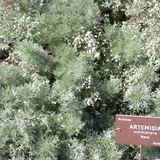
Stachys (lamb's ears)gypsophilalavenderartemisia

Availability worldwide

A popular modern Meilland variety:

  • 🇫🇷 France: high · Meilland-Richardier
  • 🇺🇸 USA: high · Edmunds, Star Roses
  • 🇪🇺 Europe: high
  • 🇺🇦 Ukraine: moderate · through Meilland partners

More about the variety

Hips
Not documented — cut for repeat blooming
Variations of the variety
Code MEIkarouz. US Plant Patent PP14039. Introduced 2000. Parentage not published (Meilland's trade secret). The entry replaced Rhodos in the catalogue — Rhodos (De Ruiter ~2014) turned out to be a commercial cut-flower variety — bred for cutting, but also grows in open ground

How to grow

Where to plant. In fragrant borders, along paths, benches and entrances — to enjoy the complex fruity scent; as a cut-flower bush for home bouquets — the quartered form looks stunning in a vase; as a “romantic accent” in a Romantica-style corner.

Climate. Central/South Ukraine without cover (USDA 6–10); good in heat and rain.

Care. Full sun; a well-ventilated spot; moderate disease prevention; feed 3× per season; prune ⅓ in spring.

About the name

Name. “Rouge Royale” = “Royal Red”. A classic French marketing name that conveys the elegance and nobility of the dark raspberry colour. Meilland's tradition of giving top flagship varieties “royal” epithets (Rouge Royale, Pierre de Ronsard, etc.).

Breeding. Bred at Meilland International (France), one of the world's leading rose houses. Code MEIkarouz. US Plant Patent PP14039. Introduced 2000. Parentage not published (Meilland's trade secret). The entry replaced Rhodos in the catalogue: Rhodos (De Ruiter ~2014) turned out to be a commercial cut-flower variety from De Ruiter — bred for cutting, but also grown in open ground.

Significance. Rose Hills International Fragrance Award 2003 (International Rose Trials, California) — a prestigious award for fragrance. Parentage not published, but classified as a top Meilland Hybrid Tea of the 2000s. 75–80 petals in a quartered old-fashioned form — a rare combination of modern awards with a nostalgic form. A strong fruity scent of citrus and berries — a complex composition, rare for red HTs (most have no scent). Glossy foliage that copes well with heat and rain, typical of modern Meilland-type varieties. An excellent choice for gardeners who want a red classic with fragrance, without the problems of old HTs.

Frequently asked questions about Rouge Royale

Does Rouge Royale need winter protection?

The cultivar’s reference temperature is −20 °C (USDA zone 6−10). Overwintering depends on the conditions. Central/South, without cover.

How many times a season does Rouge Royale flower?

Repeat-flowering from spring to autumn — generous flushes.

How big does Rouge Royale grow?

120–150 cm tall, 60–90 cm wide.

Which diseases affect Rouge Royale?

Overall resistance: 4 out of 5. Glossy foliage; good against disease.

How much sun does Rouge Royale need?

Sun; good in heat and rain.

What does Rouge Royale smell like?

Strong fruity — citrus and fresh berries — winner of the Rose Hills International Fragrance Award 2003. One of the most complex scents among modern HTs.

Gardeners' photos and reviews

My climate

Choose a reference temperature to compare with the cultivar’s data. This is not an overwintering forecast or advice on winter protection; consider wind, moisture and the duration of frost.

Regional data are generalised. USDA describes average annual extreme minima, not a forecast; the values in the list are rounded. Check the conditions at your site. More information: Roses in Ukraine's climate.