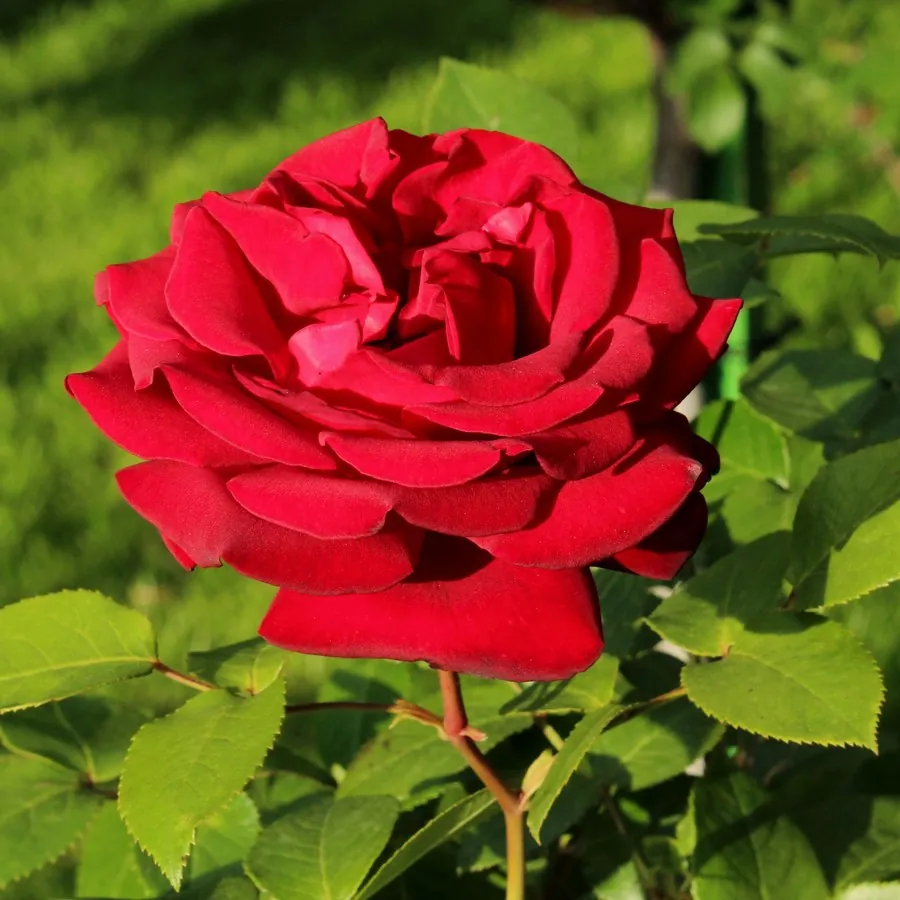
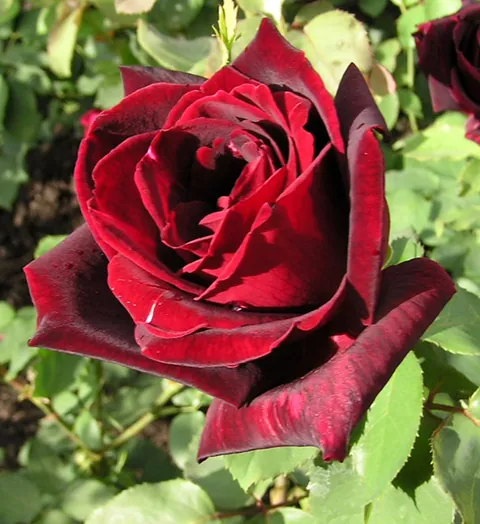
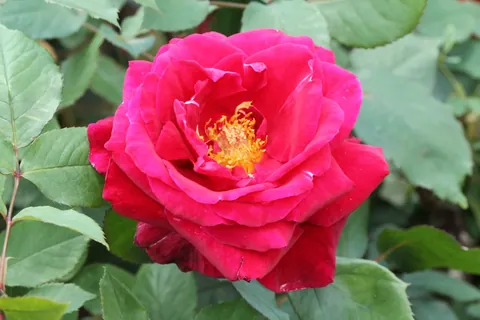
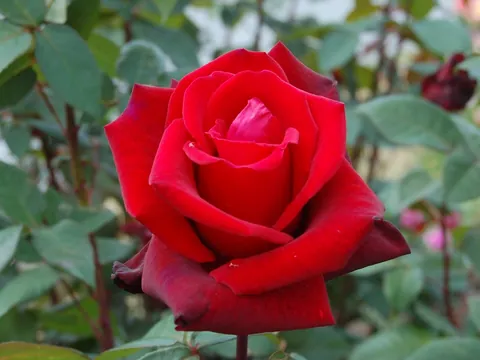




Royal William, close-up of the flower
Photo: Anna reg, CC BY-SA 3.0
Back to catalogue
Hybrid TeaReimer Kordes; W. Kordes' Söhne, 1980Red

Royal William

A velvety blood-crimson hybrid tea with a large goblet-shaped flower; strong award-winning fragrance; mostly solitary flowers on long sturdy stems — an excellent cut rose; British Rose of the Year 1987.

Variety profile

Flowering

Repeat, in flushes

Repeat-flowering, in flushes through summer and autumn. Months are approximate, for the climate of Ukraine.

Awards

Rose of the Year 1987

Britain · RHS Best of the Best 1987 · AGM (1993) · fragrance awards: Monza 1985, The Hague 1987

Winter hardiness

−20 °C

USDA zone 6b. ~−20 °C; RHS H6; HMF more cautious: 7b+; needs winter protection (standard for HTs). ~−20 °C · RHS H6 · HMF more cautious from 7b+ · needs winter protection (standard for Hybrid Teas).

Compare reference temperatures

Plant size

75–125 × 60–75 cm
person 170 cm75–125 cm
Habit
Vigorous and upright — the plant holds its shape without support
Dimensions
75–125 × 60–75 cm
Support
Not needed — an upright, vigorous HT
Shoots
Long sturdy stems — flowers mostly solitary, convenient for cutting
Branching
No data

Flower

≈ 13 cm

30–35 petals.

Bud shape
Large, pointed; buds even darker than the open flower — deep velvety red
Open flower
Large goblet-shaped, high-centred (classic exhibition HT form); diameter ~13 cm
Centre
High, full — the typical high-centred silhouette of a hybrid tea
Fullness
30–35 petals
Flower carriage
Mostly singly on long sturdy stems — so it is a good cut rose

Fragrance

Strong; rich, with warm spicy-sweet notes

Strong, rich, with warm spicy-sweet notes. Recognised with fragrance awards (Monza 1985, The Hague 1987).

Disease resistance

4 out of 5
Black spotsusceptiblePowdery mildewsusceptible

Two versions (see the “Disease resistance” tile): from “very resistant” to “possible vulnerability to black spot and powdery mildew”.

Sun

No data

The sources do not report fading of the flower.

Thorns

Moderate
thornlessfewmoderatemanyvery many

Thorniness is not detailed separately — a medium level is assumed, typical of vigorous HTs.

Foliage

Dark green.

Other names

Duftzauber '84, Fragrant Charm, Leonora Christine, La Magie du Parfum
All characteristics in a table
Group
Hybrid Tea
Breeder
Reimer Kordes; W. Kordes' Söhne, Germany, 1980
Bud shape
Large, pointed; buds even darker than the open flower — deep velvety red
Open flower
Large goblet-shaped, high-centred (classic exhibition HT form); diameter ~13 cm
Centre
High, full — the typical high-centred silhouette of a hybrid tea
Colour
Dark red, velvety blood-crimson (deep velvety crimson); buds are darker still. No data on fading — the sources do not describe it
Fullness
30–35 petals
Flower carriage
Mostly singly on long sturdy stems — so it is a good cut rose
Flowering
Repeat-flowering, in flushes through summer and autumn
Fragrance
Strong, rich, with warm spicy-sweet notes. Recognised with fragrance awards (Monza 1985, The Hague 1987)
Hips
No data
Habit
Vigorous and upright — the plant holds its shape without support
Branching
No data
Shoots
Long sturdy stems — flowers mostly solitary, convenient for cutting
Thorns
Thorniness is not detailed separately — a medium level is assumed, typical of vigorous HTs.
Dimensions
75–125 × 60–75 cm
Support
Not needed — an upright, vigorous HT
Foliage
Dark green
Resistance
Two versions (see the “Disease resistance” tile): from “very resistant” to “possible vulnerability to black spot and powdery mildew”
Variations of the variety
Code KORzaun; synonyms Duftzauber '84, Fragrant Charm, Leonora Christine, La Magie du Parfum

Colour scheme

Dark red, velvety blood-crimson (deep velvety crimson); buds are darker still. No data on fading — the sources do not describe it

Rose neighbours

Perennials to plant nearby

Neighbouring roses

Velvety dark-red fragrant Hybrid Teas — the classic red family:

Perennial companions

Silver foliage and cool lilac-blue flower spikes set off the deep blood-red:

lavendercatmintByzantine lamb's ears (Stachys)gypsophila

Recognition

One of the most decorated red fragrant Hybrid Teas from Kordes:

🇬🇧 Rose of the Year 1987🏆 RHS Best of the Best 1987 · AGM 1993👃 fragrance awards: Monza 1985 · The Hague 1987

More about the variety

Hips
No data
Variations of the variety
Code KORzaun; synonyms Duftzauber '84, Fragrant Charm, Leonora Christine, La Magie du Parfum

How to grow

Where to plant. A vigorous, upright hybrid tea for a sunny spot and fertile soil. No support needed. Thanks to its long sturdy stems and mostly solitary flowers it is an excellent cut rose for your own bouquets. The deep velvety red looks best next to silver foliage (Stachys, wormwood) and cool lilac-blue companions (lavender, catmint).

Climate. USDA 6b (~−20 °C), RHS H6; HMF is more cautious — 7b and warmer. As with any hybrid tea, it needs winter protection. In the Forest-Steppe and Steppe of Ukraine — with cover for winter; further north — with full protection.

Care. Sources differ on its health — from “very resistant” (Wikipedia, HelpMeFind) to “possible vulnerability to black spot and powdery mildew” (the fresh RHS). So preventive treatment and a sunny, well-ventilated spot are worthwhile. Repeat flowering in flushes through summer and autumn.

About the name

Name. “Royal William” — after Prince William (born 1982). The German “home” synonym Duftzauber '84 translates as “charm of fragrance” — a direct hint at the variety's main feature.

Breeding. Bred by Reimer Kordes at W. Kordes' Söhne (Germany), code KORzaun. Created in the early 1980s (bred ~1982, registered ~1984). Also sold under the synonyms Fragrant Charm, Leonora Christine, La Magie du Parfum.

Significance. One of the most decorated red fragrant hybrid teas of its generation: British Rose of the Year 1987, RHS Best of the Best 1987, AGM (1993), and fragrance awards in Monza (1985) and The Hague (1987). Its velvety blood-red colour, large goblet-shaped flower and strong spicy-sweet scent place it alongside classic fragrant red HTs such as Papa Meilland and Mister Lincoln.

Frequently asked questions about Royal William

Does Royal William need winter protection?

The cultivar’s reference temperature is −20 °C (USDA zone 6b). Overwintering depends on the conditions. ~−20 °C; RHS H6; HMF more cautious: 7b+; needs winter protection (standard for HTs).

How many times a season does Royal William flower?

Repeat-flowering, in flushes through summer and autumn.

How big does Royal William grow?

75–125 cm tall, 60–75 cm wide.

Which diseases affect Royal William?

Overall resistance: 4 out of 5. 3–4 / 5; two versions: Wikipedia/HMF “very resistant”, the fresh RHS — possible vulnerability to black spot and powdery mildew; prevention is advisable.

How much sun does Royal William need?

No data; the sources do not report fading of the flower.

What does Royal William smell like?

Strong, rich, with warm spicy-sweet notes. Recognised with fragrance awards (Monza 1985, The Hague 1987).

Gardeners' photos and reviews

My climate

Choose a reference temperature to compare with the cultivar’s data. This is not an overwintering forecast or advice on winter protection; consider wind, moisture and the duration of frost.

Regional data are generalised. USDA describes average annual extreme minima, not a forecast; the values in the list are rounded. Check the conditions at your site. More information: Roses in Ukraine's climate.