




Back to catalogue
Floribunda; Kordes fairy-tale series (Märchenrose); nostalgicW. Kordes' Söhne, 2002Red

Rotkäppchen

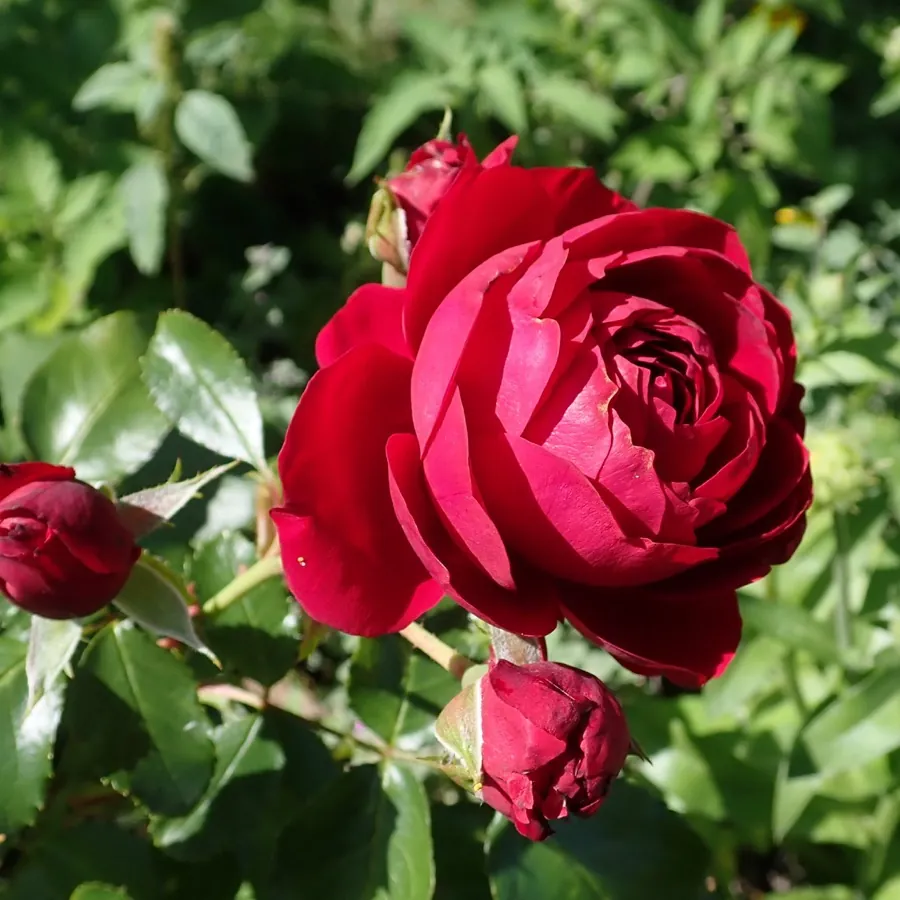
Dark red nostalgic rosettes that do NOT fade or “turn blue”; from the Kordes fairy-tale series (Märchenrose); healthy glossy foliage, self-cleaning; compact — for small gardens and containers.

'Little Red Riding Hood' by the Brothers Grimm · dark red that does not fade

Variety profile

Flowering

Repeat, in flushes

Repeat-flowering, in flushes from June to October; self-cleaning (deadheading is not necessary). Months are approximate, for the climate of Ukraine.

Legacy

Fairy-tale series

Märchenrose from Kordes

Winter hardiness

−29 °C

USDA zone 5. Good winter hardiness.

Compare reference temperatures

Plant size

70–80 × 60–70 cm
person 170 cm70–80 cm
Habit
Compact, broadly bushy, well branched, upright
Dimensions
70–80 cm tall × 60–70 cm wide — compact for the middle of a border or for a container
Support
Not needed
Shoots
Sturdy, short
Branching
Dense, even

Flower

≈ 7 cm

70–80 petals.

Bud shape
Round, dark red
Open flower
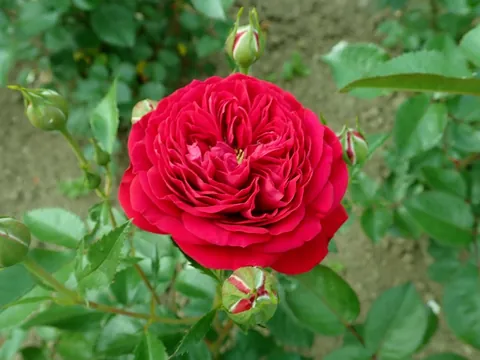
Nostalgic rosette, quartered
Centre
Dense, with numerous petals
Fullness
Very double — 70–80 petals
Flower carriage
In small clusters

Fragrance

Light

Light (mild, “light and sweet”).

Disease resistance

5 out of 5
Black spotmoderatePowdery mildewmoderate

High (4–5/5): above average against powdery mildew and black spot — typical of a “healthy Kordes”.

Sun

Sun and shade

Full sun or light partial shade.

Thorns

Moderate
thornlessfewmoderatemanyvery many

Moderate number of thorns (~15–20 per 10 cm).

Foliage

Medium green, glossy, leathery, with 5–7 leaflets.

Other names

Chaperon Rouge, Red Riding Hood, The 1812 Rose
All characteristics in a table
Group
Floribunda; Kordes fairy-tale series (Märchenrose); nostalgic
Breeder
W. Kordes' Söhne, Germany, 2002
Bud shape
Round, dark red
Open flower
Nostalgic rosette, quartered
Centre
Dense, with numerous petals
Colour
Dark red that barely fades and does not “turn blue” — rare colour stability for reds
Fullness
Very double — 70–80 petals
Flower carriage
In small clusters
Flowering
Repeat-flowering, in flushes from June to October; self-cleaning (deadheading is not necessary)
Fragrance
Light (mild, “light and sweet”)
Hips
Not documented
Habit
Compact, broadly bushy, well branched, upright
Branching
Dense, even
Shoots
Sturdy, short
Thorns
Moderate number of thorns (~15–20 per 10 cm).
Dimensions
70–80 cm tall × 60–70 cm wide — compact for the middle of a border or for a container
Support
Not needed
Foliage
Medium green, glossy, leathery, with 5–7 leaflets
Resistance
High (4–5/5): above average against powdery mildew and black spot — typical of a “healthy Kordes”
Variations of the variety
Code KORcasima. Synonyms: Chaperon Rouge, Red Riding Hood, The 1812 Rose. Parentage: unnamed seedling × Insel Mainau. Cross made in 2002, presented in 2007

Colour scheme

Dark red, which hardly fades and does not “turn blue” — rare colour stability for reds

Rose neighbours

Perennials to plant nearby

Neighbouring roses

A red palette with a yellow contrast accent:

Perennial companions

Silver-violet tones set off the dark red:

lavendercatmintwoodland sageStachys (silver)

Why it's handy

⭐ Undemanding and reliable:

  • 🔴 stable colour — does not fade or turn bluish
  • 🧹 self-cleaning — no need to remove spent flowers
  • 🪴 compact — for small gardens and containers
  • 🌿 very healthy foliage

More about the variety

Hips
Not documented
Variations of the variety
Code KORcasima. Synonyms: Chaperon Rouge, Red Riding Hood, The 1812 Rose. Parentage: unnamed seedling × Insel Mainau. Cross made in 2002, presented in 2007

How to grow

Where to plant. In a sunny spot, at the middle-to-front of a border or in a large container; its compactness makes it convenient for small gardens.

Climate. USDA zone 5 (down to −29 °C), good winter hardiness — reliable for most of Ukraine.

Care. Minimal — self-cleaning, pruning in spring, feeding at the start of the season; thanks to its health it almost never needs fungicides.

About the name

Name. “Rotkäppchen” = “Little Red Riding Hood” — the fairy tale of the Brothers Grimm. The variety belongs to the Kordes fairy-tale rose collection (Märchenrose), whose varieties are named after European fairy tales. French synonym — Chaperon Rouge.

Breeding. Bred by W. Kordes' Söhne (Wilhelm Kordes III, Germany; the house was founded in 1887), code KORcasima. Cross made in 2002, presented in 2007. Parentage: unnamed seedling × Insel Mainau.

Significance. One of the unnoticed modest ones that deserves more attention — dark red nostalgic rosettes with stable colour, outstanding health, self-cleaning habit and compactness. An ideal reliable red for a small garden and for beginners.

Frequently asked questions about Rotkäppchen

Does Rotkäppchen need winter protection?

The cultivar’s reference temperature is −29 °C (USDA zone 5). Overwintering depends on the conditions. Good winter hardiness.

How many times a season does Rotkäppchen flower?

Repeat-flowering, in flushes from June to October; self-cleaning (deadheading is not necessary).

How big does Rotkäppchen grow?

70–80 cm tall, 60–70 cm wide.

Which diseases affect Rotkäppchen?

Overall resistance: 5 out of 5. Healthy Kordes; self-cleaning.

How much sun does Rotkäppchen need?

Sun and shade; full sun or light partial shade.

What does Rotkäppchen smell like?

Light (mild, “light and sweet”).

Gardeners' photos and reviews

My climate

Choose a reference temperature to compare with the cultivar’s data. This is not an overwintering forecast or advice on winter protection; consider wind, moisture and the duration of frost.

Regional data are generalised. USDA describes average annual extreme minima, not a forecast; the values in the list are rounded. Check the conditions at your site. More information: Roses in Ukraine's climate.