



Back to catalogue
Hybrid Tea; city showcase roseBernard Panozzo; Star de Doué, 2008Apricot and orange

Sourire du Havre

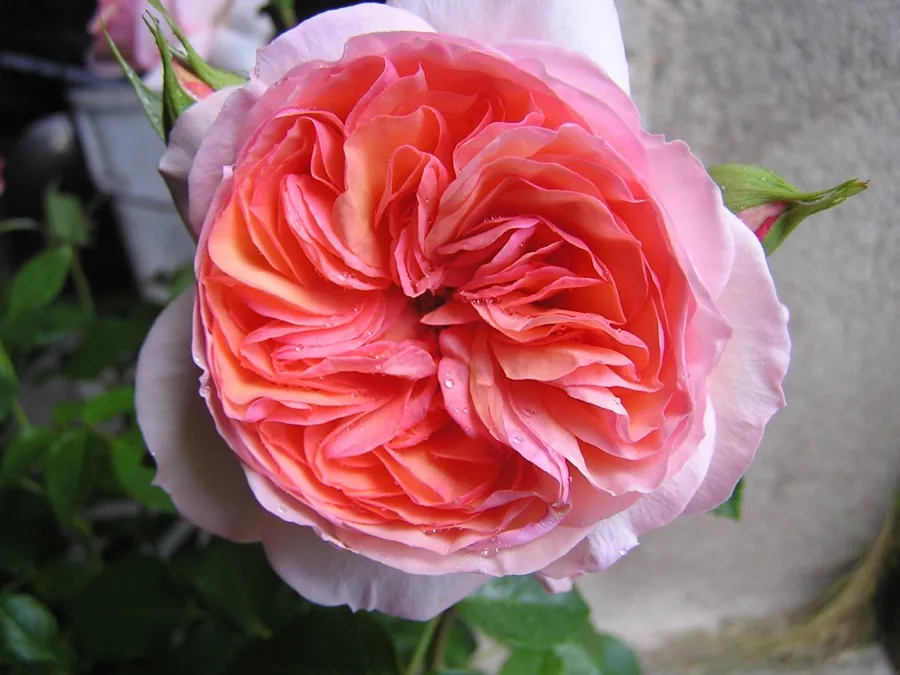
Salmon-orange Hybrid Tea with a nostalgic 'old-fashioned' form; the showcase rose of the city of Le Havre (Normandy), created specially for the occasion; bred by Star de Doué of Doué-la-Fontaine, the 'rose capital' of France; 41+ petals.

Christened on 5 October 2008 at the Château de Fontaine Henry in the presence of the mayor of Le Havre

Variety profile

Flowering

Repeat flowering

Repeat flowering from June to October. Months are approximate, for the climate of Ukraine.

Legacy

Signature variety

Of the city of Le Havre · christened by the mayor

Winter hardiness

−23 °C

USDA zone 6b. Central and southern Ukraine, with light winter protection.

Compare reference temperatures

Plant size

60–80 × 60 cm
person 170 cm60–80 cm
Habit
Compact upright — a typical Hybrid Tea
Dimensions
60–80 cm tall × 60 cm wide — compact, for small beds and street planters
Support
Not needed — self-supporting
Shoots
Medium stiffness; hold the flowers level
Branching
Moderately branched

Flower

≈ 10 cm

41+ petals.

Bud shape
Round, salmon-pink, darker than the open flower
Open flower
Old-fashioned / nostalgic, very full: ~10 cm, 41+ petals
Centre
Densely packed with a nostalgic quartered rosette
Fullness
41+ petals (very full)
Flower carriage
Singly or in small clusters

Fragrance

Light

Light — the breeder's priority was the form and colour of the flower.

Disease resistance

4 out of 5

Good, 4/5 — according to the breeder Star de Doué. USDA 6b — in central and southern Ukraine, with light winter protection.

Sun

Full sun

Thorns

Moderate
thornlessfewmoderatemanyvery many

Moderate number of prickles — typical for HTs.

Foliage

Dark green, semi-glossy.

All characteristics in a table
Group
Hybrid Tea; city showcase rose
Breeder
Bernard Panozzo; Star de Doué, France, 2008
Bud shape
Round, salmon-pink, darker than the open flower
Open flower
Old-fashioned / nostalgic, very full: ~10 cm, 41+ petals
Centre
Densely packed with a nostalgic quartered rosette
Colour
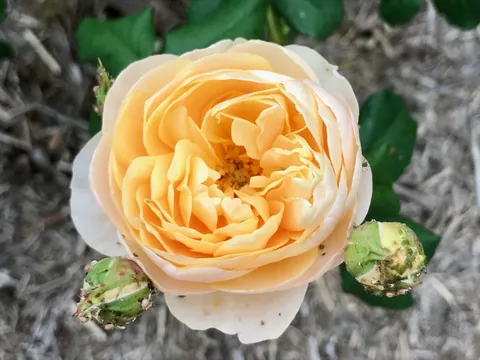
Salmon-orange with pink tints — a warm 'summer' tone. In cool weather the pinkness intensifies; in the heat, the orange comes through
Fullness
41+ petals (very full)
Flower carriage
Singly or in small clusters
Flowering
Repeat flowering from June to October
Fragrance
Light — the breeder's priority was the form and colour of the flower
Hips
Not documented — typically cut
Habit
Compact upright — a typical Hybrid Tea
Branching
Moderately branched
Shoots
Medium stiffness; hold the flowers level
Thorns
Moderate number of prickles — typical for HTs.
Dimensions
60–80 cm tall × 60 cm wide — compact, for small beds and street planters
Support
Not needed — self-supporting
Foliage
Dark green, semi-glossy
Resistance
Good, 4/5 — according to the breeder Star de Doué. USDA 6b — in central and southern Ukraine, with light winter protection
Variations of the variety
Code PANaldap (also PANoldap). Introduced around 2008–2011 through Star de Doué (Doué-la-Fontaine, France). Breeder: Bernard Panozzo. Parentage not disclosed. Officially named on 5 October 2008 at the Château de Fontaine Henry in the presence of the mayor of Le Havre — a typical 'city' showcase rose, bred specially for the occasion

Colour scheme

Salmon-orange with pink tints — a warm 'summer' tone. In cool weather the pinkness intensifies; in the heat, the orange comes through

Rose neighbours

Perennials to plant nearby

Neighbouring roses

Warm salmon-peach tones — a 'summer' mixed border:

Perennial companions

Contrasting purple-silver tones bring out the warm palette:

lavendercoreopsisStachyssalvia

Availability worldwide

A small family breeding programme — mainly through French nurseries:

🇫🇷 France: high · via Star de Doué🇪🇺 Europe: moderate🇺🇸 USA: low🇺🇦 Ukraine: rare · via collector nurseries

More about the variety

Hips
Not documented — typically cut
Variations of the variety
Code PANaldap (also PANoldap). Introduced around 2008–2011 through Star de Doué (Doué-la-Fontaine, France). Breeder: Bernard Panozzo. Parentage not disclosed. Officially named on 5 October 2008 at the Château de Fontaine Henry in the presence of the mayor of Le Havre — a typical 'city' showcase rose, bred specially for the occasion

How to grow

Where to plant. As a solo accent in a small bed; in a city garden; in street planters thanks to its compact size; as the front of a warm-toned mixed border; under windows, thanks to its low height.

Climate. Central and southern Ukraine, with light winter protection (USDA 6b); tolerates summer heat well — the orange colour intensifies.

Care. Full sun; moderate disease prevention; feed 2–3× per season; prune by ⅓ in spring; water at the root, not on the leaves.

About the name

Name. 'Sourire du Havre' = 'Smile of Le Havre' (French). In honour of the city of Le Havre in Normandy — France's second-largest seaport. A poetic, evocative name: the warm salmon-orange colour is like the 'smile' of a seaside city at dawn.

Breeding. Bred by Bernard Panozzo at Star de Doué — a small family rose nursery in Doué-la-Fontaine (Loire, France). Code PANaldap (also PANoldap). Introduced around 2008–2011. Parentage not disclosed. Officially named on 5 October 2008 at the Château de Fontaine Henry in the presence of the mayor of Le Havre — a typical 'civic ceremony', in which a rose is solemnly given the status of a city symbol.

Significance. A 'city showcase' rose — a typical French tradition of the XX-XXI centuries, in which towns commission exclusive roses from breeders as living symbols. Sourire du Havre is an example of this tradition. Doué-la-Fontaine (the town where the nursery is located) is an unofficial 'rose capital' of France and the largest centre of the industry's production. The nostalgic 'old-fashioned' form with 41+ petals is rare among modern HTs, closer to Old Garden Roses. Star de Doué is a small family rose nursery of the Panozzo family, specialising in exclusive commissions for towns and events. Outside France it is available only in limited quantities — a real collector's find for a Ukrainian garden.

Frequently asked questions about Sourire du Havre

Does Sourire du Havre need winter protection?

The cultivar’s reference temperature is −23 °C (USDA zone 6b). Overwintering depends on the conditions. Central and southern Ukraine, with light winter protection.

How many times a season does Sourire du Havre flower?

Repeat flowering from June to October.

How big does Sourire du Havre grow?

60–80 cm tall, about 60 cm wide.

Which diseases affect Sourire du Havre?

Overall resistance: 4 out of 5. Good — according to the breeder's description (Star de Doué).

How much sun does Sourire du Havre need?

Sun; full sun.

What does Sourire du Havre smell like?

Light — the breeder's priority was the form and colour of the flower.

Gardeners' photos and reviews

My climate

Choose a reference temperature to compare with the cultivar’s data. This is not an overwintering forecast or advice on winter protection; consider wind, moisture and the duration of frost.

Regional data are generalised. USDA describes average annual extreme minima, not a forecast; the values in the list are rounded. Check the conditions at your site. More information: Roses in Ukraine's climate.