



Back to catalogue
English Shrub / English Climbing Rose; one of the most popular Austin XXI century rosesDavid Austin; David Austin Roses, 2009Apricot and orange

The Lady of Shalott

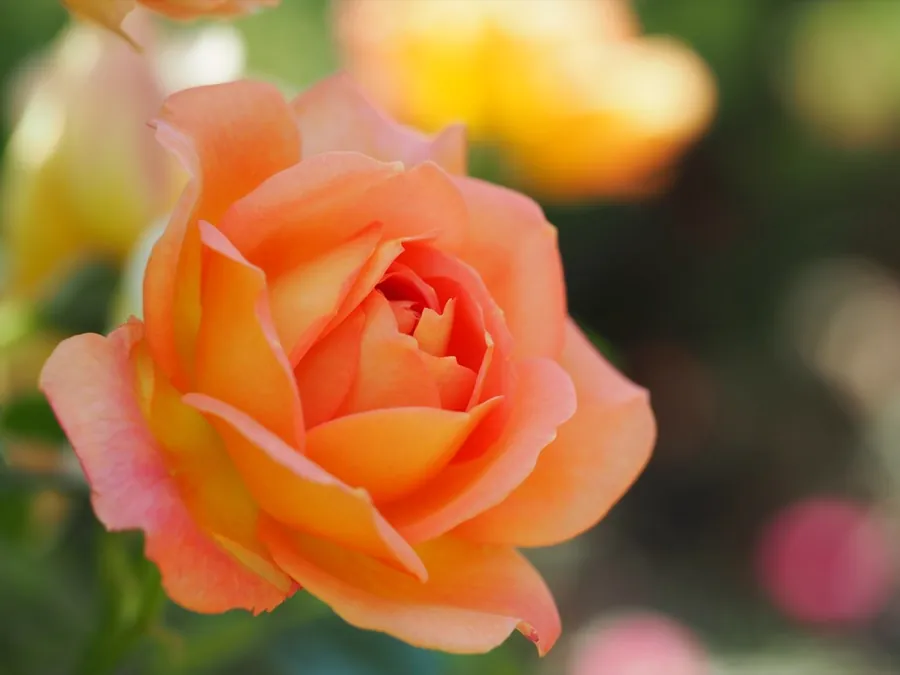
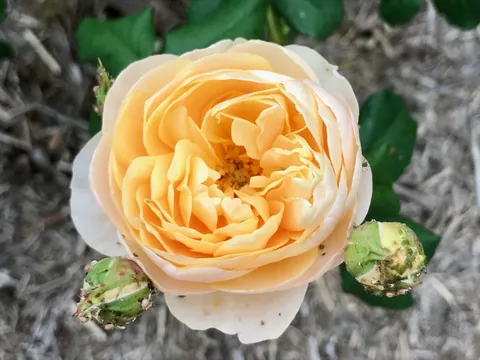
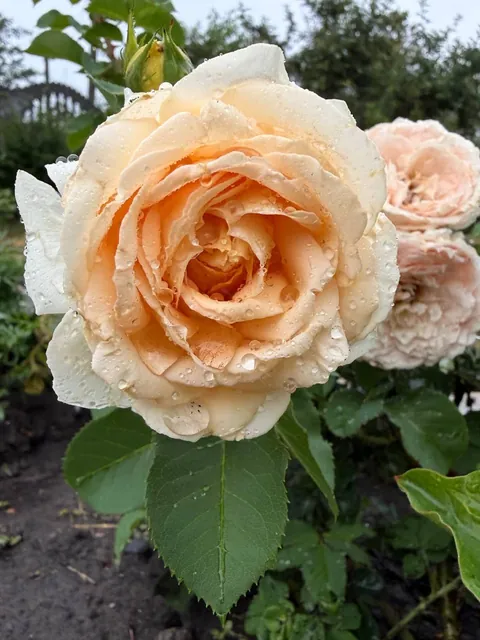
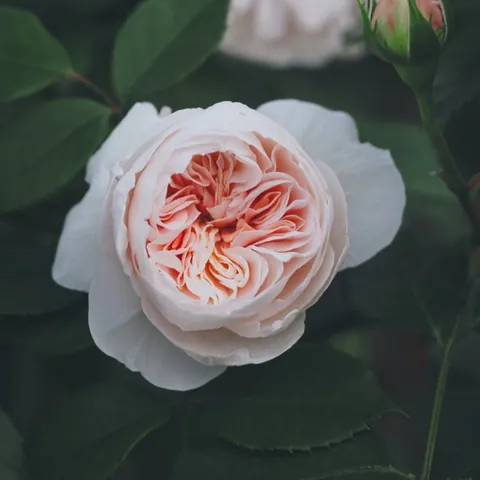
Orange-red buds — salmon-pink outer petals with a golden-yellow reverse and an apricot, cup-shaped centre; RHS AGM 2012 + AGRS 2017; released in 2009 for the 200th anniversary of Tennyson (1809–2009); named after Alfred Lord Tennyson's poem “The Lady of Shalott” (1832), an Arthurian legend; health 5/5 + USDA 4-11 + uninterrupted repeat flowering — Austin recommends it for beginners.

RHS AGM 2012 + AGRS 2017 · USDA 4-11 (one of the most cold-hardy Austins) · released for Tennyson's 200th anniversary

Variety profile

Flowering

Repeat flowering

Repeat flowering without a break from early summer to the first frosts — a rare quality. Months are approximate, for the climate of Ukraine.

Legacy

RHS AGM 2012

+ AGRS 2017 + Tennyson

Winter hardiness

−34 °C

USDA zone 4-11. All of Ukraine without winter protection!

Compare reference temperatures

Plant size

120 × 100 cm
person 170 cmon a supportup to 2.4 m120 cm
Habit
Versatile — shrub or climber; Austin's internal classification: Leander Hybrid
Dimensions
As a shrub: 120 × 100 cm (4 ft × 3.5 ft); as a climber: up to 240 cm (8 ft) tall
Support
Not needed as a shrub; as a climber — a small arch or obelisk
Shoots
Flexible, easy to shape
Branching
Well branched

Flower

9-10 cm
Bud shape
Orange-red buds — a contrasting base
Open flower
Chalice: 9–10 cm (3.5–5″), ~60 petals (HMF — 40+)
Centre
Apricot centre with visible stamens
Fullness
~60 petals (medium-full)
Flower carriage
Singly or in small clusters

Fragrance

Medium; Tea + spiced apple + cloves

Medium strength — Tea with notes of spiced apple and cloves. A complex “warm” fragrance.

Disease resistance

5 out of 5
Black spotresistantPowdery mildewresistantRustresistant

Exceptional 5/5 — one of the healthiest Austins of all time. Resistant to blackspot, powdery mildew, rust and botrytis. USDA 4-11 — one of the most cold-hardy Austins: all of Ukraine without winter protection! For zones 4–5, mulching the base is recommended.

Sun

Full sun

Tolerates partial shade.

Thorns

Few
thornlessfewmoderatemanyvery many

Few thorns — typical for Austin.

Foliage

Glossy dark green, very healthy.

All characteristics in a table
Group
English Shrub / English Climbing Rose; one of the most popular Austin XXI century roses
Breeder
David Austin; David Austin Roses, United Kingdom, 2009
Bud shape
Orange-red buds — a contrasting base
Open flower
Chalice: 9–10 cm (3.5–5″), ~60 petals (HMF — 40+)
Centre
Apricot centre with visible stamens
Colour
Multi-faceted palette: orange-red buds – salmon-pink outer petals with a golden-yellow reverse + apricot centre. All stages on the bush at once
Fullness
~60 petals (medium-full)
Flower carriage
Singly or in small clusters
Flowering
Repeat flowering without a break from early summer to the first frosts — a rare quality
Fragrance
Medium strength — Tea with notes of spiced apple and cloves. A complex “warm” fragrance
Hips
Not documented — typically cut
Habit
Versatile — shrub or climber; Austin's internal classification: Leander Hybrid
Branching
Well branched
Shoots
Flexible, easy to shape
Thorns
Few thorns — typical for Austin.
Dimensions
As a shrub: 120 × 100 cm (4 ft × 3.5 ft); as a climber: up to 240 cm (8 ft) tall
Support
Not needed as a shrub; as a climber — a small arch or obelisk
Foliage
Glossy dark green, very healthy
Resistance
Exceptional 5/5 — one of the healthiest Austins of all time. Resistant to blackspot, powdery mildew, rust and botrytis. USDA 4-11 — one of the most cold-hardy Austins: all of Ukraine without winter protection! For zones 4–5, mulching the base is recommended
Variations of the variety
Code AUSnyson. US Patent PP22171. Introduced 2009 for the 200th anniversary of Tennyson's birth (1809). Parentage: not disclosed — two unnamed seedlings. Available in both forms — shrub or climber

Colour scheme

Multi-faceted palette: orange-red buds — salmon-pink outer petals with a golden-yellow reverse and an apricot centre. All stages on the bush at once

Rose neighbours

Perennials to plant nearby

Neighbouring roses

Warm peach and apricot varieties:

Perennial companions

A sunny palette with purple accents:

lavendercoreopsislady's mantle (Alchemilla)salvia

Availability worldwide

⭐⭐⭐ A top Austin of the XXI century — Austin recommends it for beginners:

🇬🇧 UK: very high · home of Austin🇺🇸 USA: high · AGRS 2017🇪🇺 Europe: high🇺🇦 Ukraine: moderate · via modern nurseries

More about the variety

Hips
Not documented — typically cut
Variations of the variety
Code AUSnyson. US Patent PP22171. Introduced 2009 for the 200th anniversary of Tennyson's birth (1809). Parentage: not disclosed — two unnamed seedlings. Available in both forms — shrub or climber

How to grow

Where to plant. Anywhere — Austin recommends it as a “rose for beginners” because of its exceptional resistance and ease of care; as a shrub in a mixed border with pastel neighbours; as a small climber on an obelisk; in “literary” corners with Tennysonian allusions; under windows thanks to its moderate size.

Climate. All of Ukraine without winter protection (USDA 4-11 — one of the most cold-hardy Austins); tolerates summer heat well; tolerates partial shade.

Care. Minimal — full sun or light shade; rating 5/5 — no chemical treatments needed; feed 2× per season; prune ⅓ in spring; deadheading speeds up the repeat flowering.

About the name

Name. “The Lady of Shalott”. Named after Alfred Lord Tennyson's poem “The Lady of Shalott” (1832) — one of the most famous poems of the Victorian era. The poem is based on an Arthurian legend about a maiden in a castle near Camelot who, under a curse, sees the world only through a mirror and weaves a tapestry of the reflected world, but falls in love with Lancelot and dies after seeing him directly. Released in 2009 for the 200th anniversary of Tennyson's birth (1809–1892). Breeder: bred by David Austin at David Austin Roses (Albrighton, Shropshire, UK). Code AUSnyson. US Patent PP22171. Introduced 2009. Parentage: not disclosed — two unnamed seedlings. Austin's internal classification: Leander Hybrid.

Significance. One of the most popular Austin XXI century roses. RHS Award of Garden Merit 2012 — officially confirmed. American Garden Rose Selections (AGRS) Award 2017. Exceptional health 5/5 — resistant to blackspot, powdery mildew, rust and botrytis. USDA 4-11 — one of the most cold-hardy Austins: all of Ukraine without winter protection. Uninterrupted repeat flowering from early summer to the first frosts — a rare quality. Often recommended by Austin for beginners: the combination of health, colour and repeat flowering makes it a “no-lose choice”. Multi-faceted palette: orange-red buds – salmon-pink petals with a golden reverse – apricot centre. Tea + spiced apple + cloves scent — a rare combination. It has not received an ADR.

Frequently asked questions about The Lady of Shalott

Does The Lady of Shalott need winter protection?

The cultivar’s reference temperature is −34 °C (USDA zone 4−11). Overwintering depends on the conditions. All of Ukraine without winter protection!

How many times a season does The Lady of Shalott flower?

Repeat flowering without a break from early summer to the first frosts — a rare quality.

How big does The Lady of Shalott grow?

About 120 cm tall, about 100 cm wide. On a support — up to 240 cm.

Which diseases affect The Lady of Shalott?

Overall resistance: 5 out of 5. Exceptional — one of the healthiest Austins.

How much sun does The Lady of Shalott need?

Sun; full sun; tolerates partial shade.

What does The Lady of Shalott smell like?

Medium strength — Tea with notes of spiced apple and cloves. A complex “warm” fragrance.

Gardeners' photos and reviews

My climate

Choose a reference temperature to compare with the cultivar’s data. This is not an overwintering forecast or advice on winter protection; consider wind, moisture and the duration of frost.

Regional data are generalised. USDA describes average annual extreme minima, not a forecast; the values in the list are rounded. Check the conditions at your site. More information: Roses in Ukraine's climate.