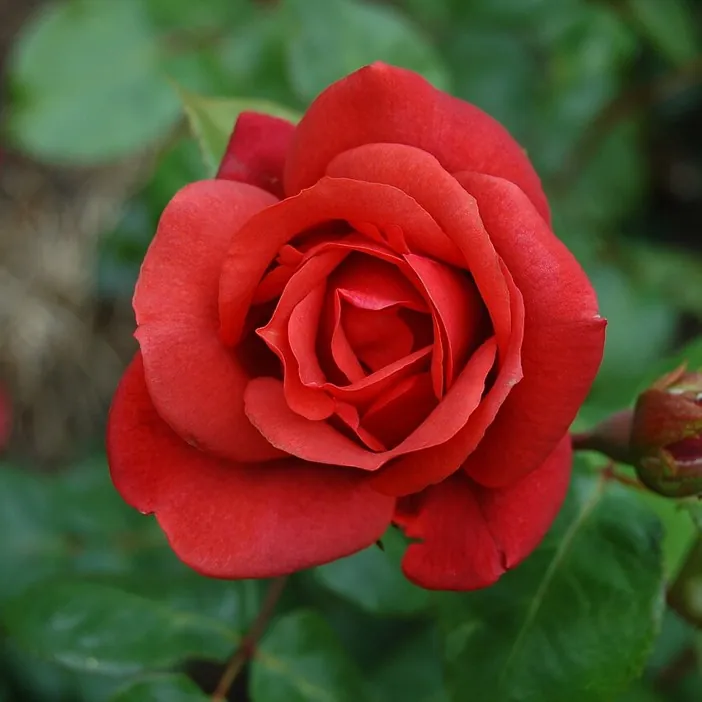
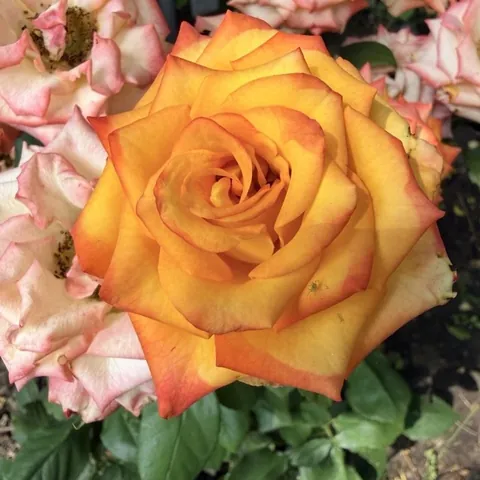
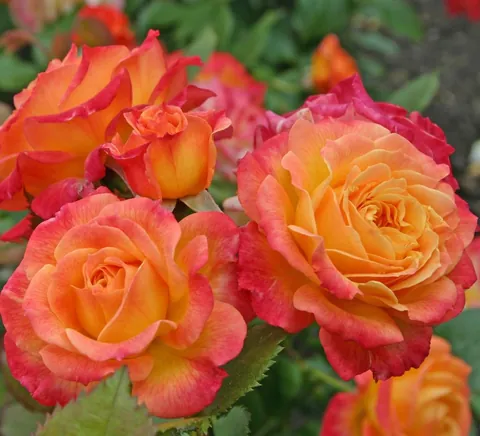
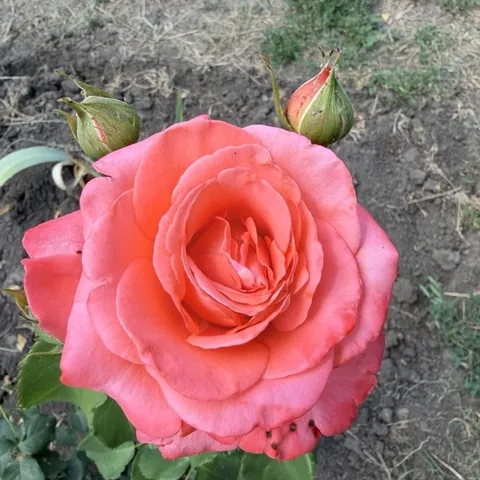




Terracotta, close-up of the flower
Back to catalogue
Hybrid TeaSimpson / Meilland, 2001Apricot and orange

Terracotta

Simchoca; unusual brick-terracotta colour (fired clay): warm reddish-orange with a brownish tint — recognisable from a distance.

A rare brick-terracotta colour

Variety profile

Flowering

Repeat flowering through the season

Awards

Collectable

A unique terracotta colour

Winter hardiness

−20 °C

USDA zone 6–9. Forest-Steppe, Steppe; north — with winter protection.

Compare reference temperatures

Plant size

100–110 cm
person 170 cm100–110 cm
Habit
Upright, sturdy, vigorous bush
Dimensions
100–110 cm tall
Support
Not needed — a self-supporting bush. For a flower bed, rose garden or cutting.
Shoots
Sturdy, straight — they hold the flower well
Branching
Good; strong stems

Flower

≈ 11 cm

30–35 petals.

Bud shape
Dense, dark reddish-brown outside, orange-brown inside
Open flower
Double, cupped with a high centre; diameter about 11 cm
Centre
Dense, high — the classic hybrid tea form
Fullness
Double, 30–35 petals
Flower carriage
In clusters of 2–5 flowers on sturdy stems — good for cutting

Fragrance

Medium

Medium, pleasant.

Disease resistance

5 out of 5

High resistance to disease — one of the variety's strong points.

Sun

Full sun

In cool weather the terracotta tone is deeper; in heat it fades to ochre.

Thorns

Moderate
thornlessfewmoderatemanyvery many

Moderately prickly — typical for hybrid teas.

Foliage

Dense, healthy, semi-matt dark green.

All characteristics in a table
Group
Hybrid Tea
Breeder
Simpson / Meilland, 2001
Bud shape
Dense, dark reddish-brown outside, orange-brown inside
Open flower
Double, cupped with a high centre; diameter about 11 cm
Centre
Dense, high — the classic hybrid tea form
Colour
Terracotta — a rare shade for roses, the colour of fired clay: reddish-orange with a brownish tint and darker edges; with age it turns ochre-pink. Recognisable from afar
Fullness
Double, 30–35 petals
Flower carriage
In clusters of 2–5 flowers on sturdy stems — good for cutting
Flowering
Repeat flowering through the season
Fragrance
Medium, pleasant
Habit
Upright, sturdy, vigorous bush
Branching
Good; strong stems
Shoots
Sturdy, straight — they hold the flower well
Thorns
Moderately prickly — typical for hybrid teas.
Dimensions
100–110 cm tall
Support
Not needed — a self-supporting bush. For a flower bed, rose garden or cutting.
Foliage
Dense, healthy, semi-matt dark green
Resistance
High resistance to disease — one of the variety's strong points

Colour scheme

Terracotta — a rare shade for roses, the colour of fired clay: reddish-orange with a brownish tint and darker edges; with age it turns ochre-pink. Recognisable from afar

Rose neighbours

Perennials to plant nearby

Neighbouring roses

To go with terracotta, other warm tones: orange, coral, apricot:

Perennial companions

Blue-purple and silver tones — the best contrast to terracotta:

Perovskia (Russian sage)catmint 'Faassen' (Nepeta)salvia 'Caradonna'Stachys (lamb's ear)lavender

Contrasting accents

Deep blue and silver foliage highlight the warm terracotta bloom:

Blue delphiniumsSpiked speedwellSilver wormwoodOrnamental grasses

How to grow

Where to plant. A showy flower bed, rose garden or border; striking as a cut flower and in autumn arrangements thanks to its unusual “clay” colour. Most striking beside blue-violet perennials.

Climate. Tolerates frost to about −20 °C, USDA 6–9. Overwinters well in the Forest-Steppe and Steppe; in the north — with protection.

Care. Undemanding, rarely sick. Formative pruning in spring; removing spent flowers encourages repeat flowering.

About the name

Name. “Terracotta” — from the word for fired clay; it precisely describes the rare brick-red colour of the flower, by which the variety is recognised from afar. Breeder: bred by Nola M. Simpson (New Zealand) in 2001, presented in France by the Meilland house. Breeding code: Simchoca. Hybrid Tea.

Significance. Valued for its genuinely unusual terracotta-clay colour — one of the few varieties of this tone — plus high disease resistance and strong stems that are good for cutting.

Frequently asked questions about Terracotta

Does Terracotta need winter protection?

The cultivar’s reference temperature is −20 °C (USDA zone 6–9). Overwintering depends on the conditions. Forest-Steppe, Steppe; north — with winter protection.

How many times a season does Terracotta flower?

Repeat flowering through the season.

How big does Terracotta grow?

100–110 cm tall.

Which diseases affect Terracotta?

Overall resistance: 5 out of 5. High; healthy, dense foliage.

How much sun does Terracotta need?

Full sun; in cool weather the terracotta tone is deeper; in heat it fades to ochre.

What does Terracotta smell like?

Medium, pleasant.

Gardeners' photos and reviews

My climate

Choose a reference temperature to compare with the cultivar’s data. This is not an overwintering forecast or advice on winter protection; consider wind, moisture and the duration of frost.

Regional data are generalised. USDA describes average annual extreme minima, not a forecast; the values in the list are rounded. Check the conditions at your site. More information: Roses in Ukraine's climate.