



Back to catalogue
English shrub roseDavid Austin, 1985Apricot and orange

Abraham Darby

One of the most distinctive fruity scents in David Austin's collection.

Shrub or short climber

Variety profile

Flowering

Repeat, in flushes

Repeat flowering in flushes: late spring – first frosts. Months are approximate, for the climate of Ukraine.

Feature

Strong fruity

Scent of pear, lemon and strawberry with a fresh tang

Winter hardiness

−23 °C

USDA zone 5–10. All of Ukraine; in northern Polissia — with light protection.

Compare reference temperatures

Plant size

150–180 × 120–150 cm
person 170 cmon a supportup to 3 m150–180 cm
Habit
Rounded, spreading shrub; can be trained as a short climber
Dimensions
As a shrub: 150–180 cm × 120–150 cm. On a support: up to 250–300 cm tall
Support
Optional: as a shrub no support is required, but heavy blooms are better tied in; as a short climber it needs an obelisk, a low arch or a trellis
Shoots
Sturdy, semi-stiff; heavy blooms can bend the stems after rain — worth tying in
Branching
Strong; abundant annual growth

Flower

≈ 11 cm

50–70 petals.

Bud shape
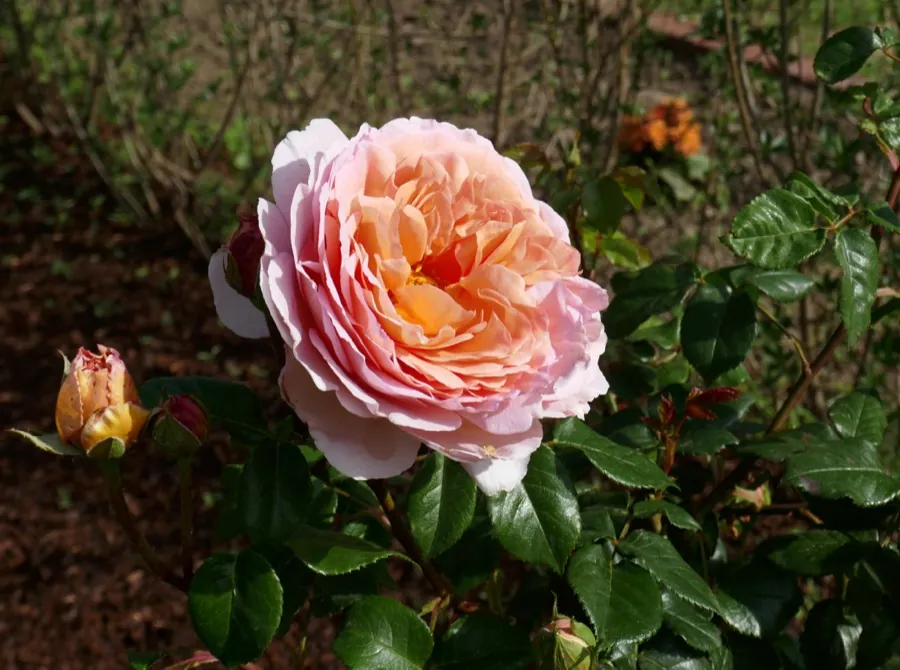
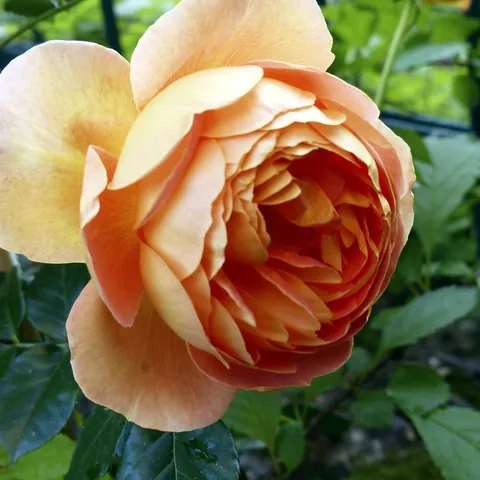
Large, round, deep apricot; opens slowly
Open flower
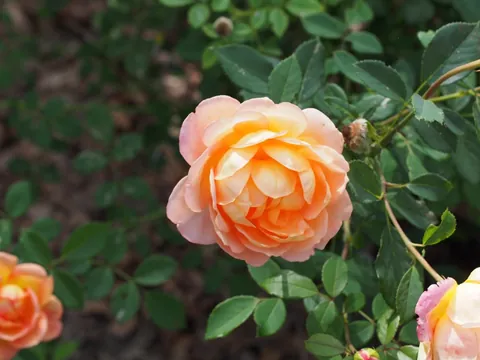
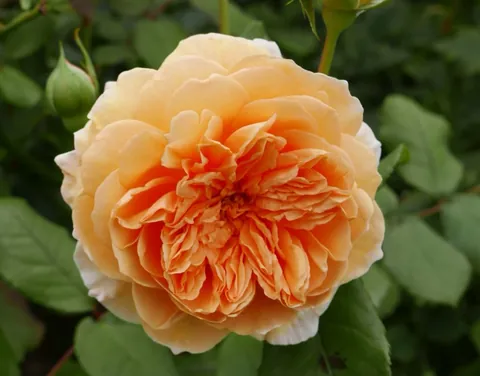
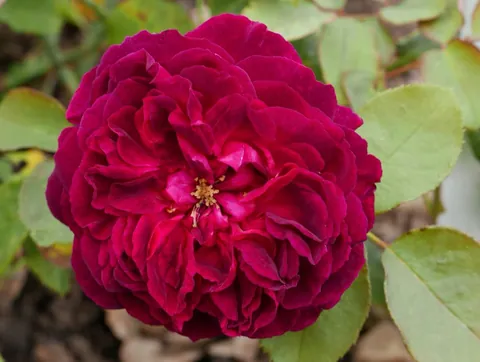
Large classic cupped, quartered (old English form); diameter ~11 cm
Centre
Quartered — petals arranged in 4 distinct sections; a deep cup with several layers
Fullness
Fully double, 50–70 petals
Flower carriage
Mostly singly or in small clusters of 1–3 on a stem

Fragrance

Strong

Strong fruity — one of the most distinctive scents in the David Austin collection; notes of pear, lemon and strawberry with a fresh tang (David Austin Fruity Fragrance Group).

Disease resistance

4 out of 5
Black spotmoderatePowdery mildewmoderateRustsusceptible

Generally resistant; susceptible to rust in humid climates; black spot and powdery mildew — moderate.

Sun

5–6 hours

Sun + partial shade; at least 5–6 hours of direct light; tolerates light shade well.

Thorns

Moderate
thornlessfewmoderatemanyvery many

A moderate number of thorns — gardeners describe it as 'moderate'; take care when pruning.

Foliage

Large, dark green, semi-glossy; leaves with 5–7 leaflets.

Other names

Abraham, Country Darby, Candy Rain

Breeder's code AUScot.

All characteristics in a table
Group
English shrub rose
Breeder
David Austin, 1985
Bud shape
Large, round, deep apricot; opens slowly
Open flower
Large classic cupped, quartered (old English form); diameter ~11 cm
Centre
Quartered — petals arranged in 4 distinct sections; a deep cup with several layers
Colour
Warm apricot-peach-pink blend; soft apricot-pink inside, pale yellow on the outside; in cooler climates, a richer peach-pink with lighter edges
Fullness
Fully double, 50–70 petals
Flower carriage
Mostly singly or in small clusters of 1–3 on a stem
Flowering
Repeat flowering in flushes: late spring – first frosts
Fragrance
Strong fruity — one of the most distinctive scents in the David Austin collection; notes of pear, lemon and strawberry with a fresh tang (David Austin Fruity Fragrance Group)
Habit
Rounded, spreading shrub; can be trained as a short climber
Branching
Strong; abundant annual growth
Shoots
Sturdy, semi-stiff; heavy blooms can bend the stems after rain — worth tying in
Thorns
A moderate number of thorns — gardeners describe it as 'moderate'; take care when pruning.
Dimensions
As a shrub: 150–180 cm × 120–150 cm. On a support: up to 250–300 cm tall
Support
Optional: as a shrub no support is required, but heavy blooms are better tied in; as a short climber it needs an obelisk, a low arch or a trellis
Foliage
Large, dark green, semi-glossy; leaves with 5–7 leaflets
Resistance
Generally resistant; susceptible to rust in humid climates; black spot and powdery mildew — moderate
Alternative names
Abraham; Country Darby; Candy Rain (trade synonyms)

Colour scheme

Warm apricot-peach-pink blend; soft apricot-pink inside, pale yellow on the outside; in cooler climates, a richer peach-pink with lighter edges

Rose neighbours

Perennials to plant nearby

Neighbouring roses

Warm apricot-orange roses (mostly David Austin's English roses) keep one golden mood around Abraham Darby:

Perennial companions

A cool lavender-purple frame and chartreuse foam at the base contrast with the warm apricot:

lavendercatmint (Nepeta) Faassensalvia Caradonnalady's mantle (Alchemilla)geranium Rozanne

Contrasting accents

For depth and height: dark purple clematis on the same support, and airy grasses:

Clematis 'Etoile Violette'Clematis 'Jackmanii'Stipa tenuissima (grass)Foxglove (Digitalis)

More about the variety

Alternative names
Abraham; Country Darby; Candy Rain (trade synonyms)

How to grow

Where to plant. As a specimen in a central composition, a group accent in a mixed border, or as a short climber on an obelisk or low arch. Because of its strong fruity scent, it is well worth placing near a path, a bench or the garden entrance.

Climate. Hardy to −23 °C; in USDA zone 5 (northern Polissia) light protection is advisable. In the Forest-Steppe and Steppe it overwinters without protection.

Care. A vigorous, free-flowering variety; heavy blooms are worth tying in after rain. Prevent rust in a wet summer. Prune by 1/3 each spring to keep its shape.

About the name

Name. Named after Abraham Darby III (1750–1789), the English industrialist who built the Iron Bridge near Coalbrookdale in 1779. The bridge became a symbol of the Industrial Revolution and a UNESCO World Heritage Site. The name was chosen together with the Ironbridge Gorge Museum, which is close to David Austin's nursery.

Breeding. Bred by David C. H. Austin in 1985. Parentage: 'Aloha' (climber) × 'Yellow Cushion' (floribunda). Breeder's code: AUScot. Trade synonyms: Abraham, Country Darby, Candy Rain.

Significance. One of David Austin's best-known English roses, especially valued for its strong fruity scent — for many gardeners it is their favourite rose precisely because of its fragrance. It is often used as a benchmark when describing English roses with strong scent. In the ARS-rating it scores about 7.7 (good).

Frequently asked questions about Abraham Darby

Does Abraham Darby need winter protection?

The cultivar’s reference temperature is −23 °C (USDA zone 5–10). Overwintering depends on the conditions. All of Ukraine; in northern Polissia — with light protection.

How many times a season does Abraham Darby flower?

Repeat flowering in flushes: late spring – first frosts.

How big does Abraham Darby grow?

150–180 cm tall, 120–150 cm wide. On a support — up to 300 cm.

Which diseases affect Abraham Darby?

Overall resistance: 4 out of 5. Generally resistant; susceptible to rust; black spot and powdery mildew — moderate.

How much sun does Abraham Darby need?

Sun + partial shade; at least 5–6 hours of direct light; tolerates light shade well.

What does Abraham Darby smell like?

Strong fruity — one of the most distinctive scents in the David Austin collection; notes of pear, lemon and strawberry with a fresh tang (David Austin Fruity Fragrance Group).

Gardeners' photos and reviews

My climate

Choose a reference temperature to compare with the cultivar’s data. This is not an overwintering forecast or advice on winter protection; consider wind, moisture and the duration of frost.

Regional data are generalised. USDA describes average annual extreme minima, not a forecast; the values in the list are rounded. Check the conditions at your site. More information: Roses in Ukraine's climate.