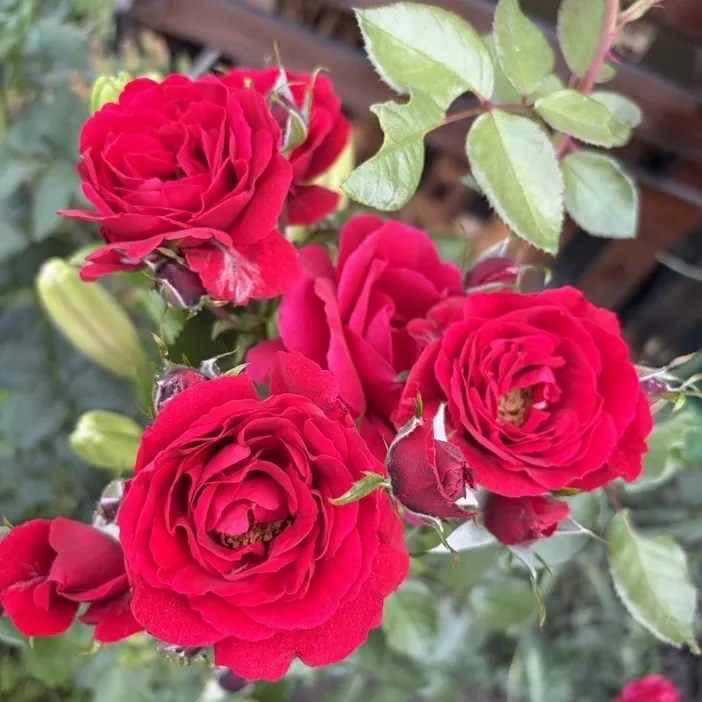
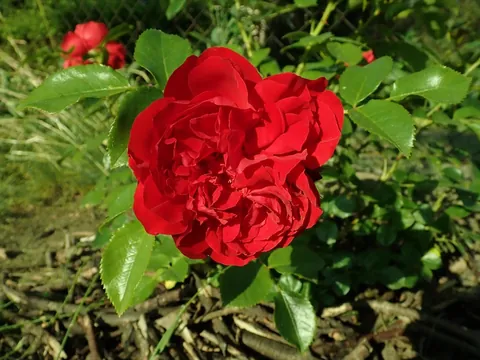
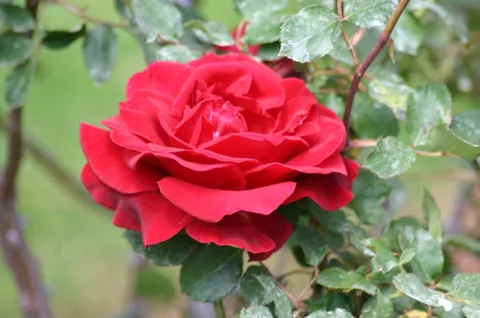
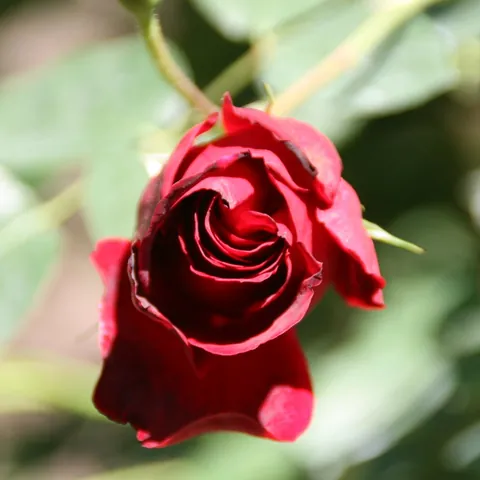
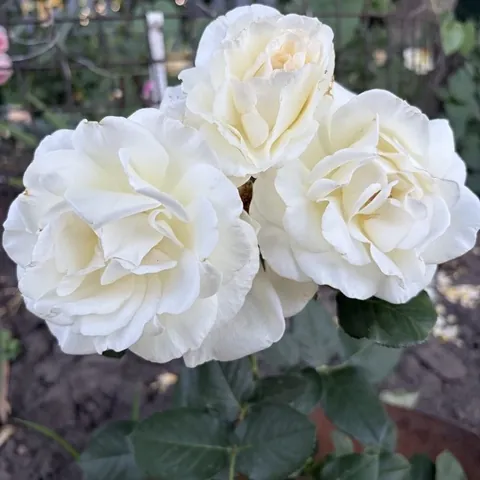



Amadeus, close-up of the flower
Back to catalogue
Large-Flowered ClimberKordes, 2003Red

Amadeus

Velvety dark red climber with a record number of awards: ADR 2007 + 4 gold medals.

Climber for rainy regions

Variety profile

Flowering

Repeat, in flushes

Repeat-flowering in waves through the season; a strong second flush in August–September; rain-tolerant. Months are approximate, for the climate of Ukraine.

Awards

ADR 2007 + 4 gold

The Hague · Geneva · Lyon · Bagatelle

Winter hardiness

−20 °C

USDA zone 6b–9b. Forest-Steppe; Steppe; northern Ukraine — with winter protection. Forest-Steppe · Steppe; north of Ukraine with winter protection.

Compare reference temperatures

Plant size

200–250 × 80–110 cm
person 170 cm200–250 cm
Habit
Upright, bushy climber of moderate vigour
Dimensions
200–250 cm tall × 80–110 cm wide
Support
Yes — it needs a compulsory support: arch, pergola, obelisk, trellis, wall or fence. Tie the canes in horizontally or at an angle; this ensures abundant flowering along their full length
Shoots
Long, stiff; works well on an arch, pergola, obelisk or trellis
Branching
Strong; abundant new growth each year

Flower

8–10 cm
Bud shape
Elongated, goblet-shaped; blood red, velvety
Open flower
Double, cupped; diameter 8–10 cm; when fully open, a yellow centre with stamens is visible
Centre
Moderately dense; a distinct yellow-gold centre with stamens — a characteristic feature of the variety
Fullness
Double, 17–25 petals
Flower carriage
In clusters of 5–7 flowers per stem — like small bouquets along the full length

Fragrance

Light

Light, unobtrusive; won a fragrance prize at a competition in Nantes.

Disease resistance

5 out of 5
Black spotresistantPowdery mildewresistantRustresistant

High resistance to powdery mildew, black spot and rust; one of the most disease-resistant red climbing roses of modern breeding.

Sun

Sun or partial shade

Tolerates light shade and rainy regions (Kordes series for rainy areas).

Thorns

Moderate
thornlessfewmoderatemanyvery many

. Moderately thorny, typical of Kordes climbers; an exact figure is not recorded in open sources.

Foliage

Large, dark green, glossy.

Other names

Breeder's code KORlabriax.

All characteristics in a table
Group
Large-Flowered Climber
Breeder
Kordes, 2003
Bud shape
Elongated, goblet-shaped; blood red, velvety
Open flower
Double, cupped; diameter 8–10 cm; when fully open, a yellow centre with stamens is visible
Centre
Moderately dense; a distinct yellow-gold centre with stamens — a characteristic feature of the variety
Colour
Velvety dark red, blood red (crimson red / blutrot), with a glossy sheen; the colour is stable and does not fade even in full sun
Fullness
Double, 17–25 petals
Flower carriage
In clusters of 5–7 flowers per stem — like small bouquets along the full length
Flowering
Repeat-flowering in waves through the season; a strong second flush in August–September; rain-tolerant
Fragrance
Light, unobtrusive; won a fragrance prize at a competition in Nantes
Habit
Upright, bushy climber of moderate vigour
Branching
Strong; abundant new growth each year
Shoots
Long, stiff; works well on an arch, pergola, obelisk or trellis
Thorns
. Moderately thorny, typical of Kordes climbers; an exact figure is not recorded in open sources.
Dimensions
200–250 cm tall × 80–110 cm wide
Support
Yes — it needs a compulsory support: arch, pergola, obelisk, trellis, wall or fence. Tie the canes in horizontally or at an angle; this ensures abundant flowering along their full length
Foliage
Large, dark green, glossy
Resistance
High resistance to powdery mildew, black spot and rust; one of the most disease-resistant red climbing roses of modern breeding
Rain tolerance
High — Kordes included the variety in its ‘rainy areas’ series

Colour scheme

Velvety dark red, blood red (crimson red / blutrot), with a glossy sheen; the colour is stable and does not fade even in full sun

Rose neighbours

Perennials to plant nearby

Neighbouring roses

For a monochrome red wall, other red climbers; for contrast, white climbers:

Perennials and clematis

A lavender-silver carpet at the base, plus partner clematis to twine up the support:

lavendercatmint (Nepeta) 'Faassen'silver wormwoodsalvia 'Caradonna'clematis 'Etoile Violette'clematis 'Alba Luxurians'

Contrasting accents

White verticals and chartreuse foliage give an accent to the dark red wall:

White phloxGypsophilaBlue delphiniumsLady’s mantle (Alchemilla)Blue fescue (Festuca glauca)

More about the variety

Rain tolerance
High — Kordes included the variety in its ‘rainy areas’ series

How to grow

Where to plant. Arches, pergolas, obelisks, trellises, walls, and fences 2–2.5 m high. Especially striking against a light wall (white façade), where the velvety dark red flowers create a dramatic contrast. Do not plant it in a container, as it has a deep taproot.

Climate. Hardy to −20 °C, USDA 6b–9b. Winter protection is advisable in the northern regions of Ukraine. It overwinters reliably in the Forest-Steppe and Steppe. It is excellent for regions with frequent rain: it is one of the few red climbers that keeps the quality of its flowers in the rain.

Care. Prune young canes every spring and remove old canes that are 5–6 years old. Tying the long canes horizontally is essential for abundant flowering along their full length. Thanks to its high disease resistance, few preventive treatments are needed.

About the name

Name. Kordes does not officially comment on the origin of the name, but 'Amadeus' is the second name of Wolfgang Amadeus Mozart. In the Kordes portfolio it belongs to a ‘musical’ line of varieties, alongside 'Mozart', 'Schubert' and others, following the German nursery's tradition of naming some varieties after famous composers.

Breeding. Bred by the German nursery W. Kordes' Söhne and introduced in 2003. Breeding code: KORlabriax. The parentage is not disclosed by the breeder (a Kordes trade secret). Alternative trade names: Super Conquerant®, Climbing Max®.

Meaning. One of the most awarded red climbers of modern breeding. It received the ADR 2007 (Allgemeine Deutsche Rosenneuheitenprüfung, Germany's main quality standard for new roses), four gold medals (The Hague 2004, Geneva 2004, Lyon 2005, Bagatelle (Paris) 2004 — Certificate of Merit), and a fragrance prize in Nantes. The variety is known for its record disease resistance and rain tolerance: Kordes includes it in its series for regions with frequent rainfall. Not to be confused with: HelpMeFind also lists a variety 'Amadeus' (KORsetag, Kordes, 1997), which is a dark red Hybrid Tea (NOT a climber). The reference for this card is the code KORlabriax, a climbing variety from 2003.

Frequently asked questions about Amadeus

Does Amadeus need winter protection?

The cultivar’s reference temperature is −20 °C (USDA zone 6b–9b). Overwintering depends on the conditions. Forest-Steppe; Steppe; northern Ukraine — with winter protection.

How many times a season does Amadeus flower?

Repeat-flowering in waves through the season; a strong second flush in August–September; rain-tolerant.

How big does Amadeus grow?

200–250 cm tall, 80–110 cm wide.

Which diseases affect Amadeus?

Overall resistance: 5 out of 5. High resistance to powdery mildew, black spot and rust.

How much sun does Amadeus need?

Sun or partial shade; tolerates light shade and rainy regions (Kordes series for rainy areas).

What does Amadeus smell like?

Light, unobtrusive; won a fragrance prize at a competition in Nantes.

Gardeners' photos and reviews

My climate

Choose a reference temperature to compare with the cultivar’s data. This is not an overwintering forecast or advice on winter protection; consider wind, moisture and the duration of frost.

Regional data are generalised. USDA describes average annual extreme minima, not a forecast; the values in the list are rounded. Check the conditions at your site. More information: Roses in Ukraine's climate.