


Back to catalogue
Large-flowered climberTim-Hermann Kordes, 2011Red

Florentina

ADR 2016; US PP 24196 (2014); 'a healthy descendant of Flammentanz' — a modern red climber with repeat flowering.

Arborose® collection · Kordes

Variety profile

Flowering

Repeat flowering

Repeat-flowering (unlike Flammentanz) — in flushes from June to the first frosts. Months are approximate, for the climate of Ukraine.

Awards

ADR

2016 · Best of the Best La Tacita

Winter hardiness

−29 °C

USDA zone 5–9. «extremely winterhardy» (Kordes).

Compare reference temperatures

Plant size

200 × 80 cm
person 170 cm200 cm
Habit
A short climber of ~2 m — ideal for low arches and obelisks (unlike Flammentanz, which grows to 3.5 m)
Dimensions
200 cm tall × 80 cm wide (in the USA up to 215 cm); in a warm climate — at the upper end
Support
Needs support — a low arch, obelisk, trellis, or a container by a fence
Shoots
Strong, straight, hold the double flowers well
Branching
Good, forms a dense green wall

Flower

8–10 cm
Bud shape
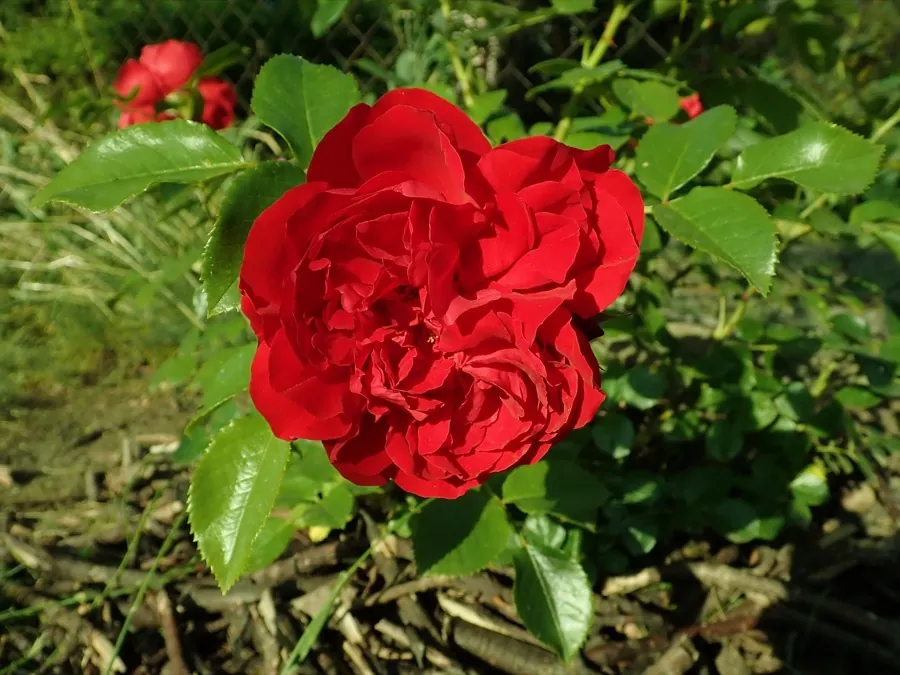
Round-conical, dark red
Open flower
Quartered, nostalgic rosette with delicate 'boxes' of petals; 8–10 cm across
Centre
Dense dark red centre, opening more over time
Fullness
Very double, ~75 petals
Flower carriage
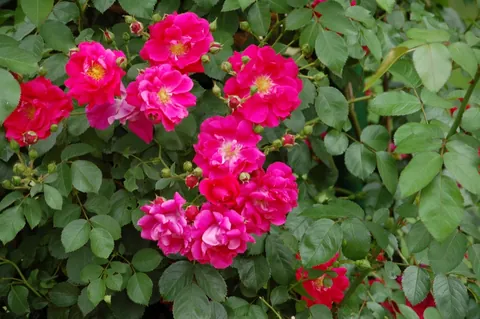
Singly or in small clusters of 2–3

Fragrance

Light

Light to moderate — slight/mild; not the variety's strong point; its main value is colour and resistance.

Disease resistance

5 out of 5
Powdery mildewresistant

Outstanding — confirmed by the 2016 ADR-certificate after 3 years of rigorous testing.

Sun

Full sun for profuse flowering

Thorns

Moderate
thornlessfewmoderatemanyvery many

Medium number, typical of modern Kordes climbers.

Foliage

Dark green, glossy, very healthy.

Other names

Florentina® Arborose
All characteristics in a table
Group
Large-flowered climber
Breeder
Tim-Hermann Kordes, Germany, 2011
Bud shape
Round-conical, dark red
Open flower
Quartered, nostalgic rosette with delicate 'boxes' of petals; 8–10 cm across
Centre
Dense dark red centre, opening more over time
Colour
Bright pure red with no orange or maroon tints; holds its colour well
Fullness
Very double, ~75 petals
Flower carriage
Singly or in small clusters of 2–3
Flowering
Repeat-flowering (unlike Flammentanz) — in flushes from June to the first frosts
Fragrance
Light to moderate — slight/mild; not the variety's strong point; its main value is colour and resistance
Hips
Does not form decorative hips (repeat flowering interrupts hip formation)
Habit
A short climber of ~2 m — ideal for low arches and obelisks (unlike Flammentanz, which grows to 3.5 m)
Branching
Good, forms a dense green wall
Shoots
Strong, straight, hold the double flowers well
Thorns
Medium number, typical of modern Kordes climbers.
Dimensions
200 cm tall × 80 cm wide (in the USA up to 215 cm); in a warm climate — at the upper end
Support
Needs support — a low arch, obelisk, trellis, or a container by a fence
Foliage
Dark green, glossy, very healthy
Resistance
Outstanding — confirmed by the 2016 ADR-certificate after 3 years of rigorous testing
Variations of the variety
Synonyms Florentina® Arborose®; code KORtrameilo; NOT 'Florentine' (that is a different variety); parentage not disclosed (two unnamed Kordes seedling lines)

Colour scheme

Bright pure red with no orange or maroon tints; holds its colour well

Rose neighbours

Perennials to plant nearby

Rose neighbours

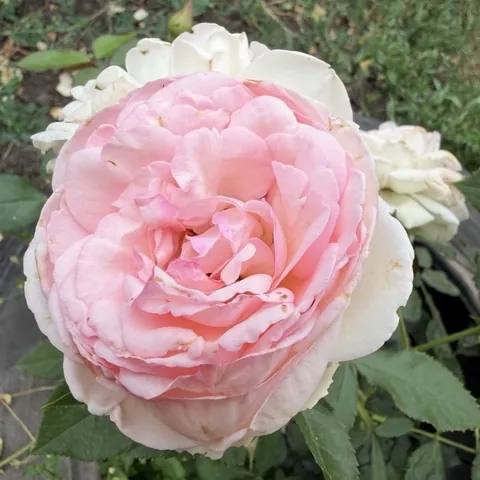
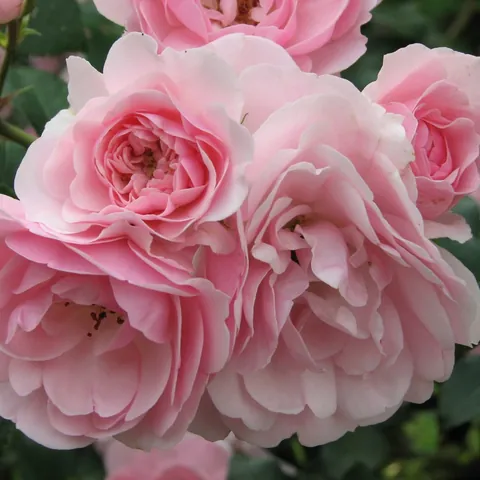
White or cream climbers to contrast with the deep red:

Perennial companions

A silver-purple palette — a classic for a red climber:

lavender 'Munstead'lamb's ear (Stachys byzantina)lady's mantle (Alchemilla mollis)geranium 'Rozanne'

Availability worldwide

One of the best modern red climbers, available worldwide:

  • 🇪🇺 Europe: HIGH · Kordes · Arborose collection
  • 🇺🇸 USA: high · Jackson&Perkins · Wayside
  • 🇯🇵 Asia: moderate
  • 🇺🇦 Ukraine: moderate · available from Kordes dealers

More about the variety

Hips
Does not form decorative hips (repeat flowering interrupts hip formation)
Variations of the variety
Synonyms Florentina® Arborose®; code KORtrameilo; NOT 'Florentine' (that is a different variety); parentage not disclosed (two unnamed Kordes seedling lines)

How to grow

Where to plant. Low 2 m arches, obelisks, containers by a wall, garden 'gateways'; good for small plots where Flammentanz (3.5 m) would be too large; paired with a white climber it makes a dramatic red-and-white gateway.

Climate. To −29 °C — all of Ukraine with minimal cover or none; in the south no cover is needed; in the northern Carpathians light cover is recommended.

Care. Formative pruning of climbers is light; profuse flowering is encouraged by training the shoots horizontally; outstanding resistance means almost no fungicide is needed.

About the name

Name. 'Florentina' — from Italian Firenze (Florence), the historic capital of the Italian Renaissance. The name conveys the 'Italian spirit' — rich colour, a quartered form (reminiscent of Renaissance flowers in Botticelli's paintings) and the noble bearing of a climber.

Breeding. Bred by Tim-Hermann Kordes (great-grandson of Wilhelm Kordes I, and the fourth generation of the Kordes family!), Sparrieshoop, Germany. Exact dates: bred 2002, selected 2003, commercial introduction 2011. Code KORtrameilo, US patent PP 24,196 (2014). Parentage not disclosed (two unnamed Kordes seedling lines — standard practice for the house).

Significance. 'a healthy descendant of Flammentanz' — one of the few modern red climbers to receive ADR in 2016. Belongs to the Arborose® Kordes collection ('tree-like' in English) — a series of modern climbers with improved resistance. Positioned as a direct 'heir' to Flammentanz: it has the same rich red colour and legendary resistance, but with repeat flowering (Flammentanz flowers once a year) and a more compact habit (2 m vs 3.5 m). Ideal for modern small gardens where the 1955 classic would be too big.

Frequently asked questions about Florentina

Does Florentina need winter protection?

The cultivar’s reference temperature is −29 °C (USDA zone 5–9). Overwintering depends on the conditions. «extremely winterhardy» (Kordes).

How many times a season does Florentina flower?

Repeat-flowering (unlike Flammentanz) — in flushes from June to the first frosts.

How big does Florentina grow?

About 200 cm tall, about 80 cm wide.

Which diseases affect Florentina?

Overall resistance: 5 out of 5. Outstanding resistance to black spot and powdery mildew; ADR-certificate.

How much sun does Florentina need?

Sun; full sun for profuse flowering.

What does Florentina smell like?

Light to moderate — slight/mild; not the variety's strong point; its main value is colour and resistance.

Gardeners' photos and reviews

My climate

Choose a reference temperature to compare with the cultivar’s data. This is not an overwintering forecast or advice on winter protection; consider wind, moisture and the duration of frost.

Regional data are generalised. USDA describes average annual extreme minima, not a forecast; the values in the list are rounded. Check the conditions at your site. More information: Roses in Ukraine's climate.