


Back to catalogue
Floribunda; patio roseVittorio BarniYellow

Briosa

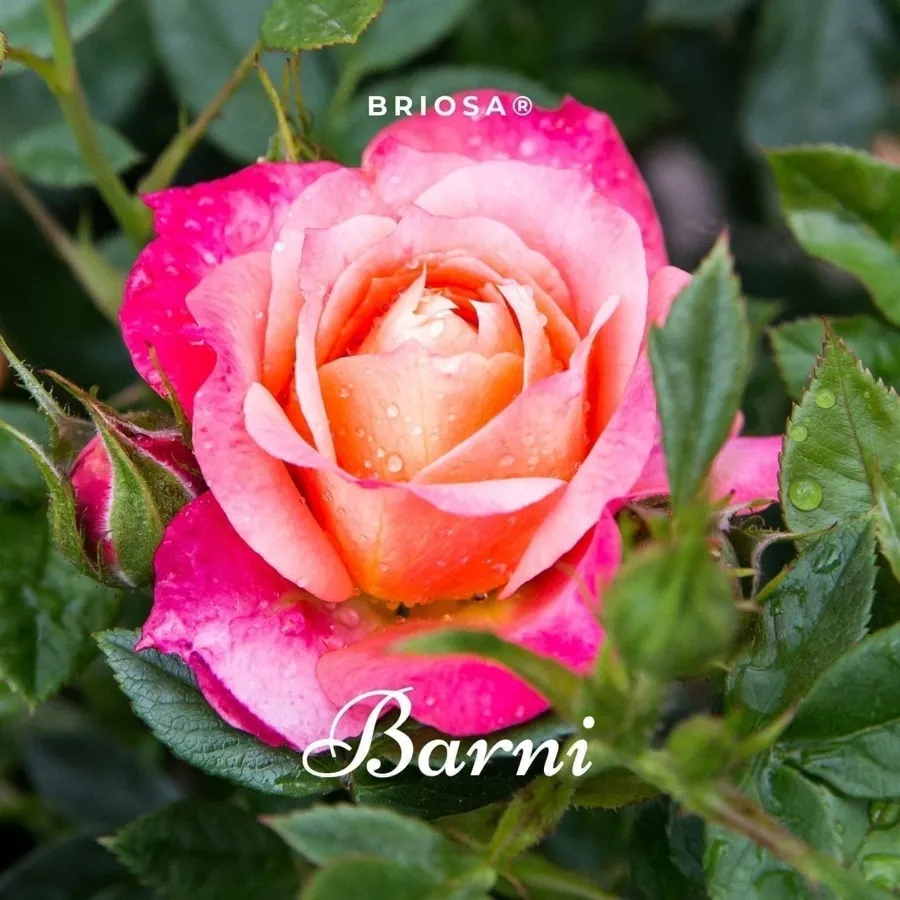
Rose Barni collection; a colourful Italian bedding rose with a characteristic multicoloured change.

Mini shrub · Italian breeding by Rose Barni

Variety profile

Flowering

In flushes throughout the season

Awards

Excellent

HelpMeFind rating · 18 votes

Winter hardiness

−20 °C

USDA zone 6b–9b. South and West Ukraine · Polissia — with winter protection.

Compare reference temperatures

Plant size

40–70 × 50–60 cm
person 170 cm40–70 cm
Habit
Compact, dense, spreading
Dimensions
40–70 cm high × 50–60 cm wide
Support
Does not need support — the shrub is self-supporting (support is needed only for climbing varieties)
Shoots
Numerous, thin but sturdy
Branching
Strong

Flower

9–11 cm
Bud shape
Full, orange-pink
Open flower
Ball-shaped cupped; diameter 9–11 cm
Centre
Yellow-orange, clearly visible when open
Fullness
Full, 17–25 petals
Flower carriage
In clusters

Fragrance

Barely noticeable

Barely noticeable, light.

Disease resistance

3 out of 5
Black spotmoderate

Moderate — needs protection against black spot.

Sun

Full sun to show the multicoloured change

Thorns

Moderate
thornlessfewmoderatemanyvery many

Standard for a patio floribunda.

Foliage

Medium green, compound.

Other names

Breeder's code BARbrio.

All characteristics in a table
Group
Floribunda; patio rose
Breeder
Vittorio Barni
Bud shape
Full, orange-pink
Open flower
Ball-shaped cupped; diameter 9–11 cm
Centre
Yellow-orange, clearly visible when open
Colour
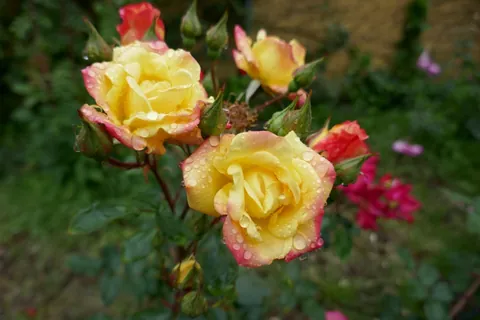
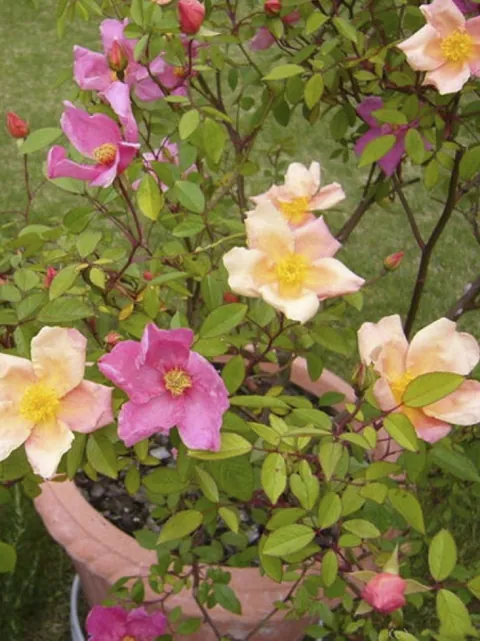
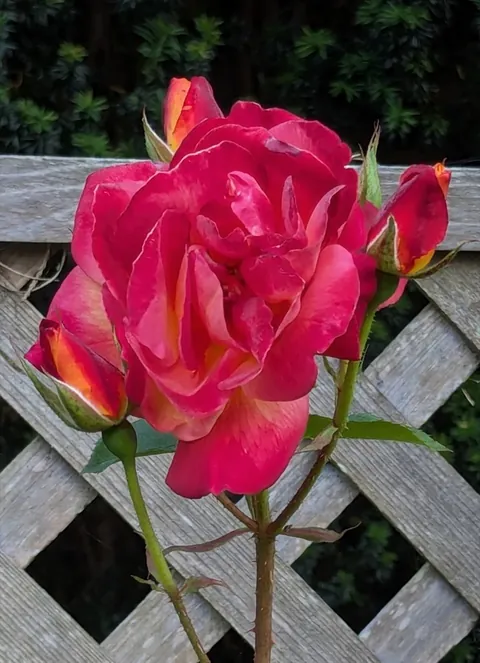
Changes as it opens — from an orange-yellow centre to pink and cherry at the edges; every flower is unique
Fullness
Full, 17–25 petals
Flower carriage
In clusters
Flowering
In flushes throughout the season
Fragrance
Barely noticeable, light
Hips
Rare
Habit
Compact, dense, spreading
Branching
Strong
Shoots
Numerous, thin but sturdy
Thorns
Standard for a patio floribunda.
Dimensions
40–70 cm high × 50–60 cm wide
Support
Does not need support — the shrub is self-supporting (support is needed only for climbing varieties)
Foliage
Medium green, compound
Resistance
Moderate — needs protection against black spot
Variations of the variety
Ideal for rock gardens and patio pots

Colour scheme

Changes as it opens — from an orange-yellow centre to pink and cherry at the edges; every flower is unique

Rose neighbours

Perennials to plant nearby

Neighbouring roses

A multicoloured palette keeps one playful mood around Briosa.

Companion perennials

Warm yellow-orange tones + blue contrast:

yarrow Moonshinecoreopsis Zagrebcatmint (Nepeta)geum Mrs Bradshaw

Contrasting accents

For a play of warm tones: caramel foliage and warm-coloured echinacea:

Echinacea Cheyenne SpiritHeuchera CaramelGaillardia

More about the variety

Hips
Rare
Variations of the variety
Ideal for rock gardens and patio pots

How to grow

Where to plant. Low borders, rock gardens, patios, small multicoloured beds, pots on a terrace.

Climate. The South and West of Ukraine; in the Poltava and Sumy regions — with winter protection.

Care. Moderate watering, feeding for long flowering, disease prevention.

About the name

Name. From the Italian 'briosa', meaning 'lively, playful, spirited' — for its bright, changing colour, which suggests a lively character.

Breeding. Bred by Vittorio Barni (1914–1999, Italy). Parentage not officially documented. Patent code BARbrio.

Significance. It emphasises the lively, playful character of the flower. A collectors' Italian rose with a characteristic multicoloured change — rare outside Italy.

Frequently asked questions about Briosa

Does Briosa need winter protection?

The cultivar’s reference temperature is −20 °C (USDA zone 6b–9b). Overwintering depends on the conditions.

How many times a season does Briosa flower?

In flushes throughout the season.

How big does Briosa grow?

40–70 cm tall, 50–60 cm wide.

Which diseases affect Briosa?

Overall resistance: 3 out of 5. Moderate; needs protection against black spot.

How much sun does Briosa need?

Sun; full sun to show the multicoloured change.

What does Briosa smell like?

Barely noticeable, light.

Gardeners' photos and reviews

My climate

Choose a reference temperature to compare with the cultivar’s data. This is not an overwintering forecast or advice on winter protection; consider wind, moisture and the duration of frost.

Regional data are generalised. USDA describes average annual extreme minima, not a forecast; the values in the list are rounded. Check the conditions at your site. More information: Roses in Ukraine's climate.