

Back to catalogue
Large-Flowered ClimberDavid L. Armstrong & Herbert C. Swim; Armstrong Nurseries, 1964Red

Joseph's Coat

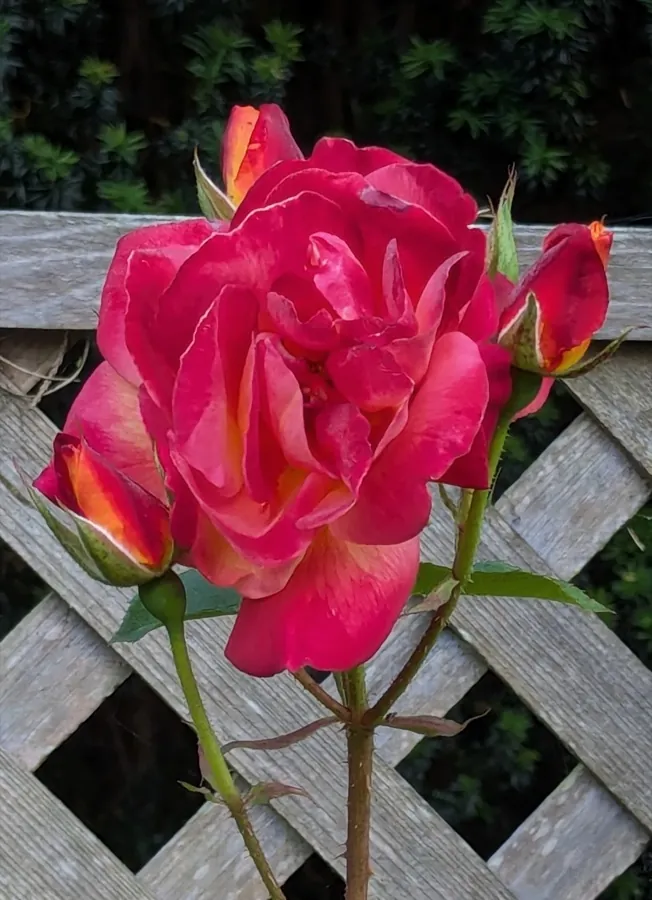
'Coat of many colours'; one flower passes from yellow through orange to red; a biblical name (Book of Genesis, 37).

US PP 2,488 · Armstrong & Swim · climbing floribunda

Variety profile

Flowering

Repeat-flowering with pauses

Legacy

Armstrong+Swim 1964

The first commercial multicolour climber · no official awards, but iconic

Winter hardiness

−29 °C

USDA zone 4b–10. In Ukraine with protection in the north.

Compare reference temperatures

Plant size

245–365 × 120 cm
person 170 cm245–365 cm
Habit
An upright climber with erect canes
Dimensions
245–365 × 120 cm (8–12 × 4 ft)
Support
Needs a support: pergolas, arches, south walls
Shoots
Sturdy, straight, holding the weight of the climber clusters well
Branching
Good along the whole length of the cane

Flower

≈ 10 cm

Semi-double, 23–28 petals (some sources say up to 40) petals.

Bud shape
Bright red, oval
Open flower
Half-open cup with visible stamens; the colour changes from the first day to the fall of the petals
Centre
Visible, with a tuft of yellow stamens
Fullness
Semi-double, 23–28 petals (some sources say up to 40)
Flower carriage
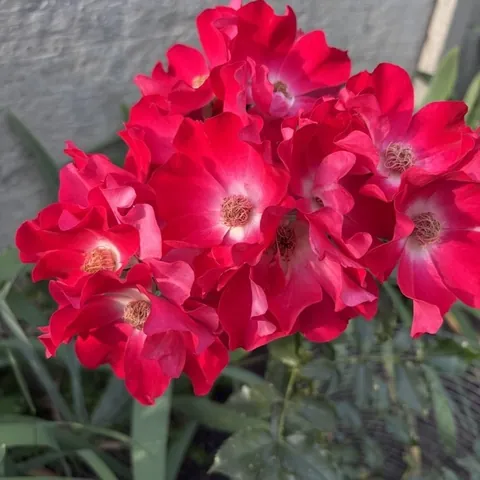
Small clusters of 5–10 flowers per stem: a climbing floribunda by patent

Fragrance

Moderate; fruity

Disease resistance

2 out of 5
Black spotsusceptiblePowdery mildewsusceptibleRustsusceptible

2/5: weak against the main rose diseases; seasonal prevention is essential.

Sun

Full sun

The colour is richer in sunny exposures.

Thorns

Many
thornlessfewmoderatemanyvery many

Many: typical of climbers of that time.

Foliage

Medium green, moderately leathery: the variety's weak point, needs seasonal prevention.

All characteristics in a table
Group
Large-Flowered Climber
Breeder
David L. Armstrong & Herbert C. Swim; Armstrong Nurseries, USA, 1964
Bud shape
Bright red, oval
Open flower
Half-open cup with visible stamens; the colour changes from the first day to the fall of the petals
Centre
Visible, with a tuft of yellow stamens
Colour
A unique colour sequence: the bud is bright red, opens yellow with an orange-red flush, and turns fully red; all three stages can be seen on one bush at once, hence the 'coat of many colours'
Fullness
Semi-double, 23–28 petals (some sources say up to 40)
Flower carriage
Small clusters of 5–10 flowers per stem: a climbing floribunda by patent
Flowering
Repeat-flowering with pauses
Fragrance
Moderate, fruity
Hips
Not documented
Habit
An upright climber with erect canes
Branching
Good along the whole length of the cane
Shoots
Sturdy, straight, holding the weight of the climber clusters well
Thorns
Many: typical of climbers of that time.
Dimensions
245–365 × 120 cm (8–12 × 4 ft)
Support
Needs a support: pergolas, arches, south walls
Foliage
Medium green, moderately leathery: the variety's weak point, needs seasonal prevention
Resistance
2/5: weak against the main rose diseases; seasonal prevention is essential
Variations of the variety
US PP 2,488 (16 March 1965); parentage Buccaneer × Circus: from its father Circus it received its bicolour heritage

Colour scheme

A unique colour sequence: the bud is bright red, opens yellow with an orange-red flush, and turns fully red; all three stages can be seen on one bush at once, hence the 'coat of many colours'

Rose neighbours

Perennials to plant nearby

Rose neighbours

Solo climbers for neighbouring supports — Joseph's Coat is already a 'festival' on its own:

Companion perennials

Cool purples and neutral greens — a grounding base for the 'explosion' of colour:

clematis 'Étoile Violette'lavenderornamental grassessoft lady's mantle

Availability worldwide

A classic climber with a 60-year history, available worldwide:

🇺🇸 USA: high · classic Armstrong🇬🇧 United Kingdom: moderate🇪🇺 Europe: moderate🇺🇦 Ukraine: high · traditionally popular

More about the variety

Hips
Not documented
Variations of the variety
US PP 2,488 (16 March 1965); parentage Buccaneer × Circus: from its father Circus it received its bicolour heritage

How to grow

Where to plant. Arches, pergolas, south walls, wooden fences; as a specimen, Joseph's Coat 'colours itself' and needs no colour neighbours. Do not plant it in a group with other multicolour roses: the colours would clash.

Climate. Down to −29 °C. In Ukraine: the south and centre without protection; in the north, moderate protection for young plants in snowless winters.

Care. Seasonal disease prevention is essential (fungicides in spring and autumn); pruning is selective: remove only dead and diseased canes; tie young canes horizontally for more flowering.

About the name

Name. The rose is named after Joseph's 'multicoloured coat' from the Bible, Book of Genesis, chapter 37. According to the story, Jacob (Israel) gave his favourite son Joseph a multicoloured tunic; this provoked the jealousy of his brothers, who sold him into slavery in Egypt. The variety captures this 'multicoloured fabric' exactly: one flower carries yellow, orange and red at the same time.

Breeding. Jointly bred by David L. Armstrong and Herbert C. Swim at Armstrong Nurseries (California, USA), introduced in 1964. US PP 2,488 (16 March 1965). Parentage: Buccaneer × Circus; it inherited its bicolour heritage from its father Circus (Swim 1956, AARS 1956, also a bicolour). By its patent it is a climbing floribunda; in ARS classification it is a Large-Flowered Climber.

Significance. One of the first commercially successful multicolour climbers, the benchmark for the genre. Although it has not won major international awards (no AARS, ADR or WFRS HoF), it has remained in commerce for more than 60 years, a rare achievement without official titles. It is often wrongly classified as a 'Hybrid Tea climber'; by its patent it is a climbing floribunda. The breeders are often shortened to 'Armstrong', but it was a joint breeding by Armstrong and Swim. AROcad is another Armstrong variety, not a synonym of Joseph's Coat.

Frequently asked questions about Joseph's Coat

Does Joseph's Coat need winter protection?

The cultivar’s reference temperature is −29 °C (USDA zone 4b–10). Overwintering depends on the conditions. In Ukraine with protection in the north.

How many times a season does Joseph's Coat flower?

Repeat-flowering with pauses.

How big does Joseph's Coat grow?

245–365 cm tall, about 120 cm wide.

Which diseases affect Joseph's Coat?

Overall resistance: 2 out of 5. Weak; susceptible to black spot, powdery mildew and rust: preventive spraying is essential.

How much sun does Joseph's Coat need?

Sun; full sun; the colour is richer in sunny exposures.

What does Joseph's Coat smell like?

Moderate, fruity.

Gardeners' photos and reviews

My climate

Choose a reference temperature to compare with the cultivar’s data. This is not an overwintering forecast or advice on winter protection; consider wind, moisture and the duration of frost.

Regional data are generalised. USDA describes average annual extreme minima, not a forecast; the values in the list are rounded. Check the conditions at your site. More information: Roses in Ukraine's climate.