



Back to catalogue
Hybrid TeaMcGredy, 1963Yellow

Casanova

Sam McGredy IV; Northern Ireland; a benchmark yellow HT of the 1960s.

Classic 1950s HT

Variety profile

Flowering

Repeat, in flushes

Repeat flowering in flushes all season until the first frosts. Months are approximate, for the climate of Ukraine.

Awards

Geneva

Certificate of Merit 1963

Winter hardiness

−20 °C

USDA zone 6–9. With winter cover — all of Ukraine.

Compare reference temperatures

Plant size

120–140 × 70–90 cm
person 170 cm120–140 cm
Habit
Upright, vigorous, vertical
Dimensions
120–140 cm high × 70–90 cm wide
Support
Does not need support — the bush is self-supporting; the stems are stiff enough to hold the large flowers
Shoots
Sturdy, straight, hold the large flowers on long stems well
Branching
Moderate; typical structure of a hybrid tea

Flower

12–15 cm
Bud shape
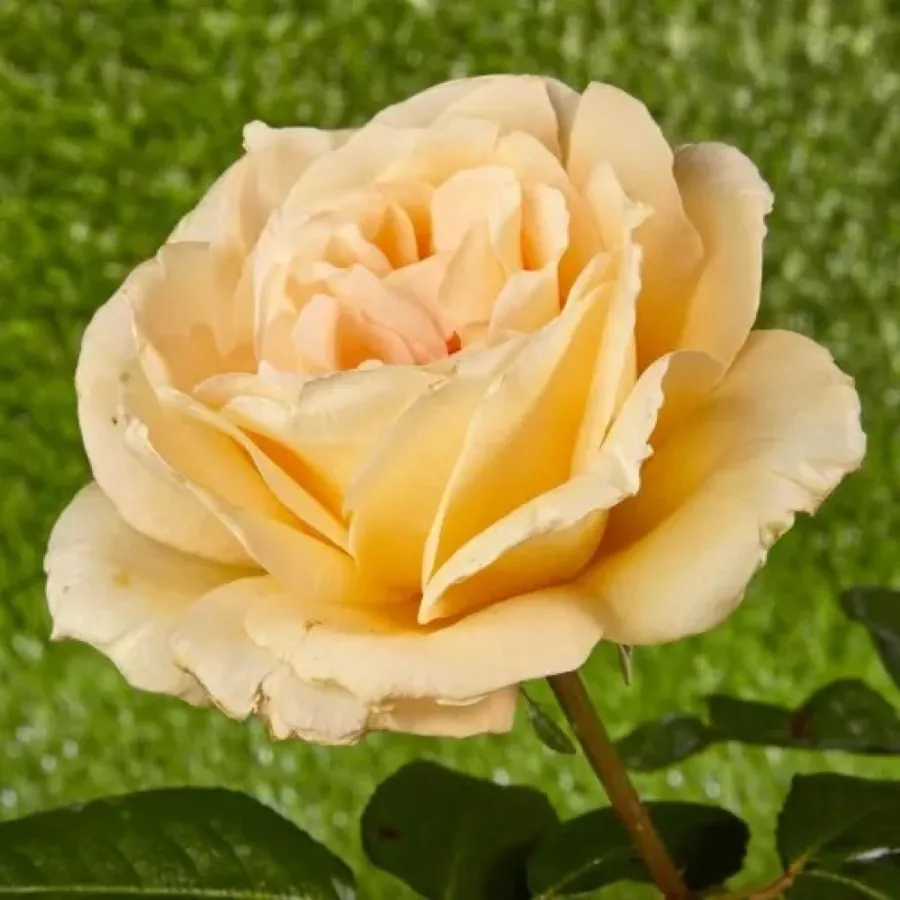
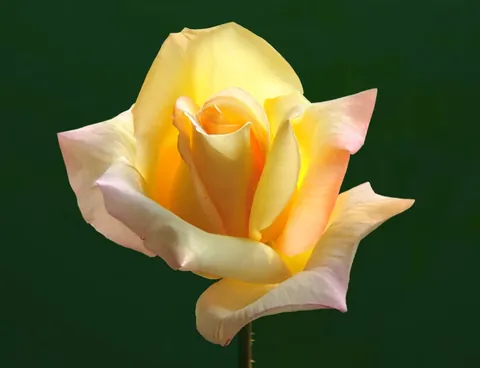
Elongated, pointed, high — the benchmark HT form for cutting
Open flower
Classic high-centred, conical; diameter 12–15 cm
Centre
Clearly conical, high, hides the stamens until fully open
Fullness
Full, 26–40 petals
Flower carriage
Mostly borne singly, sometimes 2–3 in small clusters

Fragrance

Moderate

Moderate, soft musk notes with a sweet tinge.

Disease resistance

3 out of 5
Black spotsusceptible

Moderate; needs prevention of black spot and summer powdery mildew.

Sun

Full sun essential

In partial shade flowering weakens and the colour fades.

Thorns

Few
thornlessfewmoderatemanyvery many

Almost thornless — a characteristic trait of the variety, convenient for cutting.

Foliage

Matt, dark green, typical of HTs.

All characteristics in a table
Group
Hybrid Tea
Breeder
McGredy, 1963
Bud shape
Elongated, pointed, high — the benchmark HT form for cutting
Open flower
Classic high-centred, conical; diameter 12–15 cm
Centre
Clearly conical, high, hides the stamens until fully open
Colour
Straw-yellow at the heart, cream edges; lightens to beige with time
Fullness
Full, 26–40 petals
Flower carriage
Mostly borne singly, sometimes 2–3 in small clusters
Flowering
Repeat flowering in flushes all season until the first frosts
Fragrance
Moderate, soft musk notes with a sweet tinge
Hips
Practically none
Habit
Upright, vigorous, vertical
Branching
Moderate; typical structure of a hybrid tea
Shoots
Sturdy, straight, hold the large flowers on long stems well
Thorns
Almost thornless — a characteristic trait of the variety, convenient for cutting.
Dimensions
120–140 cm high × 70–90 cm wide
Support
Does not need support — the bush is self-supporting; the stems are stiff enough to hold the large flowers
Foliage
Matt, dark green, typical of HTs
Resistance
Moderate; needs prevention of black spot and summer powdery mildew
Variations of the variety
No official sports; do not confuse with modern 'Casanova' varieties from other breeders

Colour scheme

Straw-yellow at the heart, cream edges; lightens to beige with time

Rose neighbours

Perennials to plant nearby

Neighbouring roses

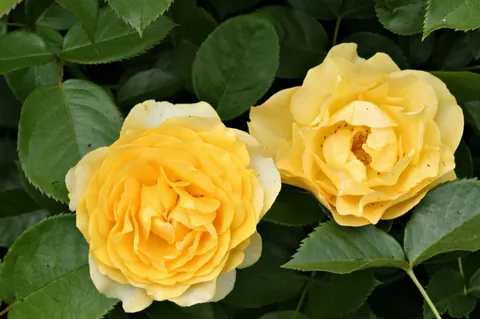
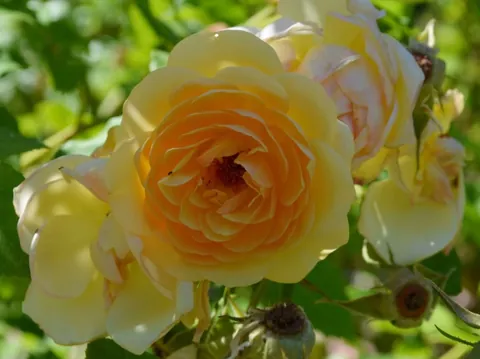
A yellow-cream palette for a monochrome golden flower bed:

Companion perennials

Cool blue and purple tones — a classic contrast to the warm yellow:

catmint (Nepeta)sage 'Caradonna'ornamental onionox-eye daisy

Contrasting accents

For depth — deep blue and silver:

delphinium blueagastache 'Blue Fortune'salvia 'May Night'woolly stachys

More about the variety

Hips
Practically none
Variations of the variety
No official sports; do not confuse with modern 'Casanova' varieties from other breeders

How to grow

Where to plant. Formal borders, specimen roses for cutting, the front of a planting with low perennials; as a classic HT it looks good in row plantings and single-variety beds.

Climate. Tolerates frosts to −20 °C — northern regions of Ukraine need winter cover; southern regions — no cover needed.

Care. As a classic HT it needs regular preventive treatments against disease, formative pruning in spring, and removal of spent flowers.

About the name

Name. After Giacomo Casanova — a symbol of elegance, romance and charm. The name highlights the stately, heart-stopping beauty of a classic HT.

Breeding. Bred by Samuel Darragh McGredy IV at Sam McGredy (Portadown, Northern Ireland), 1957; introduced to the market in Great Britain in 1963 through Fisons Horticulture Ltd. Parentage: Queen Elizabeth (grandiflora, Lammerts 1954) × Perfecta (HT, Kordes 1957).

Significance. A model example of a 'pure HT' from the 1950s–60s, when McGredy IV was still working in Northern Ireland, before moving to New Zealand. The variety received the Geneva Certificate of Merit (1963) and became one of the standard yellow HTs of its time.

Frequently asked questions about Casanova

Does Casanova need winter protection?

The cultivar’s reference temperature is −20 °C (USDA zone 6–9). Overwintering depends on the conditions.

How many times a season does Casanova flower?

Repeat flowering in flushes all season until the first frosts.

How big does Casanova grow?

120–140 cm tall, 70–90 cm wide.

Which diseases affect Casanova?

Overall resistance: 3 out of 5. Typical level for 1960s HTs; weak point — black spot; powdery mildew — satisfactory.

How much sun does Casanova need?

Sun; full sun essential; in partial shade flowering weakens and the colour fades.

What does Casanova smell like?

Moderate, soft musk notes with a sweet tinge.

Gardeners' photos and reviews

My climate

Choose a reference temperature to compare with the cultivar’s data. This is not an overwintering forecast or advice on winter protection; consider wind, moisture and the duration of frost.

Regional data are generalised. USDA describes average annual extreme minima, not a forecast; the values in the list are rounded. Check the conditions at your site. More information: Roses in Ukraine's climate.