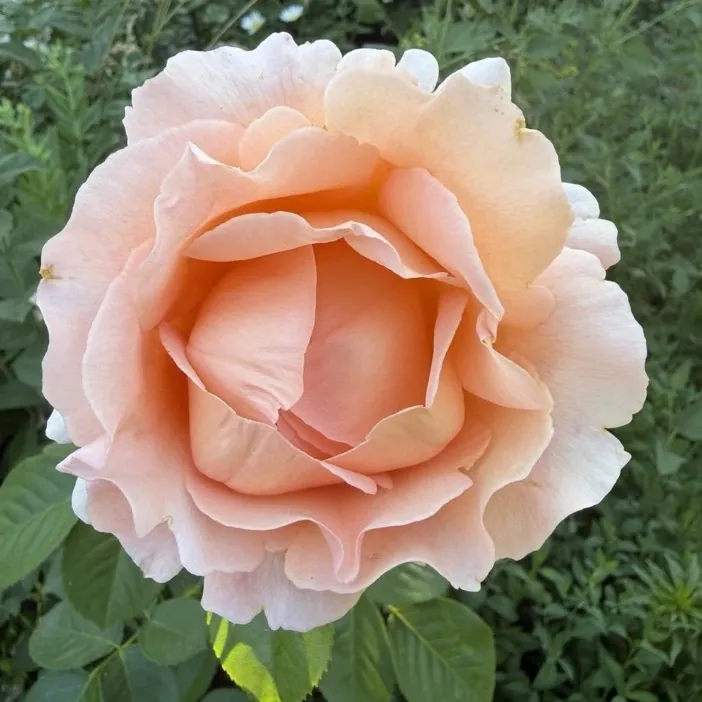
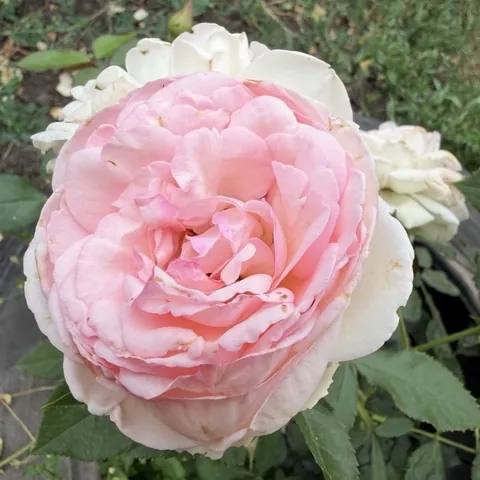
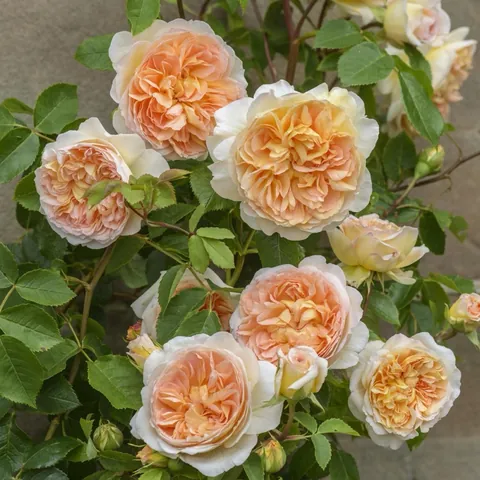
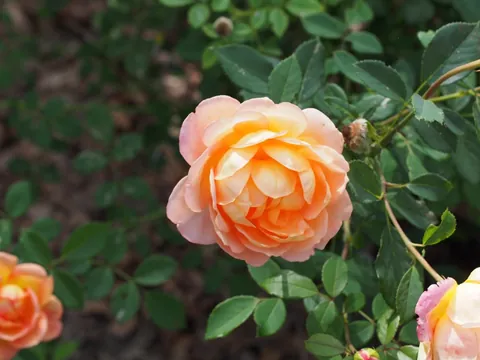
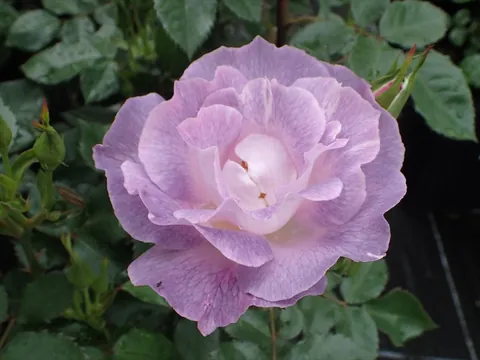




Polka, close-up of the flower
Back to catalogue
Large-Flowered Climber; climber; romantic styleJacques Mouchotte; Meilland International, 1991Apricot and orange

Polka

A warm peach-apricot climber with wavy petals; ~90–100 petals in the quartered form of old roses; 5 trade names: Polka, Lord Byron, Scented Dawn, Twilight Glow, Pretty Lady; a Meilland series with musical names.

5 trade names in different countries · ~90–100 petals

Variety profile

Flowering

Repeat, in flushes

Repeat flowering from June to October, with pronounced waves. Months are approximate, for the climate of Ukraine.

Legacy

Meilland 1991

Music-themed name series · Bagatelle, Le Roeulx

Winter hardiness

−29 °C

USDA zone 5a. All of Ukraine without cover.

Compare reference temperatures

Plant size

120–365 × 120–240 cm
person 170 cm120–365 cm
Habit
A large climber with flexible canes
Dimensions
120–365 cm high (usually 2.5–3 m) × 120–240 cm wide — a convenient climber for arches, pergolas and walls
Support
Essential — an arch, a pergola, a trellis, a wall
Shoots
Flexible, train well on a support
Branching
Well branched, with strong main canes and flexible side shoots

Flower

10–13 cm
Bud shape
Round, warm peach-apricot with pink tints
Open flower
Quartered form of old roses: 10–13 cm, very double, with wavy (frilly) petal edges — a special feature
Centre
Densely packed with curled "quartered" petals; a yellow glow in the centre
Fullness
90–100 petals — a record for a climber
Flower carriage
Mostly in small clusters of 3–5 flowers

Fragrance

Moderate; old-rose with spice

Moderate old-rose with spicy notes — a typical "old rose" combination.

Disease resistance

5 out of 5
Black spotresistantPowdery mildewresistant

High, 5/5: to powdery mildew and blackspot; good winter hardiness for a Meilland climber (USDA 5a).

Sun

Sun + shade

Full sun or light shade.

Thorns

Moderate
thornlessfewmoderatemanyvery many

Moderate number of prickles — typical of Meilland-climbers.

Foliage

Dark green, glossy — healthy, typical of modern Meilland roses.

All characteristics in a table
Group
Large-Flowered Climber; climber; romantic style
Breeder
Jacques Mouchotte; Meilland International, France, 1991
Bud shape
Round, warm peach-apricot with pink tints
Open flower
Quartered form of old roses: 10–13 cm, very double, with wavy (frilly) petal edges — a special feature
Centre
Densely packed with curled "quartered" petals; a yellow glow in the centre
Colour
Warm peach-apricot with pink shimmers; a yellow glow in the centre of the open flowers; wavy petal edges; they fade to a creamy peach
Fullness
90–100 petals — a record for a climber
Flower carriage
Mostly in small clusters of 3–5 flowers
Flowering
Repeat flowering from June to October, with pronounced waves
Fragrance
Moderate old-rose with spicy notes — a typical "old rose" combination
Hips
Not documented — cut for repeat flowering
Habit
A large climber with flexible canes
Branching
Well branched, with strong main canes and flexible side shoots
Shoots
Flexible, train well on a support
Thorns
Moderate number of prickles — typical of Meilland-climbers.
Dimensions
120–365 cm high (usually 2.5–3 m) × 120–240 cm wide — a convenient climber for arches, pergolas and walls
Support
Essential — an arch, a pergola, a trellis, a wall
Foliage
Dark green, glossy — healthy, typical of modern Meilland roses
Resistance
High, 5/5: to powdery mildew and blackspot; good winter hardiness for a Meilland climber (USDA 5a)
Variations of the variety
Code MEItosier. Introduced 1991 (1992 in the USA). 5 trade names: Polka, Lord Byron, Scented Dawn, Twilight Glow, Pretty Lady. Parentage: ('MEIpalsar' × 'Golden Showers' [Lammerts 1956]) × 'Lichtkönigin Lucia' (Large-Flowered Climber, Kordes 1966)

Colour scheme

Warm peach-apricot with pink shimmers; a yellow glow in the centre of the open flowers; wavy petal edges; they fade to a creamy peach

Rose neighbours

Perennials to plant nearby

Neighbouring roses

Climbers and the apricot-rolling family create an 'arch gallery':

Companion perennials

Classic cottage palette for climbers:

lavenderlady's mantlewoundwortcatmint

Availability worldwide

One of the most popular apricot climbers of the last 30 years:

🇫🇷 France: high · Meilland-Richardier🇺🇸 USA: high · Edmunds, Regan, Grace Rose Farm🇪🇺 Europe: high · via Meilland🇺🇦 Ukraine: moderate · via Meilland partners

More about the variety

Hips
Not documented — cut for repeat flowering
Variations of the variety
Code MEItosier. Introduced 1991 (1992 in the USA). 5 trade names: Polka, Lord Byron, Scented Dawn, Twilight Glow, Pretty Lady. Parentage: ('MEIpalsar' × 'Golden Showers' [Lammerts 1956]) × 'Lichtkönigin Lucia' (Large-Flowered Climber, Kordes 1966)

How to grow

Where to plant. On arches, pergolas, trellises and walls — its main use; as a romantic accent in the garden; it combines well with pastel climbers or stands alone as an accent among neutral perennials.

Climate. All of Ukraine without cover (USDA 5a, to −29 °C); copes well with summer heat. High resistance to disease and rain.

Care. Full sun or light shade; a sturdy support is essential; feed 2–3 times per season; prune by ⅓ in spring — remove old and weak canes; minimal disease prevention thanks to its high resistance.

About the name

Name. "Polka" — after the musical dance: playful, festive associations. Part of the Meilland series with musical names (Mozart, Symphonie, Polka). In different countries the variety has 5 trade names: 🇫🇷 Polka, 🇬🇧 Lord Byron, 🇺🇸 Scented Dawn, and others — Twilight Glow, Pretty Lady. Lord Byron — after the British Romantic poet G. G. Byron (1788–1824), typical of romantic climbers.

Breeding. Bred by Jacques Mouchotte for Meilland International (France). Code MEItosier. Introduced 1991 in France and 1992 in the USA. Parentage: ('MEIpalsar' × 'Golden Showers' [Lammerts 1956]) × 'Lichtkönigin Lucia' (LCl, Kordes 1966) — the combination of three climbers gave a unique quartered form with wavy edges.

Significance. One of the most popular apricot climbers of the last 30 years. ~90–100 petals — a record doubleness among climbers. Wavy (frilly) petal edges — a rare feature that adds romantic character. 5 trade names in different countries — uncommon, but important for marketing. High disease resistance — a rare combination with such doubleness. Shown at Bagatelle and Le Roeulx. No major official awards (ADR was not given), but 30+ years of global commercial success confirm its value.

Frequently asked questions about Polka

Does Polka need winter protection?

The cultivar’s reference temperature is −29 °C (USDA zone 5a). Overwintering depends on the conditions. All of Ukraine without cover.

How many times a season does Polka flower?

Repeat flowering from June to October, with pronounced waves.

How big does Polka grow?

120–365 cm tall, 120–240 cm wide.

Which diseases affect Polka?

Overall resistance: 5 out of 5. High; resistant to powdery mildew and blackspot.

How much sun does Polka need?

Sun + shade; full sun or light shade.

What does Polka smell like?

Moderate old-rose with spicy notes — a typical "old rose" combination.

Gardeners' photos and reviews

My climate

Choose a reference temperature to compare with the cultivar’s data. This is not an overwintering forecast or advice on winter protection; consider wind, moisture and the duration of frost.

Regional data are generalised. USDA describes average annual extreme minima, not a forecast; the values in the list are rounded. Check the conditions at your site. More information: Roses in Ukraine's climate.