Back to catalogue
English Shrub RoseDavid Austin, 1973Apricot and orange

Charles Austin

Named after the breeder's father; an important parent form of Graham Thomas, Golden Celebration, Teasing Georgia and others.

English Roses · tall, a parent variety

Variety profile

Flowering

Repeat, in flushes

Repeat-flowering in flushes; recovers slowly — flowers better after pruning and removing spent blooms. Months are approximate, for the climate of Ukraine.

Legacy

1973

One of David Austin's early English roses · an important parent variety

Winter hardiness

−20 °C

USDA zone 5b–10b. All of Ukraine; in the north, with winter cover. All of Ukraine · north with winter cover.

Compare reference temperatures

Plant size

150–305 × 120–185 cm
person 170 cm150–305 cm
Habit
Tall, bushy, upright
Dimensions
150–305 cm tall × 120–185 cm wide (in a warm climate over 200 cm)
Support
Can be grown as a shrub, pegged down, or tied in (to a support) as a low climber; a support is needed at its full height
Shoots
Vigorous
Branching
Good

Flower

≈ 10 cm

70 petals.

Bud shape
Buds with a reddish-orange tinge
Open flower
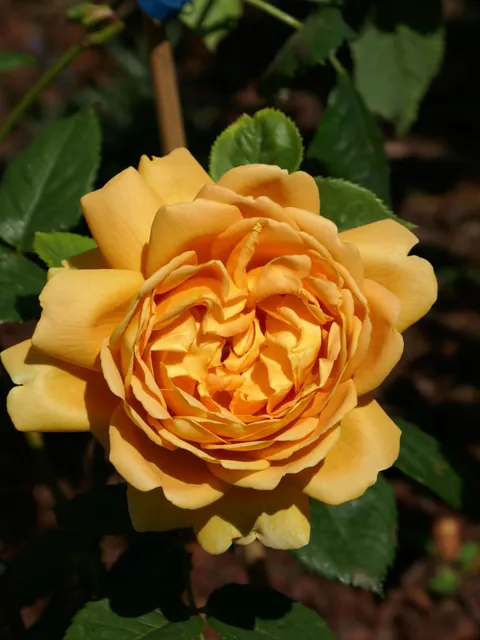
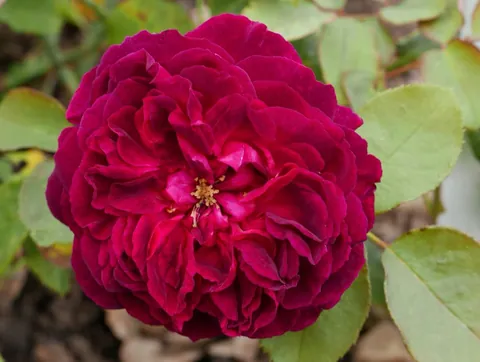
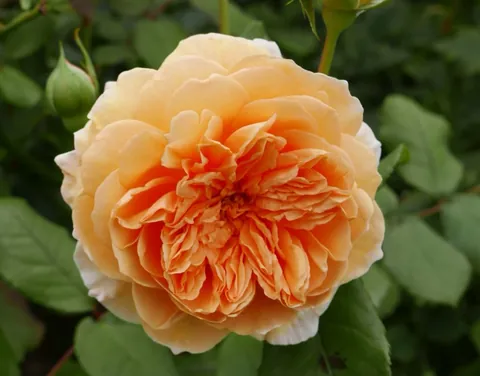
Very double, cupped, quartered rosette; diameter ~10 cm
Centre
Quartered
Fullness
Very double, ~70 petals
Flower carriage
In small clusters of 3–5 flowers

Fragrance

Strong; fruity (pear, grape, citrus)

Strong — fruity, with notes of pear, grape and citrus.

Disease resistance

2 out of 5
Black spotsusceptiblePowdery mildewsusceptible

Weak — needs preventive treatment against black spot and powdery mildew.

Sun

Full sun

Undemanding about soil type.

Thorns

Few
thornlessfewmoderatemanyvery many

A small number of fine thorns, smooth bark.

Foliage

Semi-glossy, leathery; bronze-green when young, green with age; 5–7 leaflets.

Other names

Breeder's code AUSfather.

All characteristics in a table
Group
English Shrub Rose
Breeder
David Austin, 1973
Bud shape
Buds with a reddish-orange tinge
Open flower
Very double, cupped, quartered rosette; diameter ~10 cm
Centre
Quartered
Colour
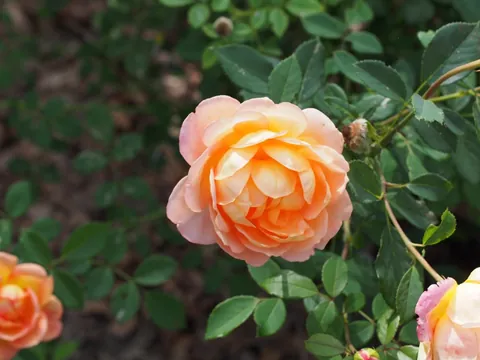
Apricot blend: deeper at the base of the petals, gradually paling to creamy peach at the edges
Fullness
Very double, ~70 petals
Flower carriage
In small clusters of 3–5 flowers
Flowering
Repeat-flowering in flushes; recovers slowly — flowers better after pruning and removing spent blooms
Fragrance
Strong — fruity, with notes of pear, grape and citrus
Hips
Usually deadheaded to encourage repeat flowering
Habit
Tall, bushy, upright
Branching
Good
Shoots
Vigorous
Thorns
A small number of fine thorns, smooth bark.
Dimensions
150–305 cm tall × 120–185 cm wide (in a warm climate over 200 cm)
Support
Can be grown as a shrub, pegged down, or tied in (to a support) as a low climber; a support is needed at its full height
Foliage
Semi-glossy, leathery; bronze-green when young, green with age; 5–7 leaflets
Resistance
Weak — needs preventive treatment against black spot and powdery mildew
Variations of the variety
Sport 'Yellow Charles Austin' (1981, lemon-gold); the variety is no longer in the David Austin range
Colour scheme

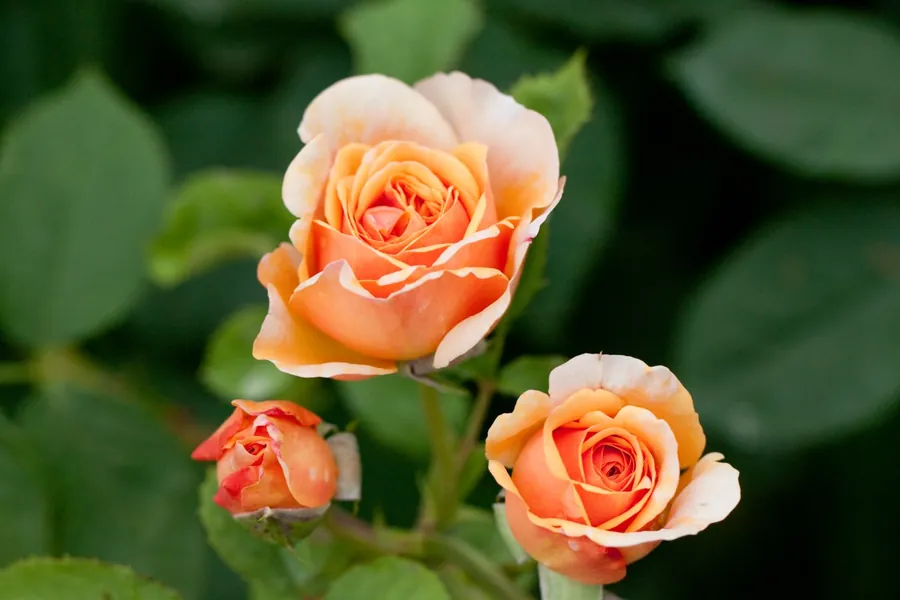
Apricot blend: deeper at the base of the petals, gradually paling to creamy peach at the edges

Rose neighbours

Perennials to plant nearby

Neighbouring roses

Apricot and golden English roses — they hold a warm, gentle mood around Charles Austin.

Companion perennials

Blue-violet flowers give a clean contrast to warm apricot:

catmint (Nepeta)sage Caradonnalavender 'Munstead'delphinium

Contrasting accents

Blue spires and a sheer 'haze' add depth to the warm range:

DelphiniumNepeta Six Hills GiantPerovskia

More about the variety

Hips
Usually deadheaded to encourage repeat flowering
Variations of the variety
Sport 'Yellow Charles Austin' (1981, lemon-gold); the variety is no longer in the David Austin range
How to grow

Where to plant. Because of its height, at the back of a mixed border, as a feature, or as a low climber on a support or wall. Pegging horizontal shoots down gives more flowers.

Climate. All of Ukraine; in the north, with light winter cover (USDA zone 5b).

Care. Disease prevention is essential (black spot, mildew); pruning and removing spent flowers encourage new flushes; feed twice a season.

About the name

Name. After Charles Austin, the father of the breeder David Austin.

Breeding. Bred by David C. H. Austin (David Austin Roses) in 1973. Patent code — AUSfather. Parentage: 'Chaucer' × 'Aloha'.

Significance. One of Austin's early English roses and an important parent — 'Graham Thomas', 'Golden Celebration', 'Teasing Georgia', 'Benjamin Britten' and others descend from it. In 1981 the sport 'Yellow Charles Austin' appeared.

Frequently asked questions about Charles Austin

Does Charles Austin need winter protection?

The cultivar’s reference temperature is −20 °C (USDA zone 5b–10b). Overwintering depends on the conditions. All of Ukraine; in the north, with winter cover.

How many times a season does Charles Austin flower?

Repeat-flowering in flushes; recovers slowly — flowers better after pruning and removing spent blooms.

How big does Charles Austin grow?

150–305 cm tall, 120–185 cm wide.

Which diseases affect Charles Austin?

Overall resistance: 2 out of 5. Weak — prone to black spot and powdery mildew; preventive treatment needed.

How much sun does Charles Austin need?

Full sun; undemanding about soil type.

What does Charles Austin smell like?

Strong — fruity, with notes of pear, grape and citrus.

Gardeners' photos and reviews

My climate

Choose a reference temperature to compare with the cultivar’s data. This is not an overwintering forecast or advice on winter protection; consider wind, moisture and the duration of frost.

Regional data are generalised. USDA describes average annual extreme minima, not a forecast; the values in the list are rounded. Check the conditions at your site. More information: Roses in Ukraine's climate.