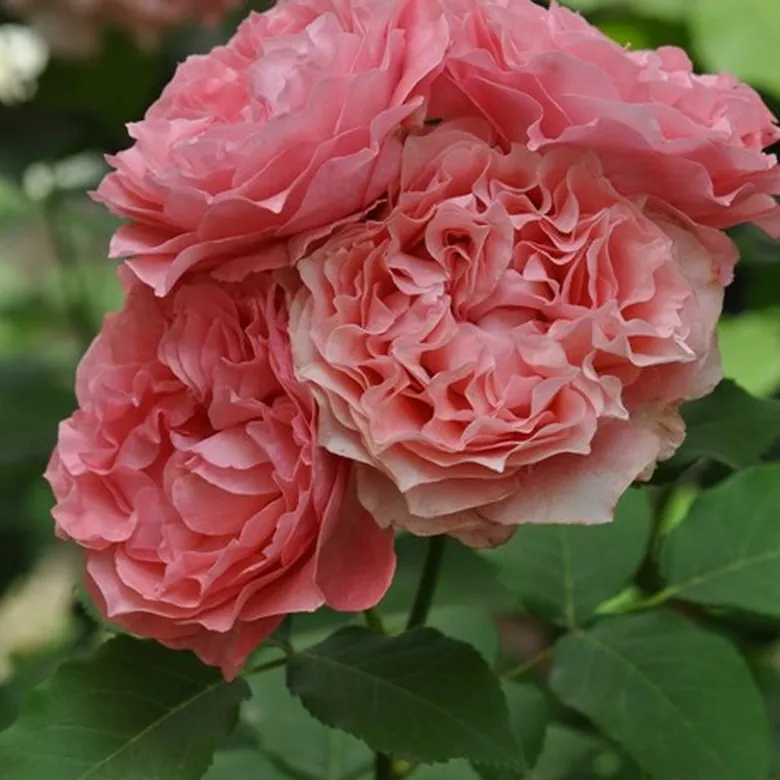
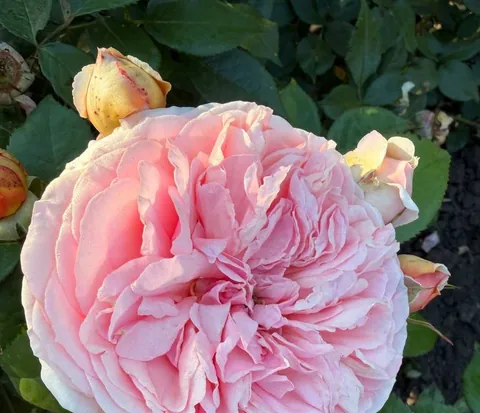
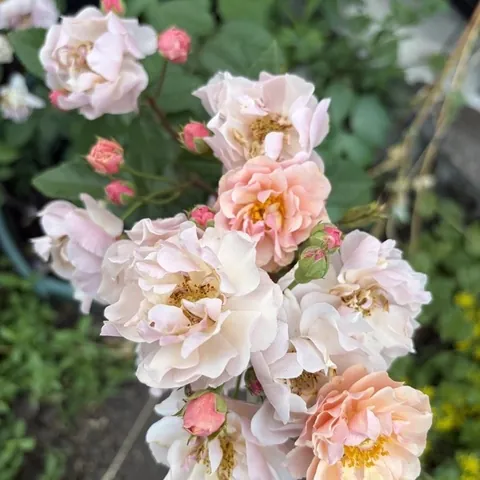
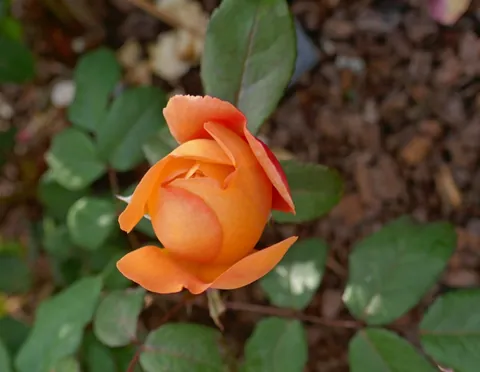
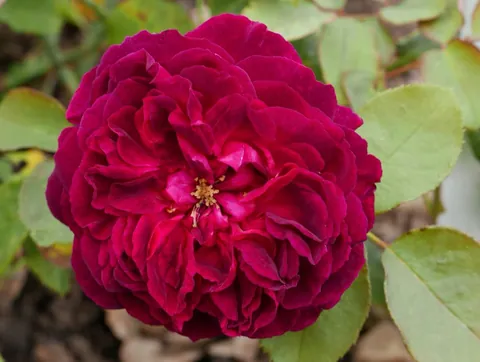



Corail Gelée, close-up of the flower
Back to catalogue
Shrub rose; nostalgicKawamoto, 2011Pink

Corail Gelée

コラーユ・ジュレ; coral colour with a jelly-like translucency of the petals.

Bred by Junko Kawamoto · Rosa Orientis

Variety profile

Flowering

Repeat-flowering, ‘four-season’ – in flushes throughout the season

Feature

'Jelly'

Translucent petals + fruity fragrance with a lychee note

Plant size

120–150 cm
person 170 cmon a supportup to 2 m120–150 cm
Habit
Vigorous shrub rose, semi-spreading; can be trained as a small semi-climber
Dimensions
120–150 cm as a bush; on a support up to 1.5–2 m as a small semi-climber
Support
Not required; if wanted, it can be trained over a low support or wall
Shoots
Springy, long
Branching
Good; the bush is dense

Flower

7–10 cm
Bud shape
Round, coral-pink
Open flower
Cupped – rosette-shaped, with wavy, frilled petal edges; diameter 7–10 cm
Centre
Densely packed with frills; no yellow eye
Fullness
Full, 26–40 petals
Flower carriage
Singly and in small clusters
Flower durability
Holds its shape well; striking when cut

Fragrance

Medium

Fruity, with a note of lychee and a tea-Damask tone; medium strength.

Disease resistance

3 out of 5

Moderate; exceptionally heat-tolerant – copes well with heat.

Sun

Sun + partial shade

Likes sun, tolerates light partial shade; exceptionally heat-tolerant.

Thorns

Moderate
thornlessfewmoderatemanyvery many

Moderate number (precise data are scarce).

Foliage

Healthy, green (detailed data are scarce).

All characteristics in a table
Group
Shrub rose; nostalgic
Breeder
Kawamoto, Japan, 2011
Bud shape
Round, coral-pink
Open flower
Cupped – rosette-shaped, with wavy, frilled petal edges; diameter 7–10 cm
Centre
Densely packed with frills; no yellow eye
Colour
Coral-pink with a translucent, jelly-like texture to the petals – hence the name
Fullness
Full, 26–40 petals
Flower carriage
Singly and in small clusters
Flowering
Repeat-flowering, ‘four-season’ – in flushes throughout the season
Fragrance
Fruity, with a note of lychee and a tea-Damask tone; medium strength
Flower durability
Holds its shape well; striking when cut
Habit
Vigorous shrub rose, semi-spreading; can be trained as a small semi-climber
Branching
Good; the bush is dense
Shoots
Springy, long
Thorns
Moderate number (precise data are scarce).
Dimensions
120–150 cm as a bush; on a support up to 1.5–2 m as a small semi-climber
Support
Not required; if wanted, it can be trained over a low support or wall
Foliage
Healthy, green (detailed data are scarce)
Resistance
Moderate; exceptionally heat-tolerant – copes well with heat
Use
Garden, cut for bouquets, large container

Colour scheme

Coral-pink with a translucent, jelly-like texture to the petals – hence the name

Rose neighbours

Perennials to plant nearby

Neighbouring roses

Coral, salmon and apricot tones keep the warm, juicy palette around Corail Gelée.

Companion perennials

Blue and lavender perennials bring out the delicate coral colour of the 'jelly' petals:

catmint (Nepeta)salviaPerovskialavender

Contrasting accents

For depth beside the coral Corail Gelée — blue, purple tones or dark green:

delphiniumcatmint (Nepeta)dark-leaved hosta

More about the variety

Use
Garden, cut for bouquets, large container

How to grow

Where to plant. As a striking accent in a mixed border, as a bush near seating areas, in a large container, or on a small support as a semi-climber. Especially lovely where the sun and warmth are strong during the day.

Climate. Japanese breeding with exceptional heat tolerance. Winter hardiness is moderate and has not been checked against field data – in most of Ukraine reliable winter protection is advisable.

Care. In a wet summer – prevention of fungal diseases (resistance moderate). Removing spent blooms encourages new flushes. The flowers last very well when cut.

About the name

Name. 'Corail Gelée' (French: corail – coral, gelée – jelly) means ‘coral jelly’; the name reflects the coral-pink colour and the translucent, jelly-like texture of the petals. The Japanese name is コラーユ・ジュレ. Bred by the Japanese breeder Junko Kawamoto (河本純子) in 2011; sold under the Kawamoto Rose Garden and Rosa Orientis / «バラの家» brands. Distinctive: a variety from the wave of Japanese ‘dessert’ roses, with a complex flower form and a refined fruity fragrance. It combines a ruffled nostalgic rosette, a tender coral tone and exceptional heat tolerance – a valuable trait for hot summers.

Frequently asked questions about Corail Gelée

How many times a season does Corail Gelée flower?

Repeat-flowering, ‘four-season’ – in flushes throughout the season.

How big does Corail Gelée grow?

120–150 cm tall. On a support — up to 200 cm.

Which diseases affect Corail Gelée?

Overall resistance: 3 out of 5. Moderate (according to Japanese sources); in a wet summer – prevention needed.

How much sun does Corail Gelée need?

Sun + partial shade; likes sun, tolerates light partial shade; exceptionally heat-tolerant.

What does Corail Gelée smell like?

Fruity, with a note of lychee and a tea-Damask tone; medium strength.

Gardeners' photos and reviews

My climate

Choose a reference temperature to compare with the cultivar’s data. This is not an overwintering forecast or advice on winter protection; consider wind, moisture and the duration of frost.

Regional data are generalised. USDA describes average annual extreme minima, not a forecast; the values in the list are rounded. Check the conditions at your site. More information: Roses in Ukraine's climate.