


Back to catalogue
FloribundaMartin Vissers, 2011Pink

Eeuwige Passie

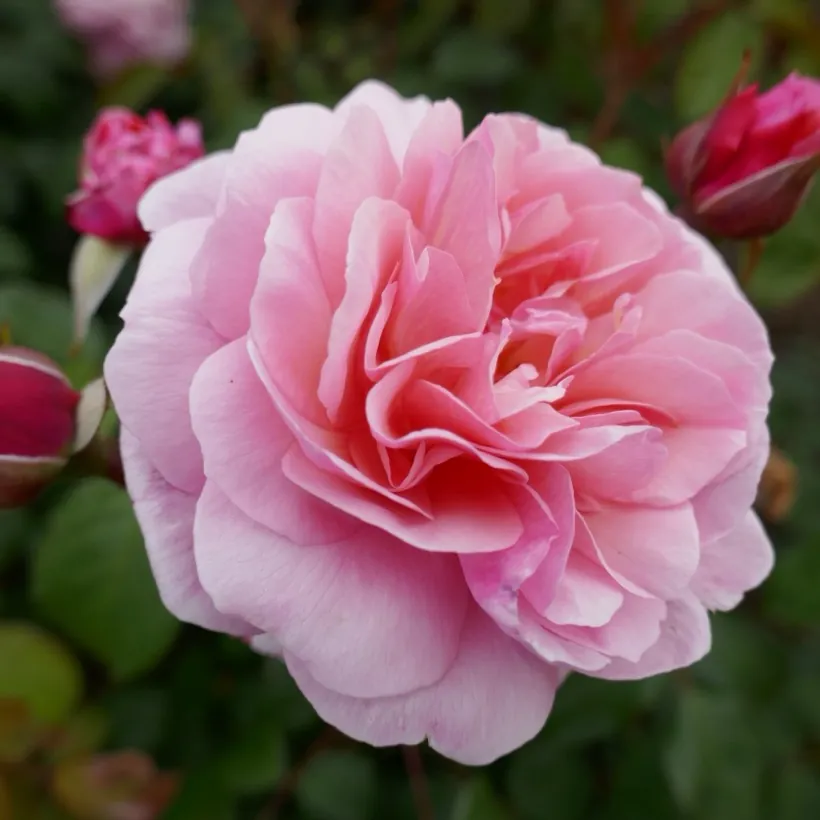
Saturated pink 'English-type' rosettes with a warm peach heart; fragrance prize Glasgow 2022; edible petals.

For the 100th anniversary of KVLV

Variety profile

Flowering

Repeat, in flushes

Repeat, continuously in flushes from late May to October; self-cleaning. Months are approximate, for the climate of Ukraine.

Awards

Glasgow 2022

Merit + fragrance prize · Warsaw 2021 (Merit) · Excellence Lottum 2025

Winter hardiness

−20 °C

USDA zone 6b. South and centre of Ukraine; in the north — with protection. South and centre of Ukraine · in the north, with winter cover.

Compare reference temperatures

Plant size

70–90 × 45–65 cm
person 170 cm70–90 cm
Habit
Upright, compact, bushy
Dimensions
70–90 cm high × 45–65 cm wide (taller in good conditions)
Support
Not needed — a self-supporting bush; suitable for a low hedge
Shoots
Sturdy; young shoots and leaves with a reddish tint
Branching
Good

Flower

6–8 cm
Bud shape
Round, classic
Open flower
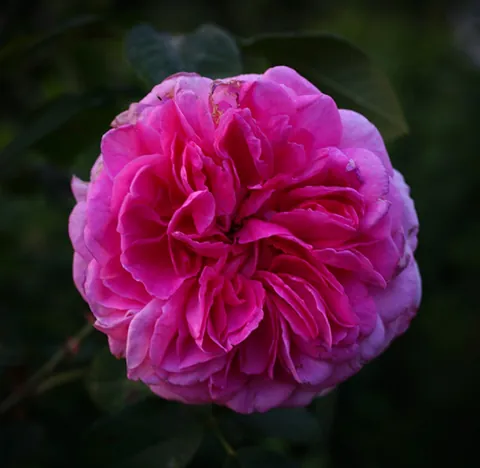
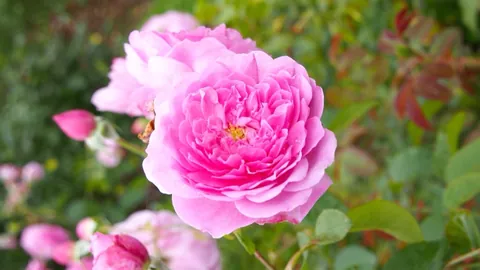
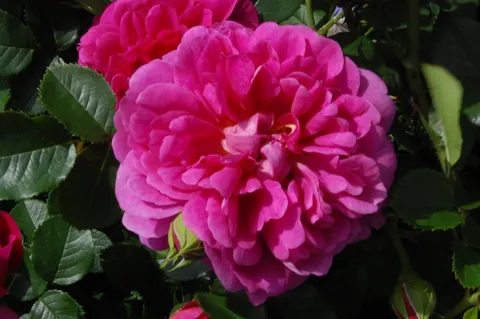
Cupped rosette, looks like an 'English rose'; diameter 6–8 cm
Centre
Warm peach-apricot (from the father, Sweet Juliet)
Fullness
Full (26–40+ petals)
Flower carriage
In small clusters (typical floribunda)

Fragrance

Strong; fresh, fruity, with a note of old garden rose (fragrance award)

Strong — fresh, fruity, with a note of old garden rose (awarded a fragrance prize).

Disease resistance

4 out of 5
Black spotresistantPowdery mildewresistantRustresistant

High — against powdery mildew, black spot and rust.

Sun

Sun / partial shade

Full sun is better.

Thorns

Moderate
thornlessfewmoderatemanyvery many

Moderately prickly.

Foliage

Young growth reddish; mature growth medium light green, slightly glossy, healthy, long-lasting.

Other names

Breeder's code VISkavepas.

All characteristics in a table
Group
Floribunda
Breeder
Martin Vissers, Belgium, 2011
Bud shape
Round, classic
Open flower
Cupped rosette, looks like an 'English rose'; diameter 6–8 cm
Centre
Warm peach-apricot (from the father, Sweet Juliet)
Colour
Saturated pink with a fine crimson tint; very stable, only slightly fading to silvery pink at the edge
Fullness
Full (26–40+ petals)
Flower carriage
In small clusters (typical floribunda)
Flowering
Repeat, continuously in flushes from late May to October; self-cleaning
Fragrance
Strong — fresh, fruity, with a note of old garden rose (awarded a fragrance prize)
Hips
Hips form rarely; orange-red and decorative in autumn
Habit
Upright, compact, bushy
Branching
Good
Shoots
Sturdy; young shoots and leaves with a reddish tint
Thorns
Moderately prickly.
Dimensions
70–90 cm high × 45–65 cm wide (taller in good conditions)
Support
Not needed — a self-supporting bush; suitable for a low hedge
Foliage
Young growth reddish; mature growth medium light green, slightly glossy, healthy, long-lasting
Resistance
High — against powdery mildew, black spot and rust
Variations of the variety
Also sold as a standard; no sports recorded

Colour scheme

Saturated pink with a fine crimson tint; very stable, only slightly fading to silvery pink at the edge

Rose neighbours

Perennials to plant nearby

Rose neighbours

Pink 'English-type' roses keep the same romantic, fragrant palette around Eeuwige Passie.

Companion perennials

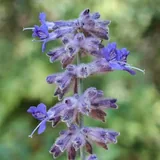
Blue-violet and silver flowers give a clean contrast to the deep pink:

catmintSalvia 'Caradonna'PerovskiaGypsophila

Contrast accents

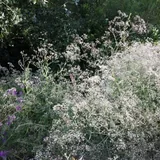
Blue spires and a sheer 'mist' add depth to the pink palette:

DelphiniumNepeta Six Hills GiantGypsophila

More about the variety

Hips
Hips form rarely; orange-red and decorative in autumn
Variations of the variety
Also sold as a standard; no sports recorded

How to grow

Where to plant. In a mixed border, a romantic fragrant flower garden, near seating areas (for its strong scent), in a low hedge; also good for cutting.

Climate. South and centre of Ukraine — no protection needed; in the north (USDA 6b) — winter protection.

Care. Full sun (tolerates light shade), fertile soil; self-cleaning, healthy and undemanding.

About the name

Name. Dutch 'eeuwige passie' — 'eternal passion' (Eternal Passion).

Breeding. Bred by Martin Vissers (ViVa Roses, Herselt, Belgium), introduced in 2011. Code VISkavepas (synonyms Eternal Passion, Passion For Ever). Parentage: 'Echo' × 'Sweet Juliet' (Sweet Juliet is a David Austin English rose, hence the 'English' look and fruity fragrance).

Significance. Created for the 100th anniversary of the Flemish women's association KVLV (founded 1911); the name symbolises 'eternal passion' for the association's cause. Awarded diplomas and a fragrance prize in Glasgow (2022); the petals are edible.

Frequently asked questions about Eeuwige Passie

Does Eeuwige Passie need winter protection?

The cultivar’s reference temperature is −20 °C (USDA zone 6b). Overwintering depends on the conditions. South and centre of Ukraine; in the north — with protection.

How many times a season does Eeuwige Passie flower?

Repeat, continuously in flushes from late May to October; self-cleaning.

How big does Eeuwige Passie grow?

70–90 cm tall, 45–65 cm wide.

Which diseases affect Eeuwige Passie?

Overall resistance: 4 out of 5. High — against powdery mildew, black spot and rust.

How much sun does Eeuwige Passie need?

Sun / partial shade; full sun is better.

What does Eeuwige Passie smell like?

Strong — fresh, fruity, with a note of old garden rose (awarded a fragrance prize).

Gardeners' photos and reviews

My climate

Choose a reference temperature to compare with the cultivar’s data. This is not an overwintering forecast or advice on winter protection; consider wind, moisture and the duration of frost.

Regional data are generalised. USDA describes average annual extreme minima, not a forecast; the values in the list are rounded. Check the conditions at your site. More information: Roses in Ukraine's climate.