- Group
- Hybrid Tea
- Breeder
- Albert Norman; introduced by Harkness, United Kingdom, 1946
- Bud shape
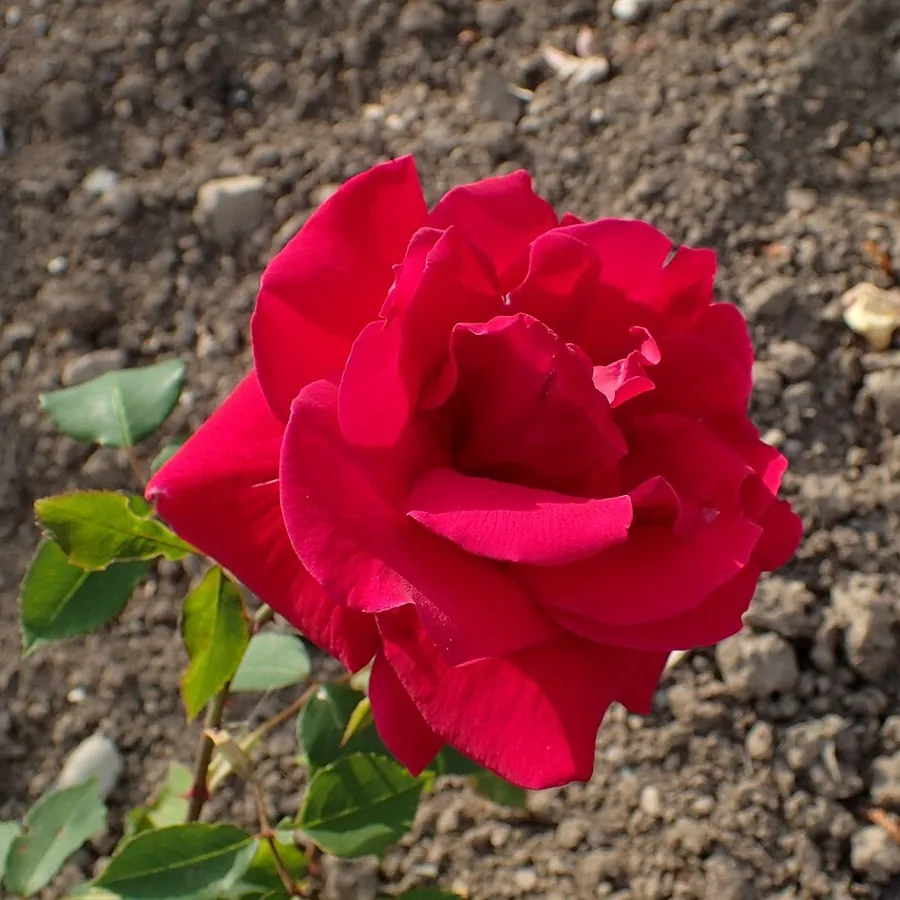
- Classic elongated, high-centred, bright red
- Open flower
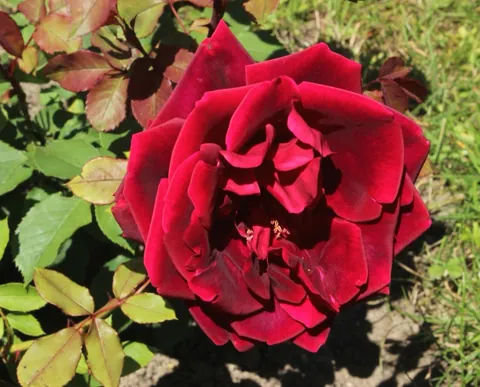
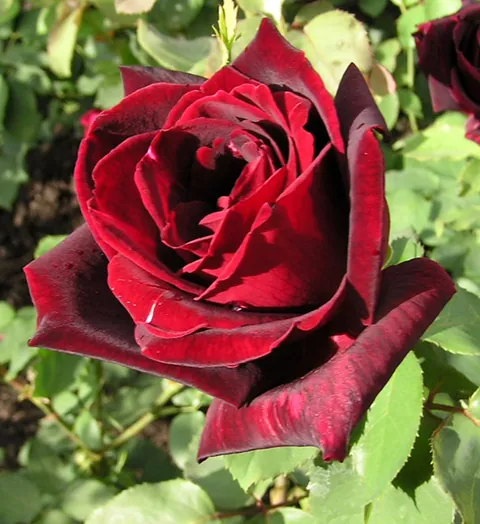
- Large, high-centred, 10–13 cm in diameter; velvety texture of the petals
- Centre
- High, classically curled — the benchmark for the hybrid tea form of its time
- Colour
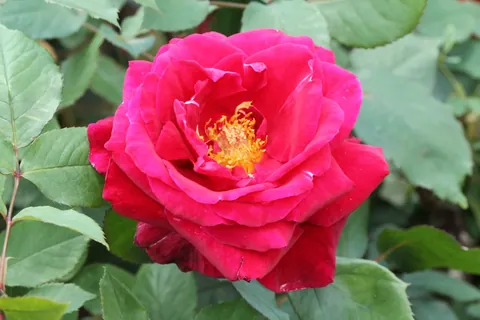
- Bright red, crimson-scarlet, velvety; the colour holds well and does not fade in the sun
- Fullness
- ~30 petals (26–40)
- Flower carriage
- Mostly flowers borne singly on each stem
- Weak neck
- Known flaw of the variety: the flower stalk ('neck') is thin, and the heavy large flower often droops. Harkness advises potassium feeding about two weeks before flowering to strengthen the stem — we say so honestly
- Flowering
- Repeat, in waves from summer to autumn
- Fragrance
- Strong classic damask rose scent — warm, deep, easily recognised; one of the most fragrant hybrid teas of its time
- Habit
- Upright, compact
- Branching
- Even; the bush is neat
- Shoots
- Upright; the flower stalks are thin and often droop under the weight of the flower ('weak neck')
- Thorns
- Moderate number of prickles — typical for hybrid teas.
- Dimensions
- 60–80 × 45–60 cm
- Support
- The bush form does not need support (a separate climbing sport, Climbing Ena Harkness, is a different, climbing plant)
- Foliage
- Leathery, dark green
- Resistance
- Very resistant — 4–5/5; a reliable classic without whims
- Variations of the variety
- A separate climbing sport, Climbing Ena Harkness, exists; we describe the bush form