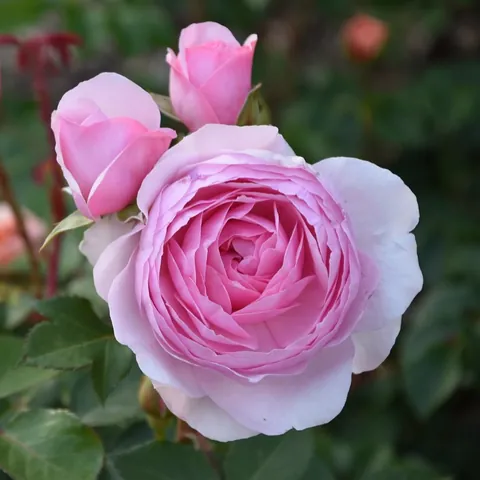
Fantin-Latour, close-up of the flower
Photo: Salicyna, CC BY-SA 4.0
Back to catalogue
Centifolia (hundred-petalled)1945Pink

Fantin-Latour

An elegant, legendary hundred-petalled rose, named after the painter Henri Fantin-Latour; flowers once, but very profusely from spring to early summer; strong fruity fragrance of an old garden; RHS AGM.

'found rose' (a rose rediscovered in old gardens)

Variety profile

Flowering

Repeat, in flushes

Once-flowering — profuse bloom in spring and early summer, with no repeat flush. Months are approximate, for the climate of Ukraine.

Awards

RHS AGM

Award of Garden Merit

Winter hardiness

−20 °C

USDA zone 4b. H6; ≈ −20 °C; Ukraine: no or light winter protection.

Compare reference temperatures

Plant size

100–180 × 120–180 cm
person 170 cm100–180 cm
Habit
A tall, arching, spreading shrub.
Dimensions
100–180 cm tall × 120–180 cm wide.
Support
It needs no support, though the flexible canes can be tied in for a neater shape.
Shoots
No data available.
Branching
No data available.

Flower

9–10 cm
Bud shape
No data available.
Open flower
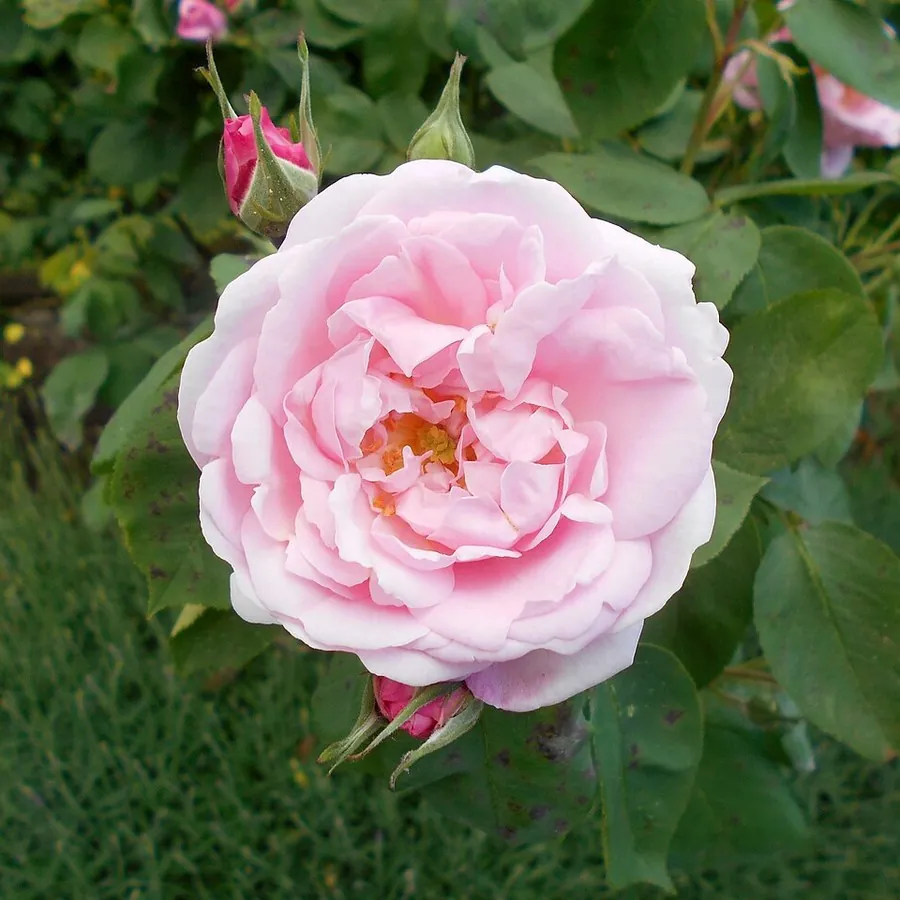
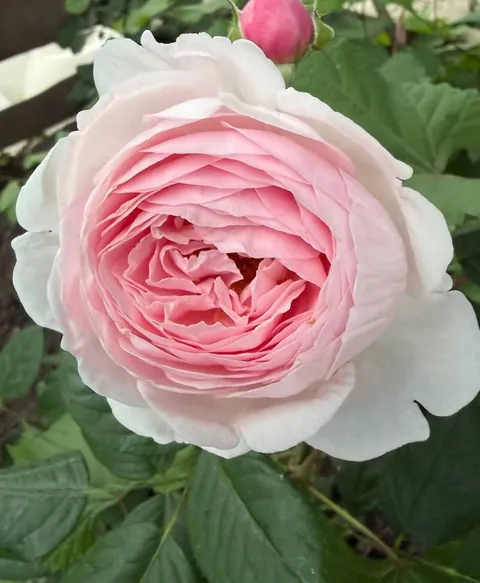
Flat, cup-shaped rosette 9–10 cm across; sometimes the centre stays open, and the stamens show through the petals.
Fullness
Very double — 17–40 petals (sources differ).
Flower carriage
No data available.

Fragrance

Strong, fruity

Strong and fruity — one of the most vivid fragrances among centifolias.

Sun

5–6 hours

Full sun; at least 5–6 hours of direct light a day.

Thorns

Few
thornlessfewmoderatemanyvery many

Few thorns — a pleasant trait for a variety with such a lush bloom.

Foliage

Smooth — an unusual trait for a centifolia; this is why a China rose is suspected in its ancestry.

All characteristics in a table
Group
Centifolia (hundred-petalled)
Breeder
1945
Bud shape
No data available.
Open flower
Flat, cup-shaped rosette 9–10 cm across; sometimes the centre stays open, and the stamens show through the petals.
Colour
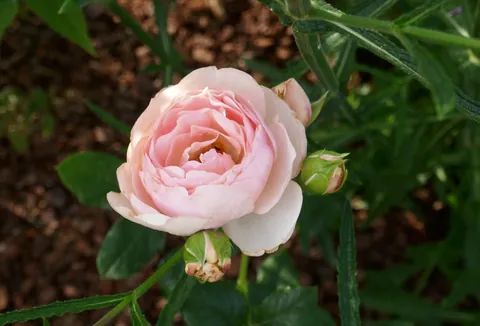
Pale pink, almost white at the edges, with a warmer pink tone at the centre of the flower.
Fullness
Very double — 17–40 petals (sources differ).
Flower carriage
No data available.
Flowering
Once-flowering — profuse bloom in spring and early summer, with no repeat flush.
Fragrance
Strong and fruity — one of the most vivid fragrances among centifolias.
Hips
No data available.
Habit
A tall, arching, spreading shrub.
Branching
No data available.
Shoots
No data available.
Thorns
Few thorns — a pleasant trait for a variety with such a lush bloom.
Dimensions
100–180 cm tall × 120–180 cm wide.
Support
It needs no support, though the flexible canes can be tied in for a neater shape.
Foliage
Smooth — an unusual trait for a centifolia; this is why a China rose is suspected in its ancestry.
Resistance
Fairly disease-resistant, but prone to powdery mildew; very hardy (USDA 4b–9b, RHS H6).
Variations of the variety
Parentage unknown; the classification is debated — a typical centifolia in flower, but the smooth foliage hints at possible China rose ancestry. The variety was previously sold as 'Best Garden Rose'.
Colour scheme

Pale pink, almost white at the edges, with a warmer pink tone at the centre of the flower.

Rose neighbours

Perennials to plant nearby

Rose neighbours

Delicate pink roses — one colour family:

Perennial companions

Blue, lilac and silver neighbours bring out the tender pink:

lavendercatmint (Nepeta)Stachysgypsophila

Variety highlights

Key traits that set this old variety apart:

Centifoliaonce-floweringstrong fragranceRHS AGM

More about the variety

Hips
No data available.
Variations of the variety
Parentage unknown; the classification is debated — a typical centifolia in flower, but the smooth foliage hints at possible China rose ancestry. The variety was previously sold as 'Best Garden Rose'.
How to grow

Where to plant. Old-fashioned and romantic gardens, mixed borders in the English style; the tall, arching shrub holds the back of a border well or stands alone as a specimen. It needs no support, though the flexible canes can be tied in.

Climate. USDA 4b–9b, RHS H6 (≈ −20 °C); in Ukraine it overwinters without cover or with light winter protection.

Care. Relatively undemanding, but watch for powdery mildew, especially in humid weather with poor air circulation. As it flowers only once a season, prune straight after flowering.

About the name

Name. After the French painter Henri Fantin-Latour. The variety was renamed by Graham Stuart Thomas; before that it was sold as 'Best Garden Rose'.

Breeding. The breeder is unknown — it is a 'found rose'; introduced by the British nursery T. Hilling & Co. in 1945; belongs to the Centifolia class.

Significance. An elegant old-fashioned centifolia with a lovely fragrance.

Frequently asked questions about Fantin-Latour

Does Fantin-Latour need winter protection?

The cultivar’s reference temperature is −20 °C (USDA zone 4b). Overwintering depends on the conditions. H6; ≈ −20 °C; Ukraine: no or light winter protection.

How many times a season does Fantin-Latour flower?

Once-flowering — profuse bloom in spring and early summer, with no repeat flush.

How big does Fantin-Latour grow?

100–180 cm tall, 120–180 cm wide.

How much sun does Fantin-Latour need?

Full sun; at least 5–6 hours of direct light a day.

What does Fantin-Latour smell like?

Strong and fruity — one of the most vivid fragrances among centifolias.

Gardeners' photos and reviews

My climate

Choose a reference temperature to compare with the cultivar’s data. This is not an overwintering forecast or advice on winter protection; consider wind, moisture and the duration of frost.

Regional data are generalised. USDA describes average annual extreme minima, not a forecast; the values in the list are rounded. Check the conditions at your site. More information: Roses in Ukraine's climate.