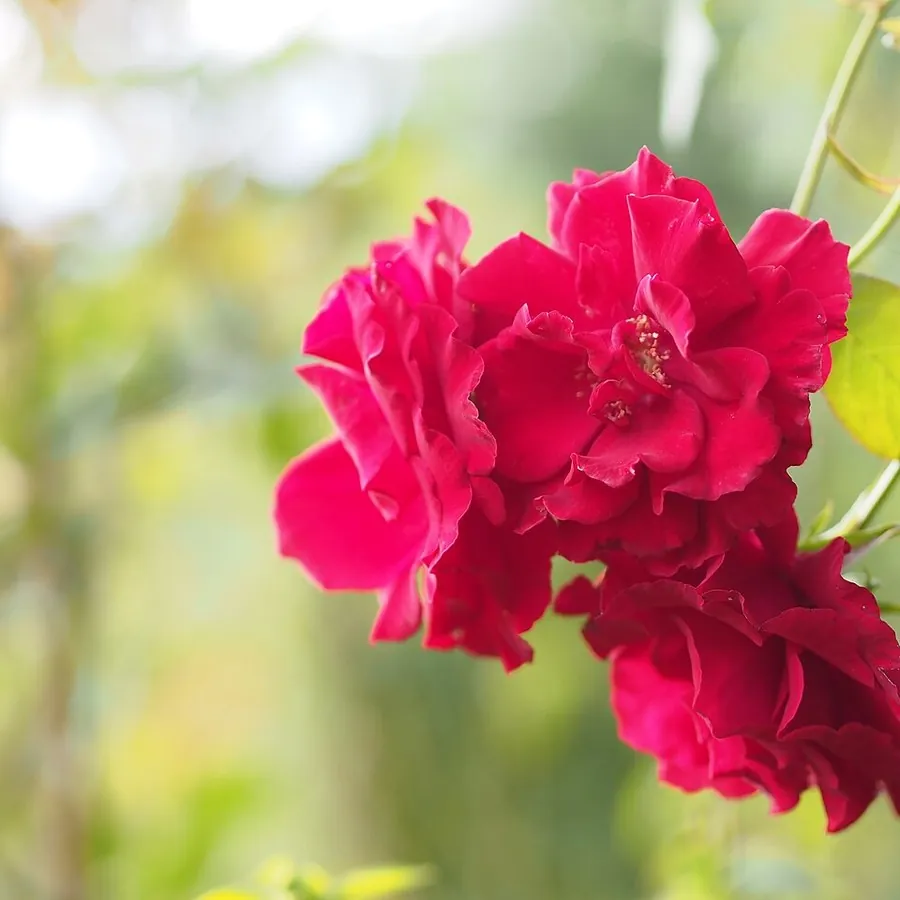
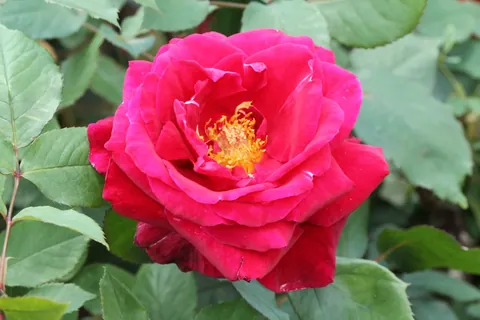
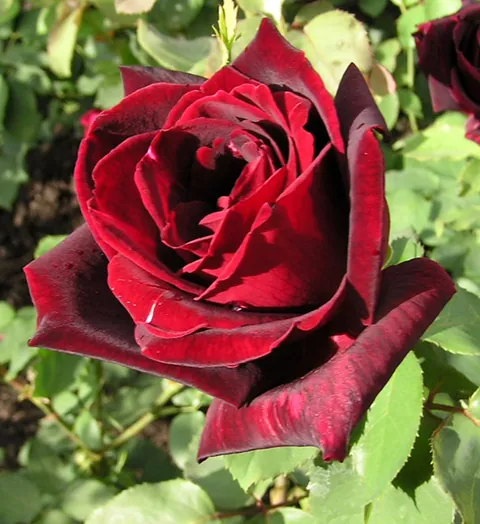
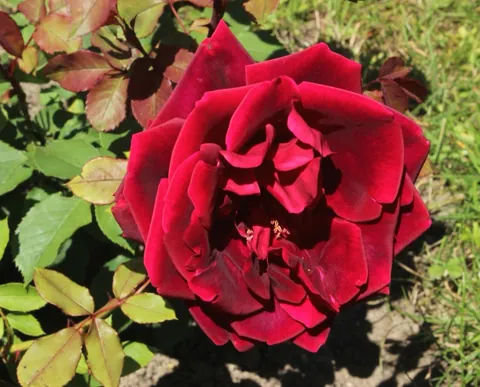





Fountain, close-up of the flower
Photo: T.Kiya, CC BY-SA 2.0
Back to catalogue
Shrub; Hybrid Tea-type flowerMathias Tantau Jr.Red

Fountain

Velvety red shrub with a large Hybrid Tea-type flower; rich blood-red (crimson); bush 100–150 cm, needs no support; ADR 1971.

No code name

Variety profile

Flowering

Repeat, in flushes

Repeat-flowering, in flushes — from late spring to early winter. Months are approximate, for the climate of Ukraine.

Awards

ADR 1971

German quality mark (Anerkannte Deutsche Rose)

Plant size

100–150 × 90–120 cm
person 170 cm100–150 cm
Habit
Upright, moderately vigorous shrub
Dimensions
100–150 × 90–120 cm
Support
Not needed — an upright, self-supporting bush
Shoots
Strong; they hold the large flower without flopping
Branching
Bushy — typical of shrubs with a Hybrid Tea-type flower

Flower

9–12 cm
Bud shape
Classic Hybrid Tea type, deep red
Open flower
Cup-shaped, Hybrid Tea type, large — 9–12 cm across
Fullness
~35 petals. Sources differ: welt-der-rosen describes the flower as 'slightly double', while others give about 35 petals
Flower carriage
Singly and in small clusters

Fragrance

Fragrant; warm, sweetish rose

Fragrant — a warm, sweetish rose note. Sources disagree: some describe the scent as 'strong and sweet', others as 'light'. Its parent variety, Fragrant Cloud (Duftwolke), is known for strong fragrance.

Disease resistance

4 out of 5

4/5 — good disease resistance.

Sun

Fading: no data — sources do not describe how the colour behaves in sun

Thorns

Moderate
thornlessfewmoderatemanyvery many

Sources give no specific data on the thorns; a moderate level typical of shrubs is indicated.

Foliage

Healthy; overall resistance good (confirmed by ADR).

Other names

Fontaine, Red Prince
All characteristics in a table
Group
Shrub; Hybrid Tea-type flower
Breeder
Mathias Tantau Jr., Germany
Bud shape
Classic Hybrid Tea type, deep red
Open flower
Cup-shaped, Hybrid Tea type, large — 9–12 cm across
Colour
Rich velvety blood-red (crimson). No data on fading or colour change in sun — sources do not describe this
Fullness
~35 petals. Sources differ: welt-der-rosen describes the flower as 'slightly double', while others give about 35 petals
Flower carriage
Singly and in small clusters
Flowering
Repeat-flowering, in flushes — from late spring to early winter
Fragrance
Fragrant — a warm, sweetish rose note. Sources disagree: some describe the scent as 'strong and sweet', others as 'light'. Its parent variety, Fragrant Cloud (Duftwolke), is known for strong fragrance
Hips
Not documented
Habit
Upright, moderately vigorous shrub
Branching
Bushy — typical of shrubs with a Hybrid Tea-type flower
Shoots
Strong; they hold the large flower without flopping
Thorns
Sources give no specific data on the thorns; a moderate level typical of shrubs is indicated.
Dimensions
100–150 × 90–120 cm
Support
Not needed — an upright, self-supporting bush
Foliage
Healthy; overall resistance good (confirmed by ADR)
Resistance
4/5 — good disease resistance
Variations of the variety
Synonyms Fontaine (German) and Red Prince; no code name

Colour scheme

Rich velvety blood-red (crimson). No data on fading or colour change in sun — sources do not describe this

Rose neighbours

Perennials to plant nearby

Rose neighbours

A classic of dark red Hybrid Teas and shrub roses — the velvet family:

Perennial companions

Silver foliage and cool lilac-blue flower spikes bring out the deep crimson:

lavendercatmint (Nepeta)Stachyssage (Salvia)

Pedigree

German breeding by Mathias Tantau Jr. (bred around 1969, on sale around 1970):

🌹 Olala × Duftwolke (Fragrant Cloud)🏅 ADR 1971🇩🇪 Germany

More about the variety

Hips
Not documented
Variations of the variety
Synonyms Fontaine (German) and Red Prince; no code name

How to grow

Where to plant. A shrub with a Hybrid Tea-type flower — an upright bush 100–150 × 90–120 cm that needs no support. It holds a specimen position or the centre of a group well, and pairs with cool lilac-blue perennials that set off the deep blood-red. Sunny spot, fertile soil.

Climate. USDA 6b–9b (about −20…−23 °C). In Ukraine — light cover for winter. Good overall resistance (confirmed by the ADR award). Flowering: repeat-flowering, in flushes — from late spring to early winter. Large cup-shaped flower 9–12 cm, singly and in small clusters.

About the name

Name. 'Fountain' ('fountain' in English; German synonym 'Fontaine') — probably for the shape of the bush, which shoots its canes upwards and scatters flowers like a jet of water. No documented history of the name exists — it is a reconstruction from the meaning of the word. Another synonym is 'Red Prince'; the variety has no code name.

Breeding. Bred by Mathias Tantau Jr. (Germany), around 1969, on sale from around 1970. Parentage: Olala × Duftwolke (Fragrant Cloud). Its parent Fragrant Cloud is known above all for strong fragrance — hence the expectation of scent in Fountain too (although sources disagree on how strong its scent is). Awards: ADR 1971 — 1971 exactly, not 1970 (some sources confuse it with the year of sale). The ADR mark (Anerkannte Deutsche Rose) confirms good garden toughness. The RNRS President's Trophy is not listed here — that award relates to the parent variety Fragrant Cloud, not to Fountain.

Frequently asked questions about Fountain

How many times a season does Fountain flower?

Repeat-flowering, in flushes — from late spring to early winter.

How big does Fountain grow?

100–150 cm tall, 90–120 cm wide.

Which diseases affect Fountain?

Overall resistance: 4 out of 5. Good resistance; confirmed by the ADR award.

How much sun does Fountain need?

Fading: no data — sources do not describe how the colour behaves in sun.

What does Fountain smell like?

Fragrant — a warm, sweetish rose note. Sources disagree: some describe the scent as 'strong and sweet', others as 'light'. Its parent variety, Fragrant Cloud (Duftwolke), is known for strong fragrance.

Gardeners' photos and reviews

My climate

Choose a reference temperature to compare with the cultivar’s data. This is not an overwintering forecast or advice on winter protection; consider wind, moisture and the duration of frost.

Regional data are generalised. USDA describes average annual extreme minima, not a forecast; the values in the list are rounded. Check the conditions at your site. More information: Roses in Ukraine's climate.