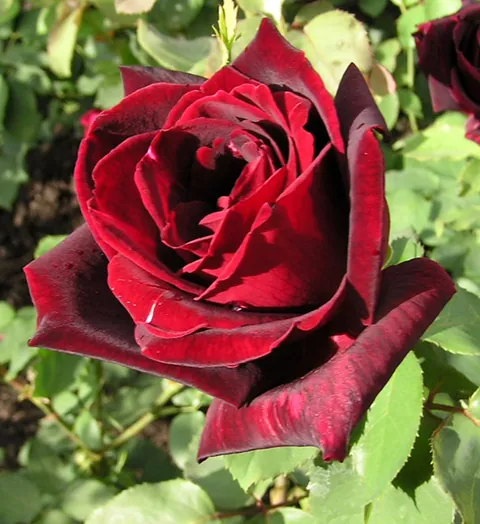
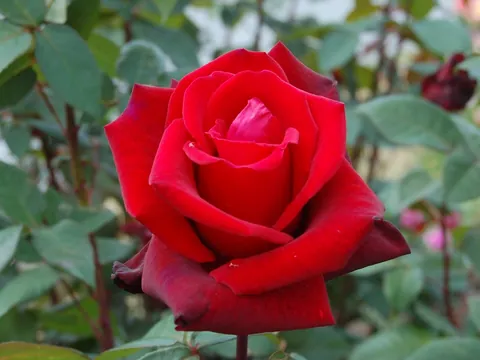
Guinée, close-up of the flower
Photo: someone10x, CC BY 2.0
Back to catalogue
Climber (Climbing HT)Charles MallerinRed

Guinée

One of the most fragrant roses in cultivation; an almost black velvety-red colour; parentage Souvenir de Claudius Denoyel × Ami Quinard; needs a sturdy support; the edges burn in scorching sun.

Large old-fashioned flower · mainly once-flowering, but profuse

Variety profile

Flowering

Once-flowering

Mostly one abundant flush in spring or early summer; repeat flowering is weak and irregular. Do not treat it as repeat-flowering. Months are approximate, for the climate of Ukraine.

Plant size

300–500 × 250–400 cm
person 170 cm300–500 cm
Habit
A strong, large climber (Climbing HT / Large-Flowered Climber) — long, vigorous canes
Dimensions
300–500 cm tall (per RHS up to 800 cm) × 250–400 cm wide
Support
A sturdy support is essential — a wall, arch, pergola or trellis; a well-ventilated spot is preferable
Shoots
Long and strong; they train well on a wall, arch or pergola
Branching
Over time it forms a large flowering wall on its support

Flower

8–10 cm
Bud shape
Very dark, almost black velvety bud
Open flower
Large, from cupped to flat, old-fashioned type; diameter ~8–10 cm (no exact data)
Centre
Golden stamens glowing brightly against the almost black petals
Fullness
26–40 petals
Flower carriage
Mainly solitary flowers

Fragrance

Very strong

ONE OF THE MOST FRAGRANT ROSES altogether — very strong, warm, honeyed-spicy with a fruity-tea note; the scent spreads especially in the evening. This is the variety's main virtue.

Disease resistance

3 out of 5
Black spotsusceptiblePowdery mildewsusceptible

Moderate; an old rose, prone to black spot and powdery mildew in damp or shaded spots.

Sun

Partial shade

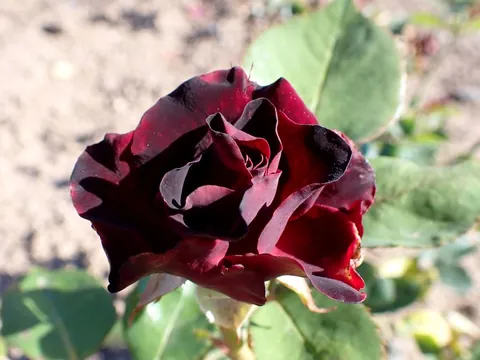
In scorching sun the petal edges burn, so it is better planted in partial shade.

Thorns

Moderate
thornlessfewmoderatemanyvery many

Moderate number of prickles (no exact data).

Foliage

In damp, shaded spots it is prone to black spot and powdery mildew — good air circulation is needed.

All characteristics in a table
Group
Climber (Climbing HT)
Breeder
Charles Mallerin, France
Bud shape
Very dark, almost black velvety bud
Open flower
Large, from cupped to flat, old-fashioned type; diameter ~8–10 cm (no exact data)
Centre
Golden stamens glowing brightly against the almost black petals
Colour
Very dark red and velvety, with a blackish sheen (blackish-crimson) — one of the darkest roses in cultivation. In scorching sun the petal edges burn.
Fullness
26–40 petals
Flower carriage
Mainly solitary flowers
Flowering
Mostly one abundant flush in spring or early summer; repeat flowering is weak and irregular. Do not treat it as repeat-flowering.
Fragrance
ONE OF THE MOST FRAGRANT ROSES altogether — very strong, warm, honeyed-spicy with a fruity-tea note; the scent spreads especially in the evening. This is the variety's main virtue.
Habit
A strong, large climber (Climbing HT / Large-Flowered Climber) — long, vigorous canes
Branching
Over time it forms a large flowering wall on its support
Shoots
Long and strong; they train well on a wall, arch or pergola
Thorns
Moderate number of prickles (no exact data).
Dimensions
300–500 cm tall (per RHS up to 800 cm) × 250–400 cm wide
Support
A sturdy support is essential — a wall, arch, pergola or trellis; a well-ventilated spot is preferable
Foliage
In damp, shaded spots it is prone to black spot and powdery mildew — good air circulation is needed
Variations of the variety
No code name — an old variety (~1937–1938)
Colour scheme

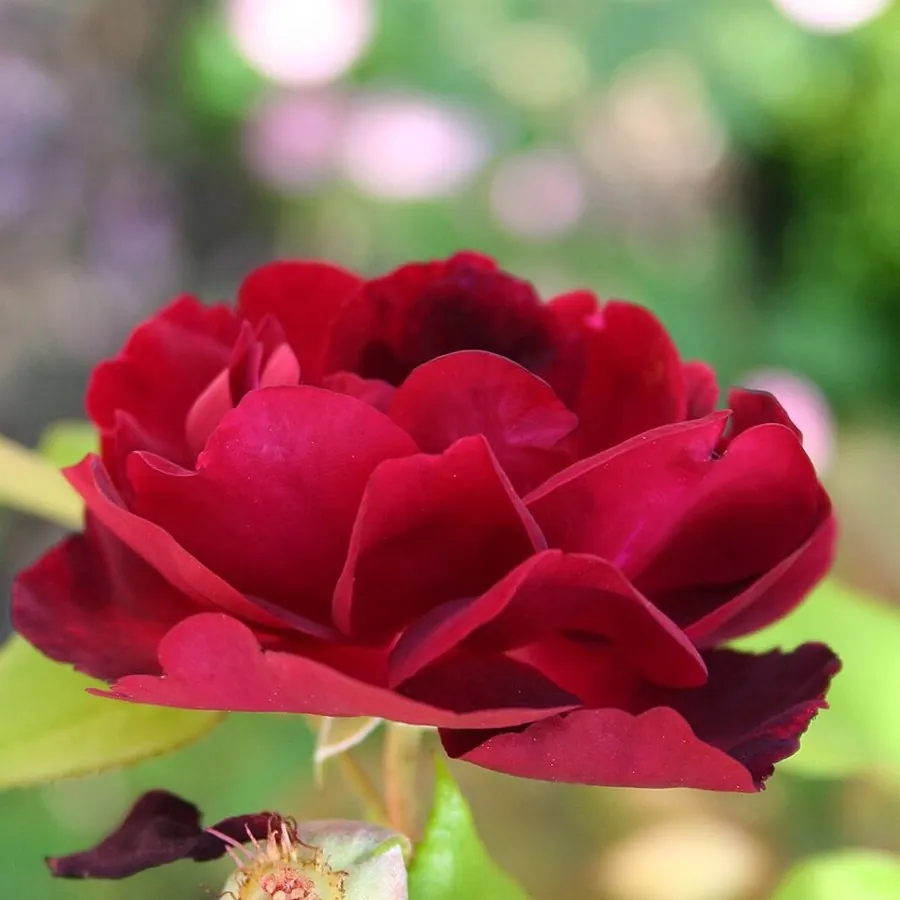
Very dark velvety red with a blackish sheen (blackish-crimson) — one of the darkest roses in cultivation. In scorching sun the petal edges burn.

Rose neighbours

Perennials to plant nearby

Neighbouring roses

The darkest reds — company for a collection of 'black' roses:

Companion perennials

Silver and blue tones highlight the almost black velvet:

lavender 'Hidcote'catmintlady's mantleStachys byzantina (lamb's ear)

Availability worldwide

Collector's classic among dark climbing roses:

  • 🇪🇺 Europe: high · old French classic
  • 🇺🇸 USA: moderate · known among collectors
  • 🇯🇵 Asia: low
  • 🇺🇦 Ukraine: moderate · for collectors of dark roses

More about the variety

Variations of the variety
No code name — an old variety (~1937–1938)
How to grow

Where to plant. A sturdy wall, arch or pergola — a climber always needs a firm support. Choose partial shade or a spot without scorching midday sun, so the edges of the dark petals do not burn; the site should also be well ventilated to reduce the risk of black spot and powdery mildew. Scent: the variety's main value is its very strong, warm, honeyed-spicy-fruity tea fragrance, which spreads especially in the evening. Plant it near places where you sit, so the scent can be enjoyed up close.

Climate. USDA 6b–9b, RHS H5 (~−20…−23 °C). In Ukraine, in winter the canes are taken off the support and covered.

Care. It blooms mainly in one abundant flush in spring or early summer; repeat flowering is weak and irregular. Train it as a climber: direct the main canes horizontally, prune for hygiene, and keep the plant well ventilated against disease.

About the name

Name. 'Guinée' is named after the country of Guinea, then a French colony in West Africa.

Breeding. Bred by Charles Mallerin (France) around 1937–1938. Parentage: Souvenir de Claudius Denoyel × Ami Quinard. No code name — the variety is old. Class: climber (Climbing HT / Large-Flowered Climber).

Significance. One of the darkest roses in cultivation and, at the same time, one of the most fragrant roses altogether — a collectors' classic among dark climbers. The combination of an almost black velvety colour with a very strong honeyed, spicy scent has made Guinée sought after by collectors for more than eight decades.

Frequently asked questions about Guinée

How many times a season does Guinée flower?

Mostly one abundant flush in spring or early summer; repeat flowering is weak and irregular. Do not treat it as repeat-flowering.

How big does Guinée grow?

300–500 cm tall, 250–400 cm wide.

Which diseases affect Guinée?

Overall resistance: 3 out of 5. Moderate; an old rose, prone to black spot and powdery mildew in damp or shaded spots.

How much sun does Guinée need?

Partial shade; in scorching sun the petal edges burn, so it is better planted in partial shade.

What does Guinée smell like?

ONE OF THE MOST FRAGRANT ROSES altogether — very strong, warm, honeyed-spicy with a fruity-tea note; the scent spreads especially in the evening. This is the variety's main virtue.

Gardeners' photos and reviews

My climate

Choose a reference temperature to compare with the cultivar’s data. This is not an overwintering forecast or advice on winter protection; consider wind, moisture and the duration of frost.

Regional data are generalised. USDA describes average annual extreme minima, not a forecast; the values in the list are rounded. Check the conditions at your site. More information: Roses in Ukraine's climate.