



Back to catalogue
Hybrid China; WFRS Old Rose Hall of Fame 2000Rudolf Geschwind, 1897Red

Gruss an Teplitz

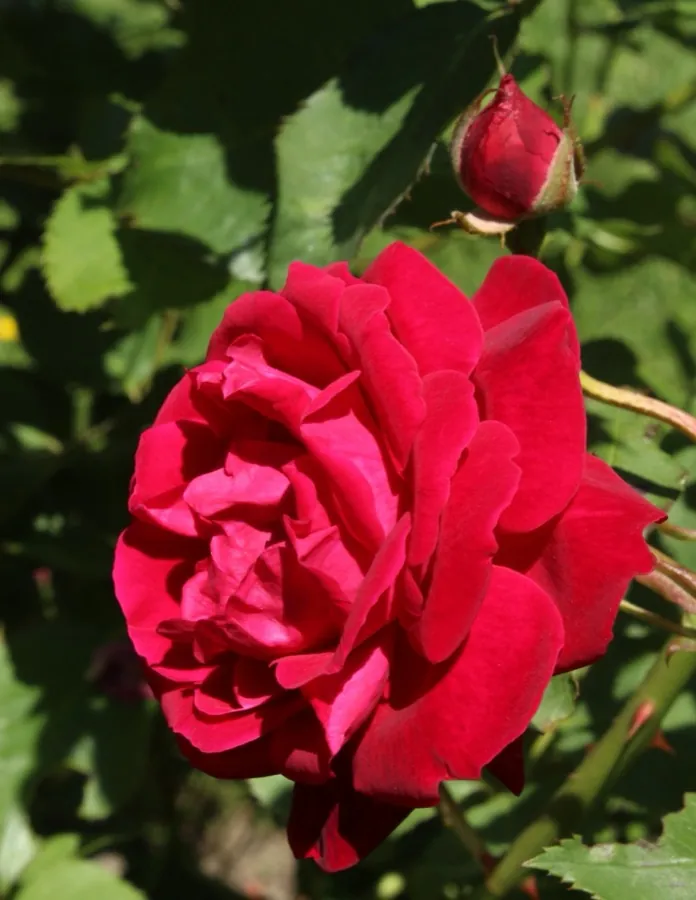
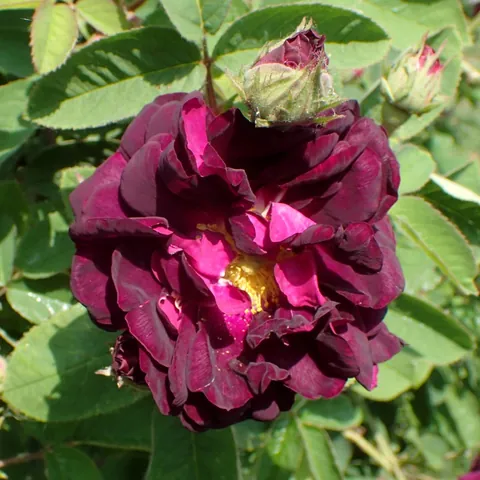
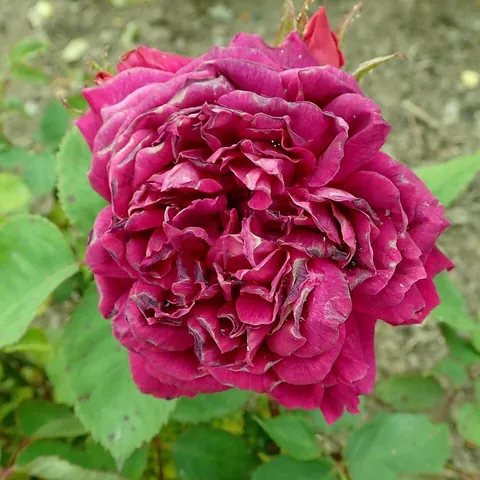
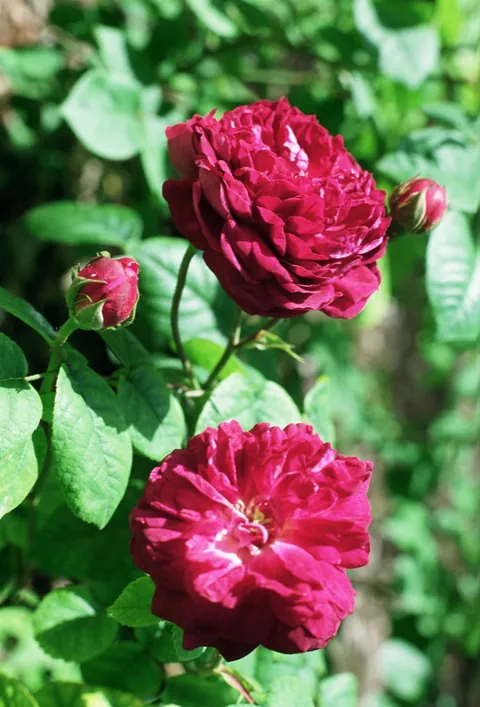
Bright crimson / dark raspberry-red (scarlet) with a darker centre in cupped flowers; WFRS Old Rose Hall of Fame 2000; famous spicy, peppery scent; one of the few varieties by the outstanding Rudolf Geschwind (1829-1910); Geschwind specifically bred hardy varieties for continental climates; named after the Czech town of Teplitz.

WFRS Old Rose HoF 2000 · one of the few varieties by the noted Rudolf Geschwind to reach popular culture

Variety profile

Flowering

Repeat, in flushes all season, REMONTANT — a rare quality for 1897

Legacy

WFRS Old Rose HoF

2000 · Geschwind

Winter hardiness

−23 °C

USDA zone 6b-10b. Ukraine with light cover.

Compare reference temperatures

Plant size

150–200 cm
person 170 cm150–200 cm
Habit
Shrub with flexible canes — can be used as a small climber
Dimensions
150-200 cm tall — a shrub with flexible canes; can be trained as a small climber
Support
As a shrub it needs no support; as a small climber — an obelisk or a small arch
Shoots
Flexible, arching
Branching
Well branched

Flower

26-40 petals
Bud shape
Round, dark raspberry-red
Open flower
Cupped, open: 26-40 petals (average 33), medium-large
Centre
The darker centre contrasts with the main red
Fullness
26-40 petals (full)
Flower carriage
Singly or in small clusters

Fragrance

Strong, spicy; with a peppery trail

STRONG SPICY — spicy, peppery trail. One of the most characteristic scents among old varieties.

Disease resistance

4 out of 5

Good, 4/5 — one of the most winter-hardy Hybrid Chinas, thanks to Geschwind-breeding. USDA 6b-10b — suitable for most regions of Ukraine with light cover. Geschwind specifically bred hardy varieties for the continental climate; this is a rarity among China-roses.

Sun

Full sun

Thorns

Few
thornlessfewmoderatemanyvery many

Few prickles — typical of China-roses.

Foliage

Dark green, typical of Hybrid China.

All characteristics in a table
Group
Hybrid China; WFRS Old Rose Hall of Fame 2000
Breeder
Rudolf Geschwind, 1897
Bud shape
Round, dark raspberry-red
Open flower
Cupped, open: 26-40 petals (average 33), medium-large
Centre
The darker centre contrasts with the main red
Colour
Bright crimson / dark raspberry-red (scarlet) with a darker centre — the classic China-Bengale colour range
Fullness
26-40 petals (full)
Flower carriage
Singly or in small clusters
Flowering
Repeat, in flushes all season, REMONTANT — a rare quality for 1897
Fragrance
STRONG SPICY — spicy, peppery trail. One of the most characteristic scents among old varieties
Hips
Small rose hips in autumn
Habit
Shrub with flexible canes — can be used as a small climber
Branching
Well branched
Shoots
Flexible, arching
Thorns
Few prickles — typical of China-roses.
Dimensions
150-200 cm tall — a shrub with flexible canes; can be trained as a small climber
Support
As a shrub it needs no support; as a small climber — an obelisk or a small arch
Foliage
Dark green, typical of Hybrid China
Resistance
Good, 4/5 — one of the most winter-hardy Hybrid Chinas, thanks to Geschwind-breeding. USDA 6b-10b — suitable for most regions of Ukraine with light cover. Geschwind specifically bred hardy varieties for the continental climate; this is a rarity among China-roses
Variations of the variety
No official code (historic, 1897). Introduced 1897. Breeder: Rudolf Geschwind (1829-1910), Austria-Hungary (worked in what is now Slovakia — Krupina). Introduced by Peter Lambert (Germany). Parentage: [('Sir Joseph Paxton' × 'Fellemberg') × 'Papa Gontier'] × 'Gloire des Rosomanes'. Hybrid China (NOT a Bourbon, as is often wrongly classified in older sources)

Colour scheme

Bright crimson / dark raspberry-red (scarlet) with a darker centre — the classic China-Bengale colour range

Rose neighbours

Perennials to plant nearby

Neighbouring roses

Classic WFRS Old Rose HoF collection:

Companion perennials

Silver perennials highlight the crimson colour:

lavenderstachyslady's mantlesalvia

Availability worldwide

⭐⭐ One of the best-known Geschwind roses:

  • 🇨🇿 Czechia: high · named after Teplitz
  • 🇸🇰 Slovakia: high · Geschwind's homeland
  • 🇩🇪 Germany: high · introduced by Lambert
  • 🇺🇦 Ukraine: moderate · suited to a continental climate

More about the variety

Hips
Small rose hips in autumn
Variations of the variety
No official code (historic, 1897). Introduced 1897. Breeder: Rudolf Geschwind (1829-1910), Austria-Hungary (worked in what is now Slovakia — Krupina). Introduced by Peter Lambert (Germany). Parentage: [('Sir Joseph Paxton' × 'Fellemberg') × 'Papa Gontier'] × 'Gloire des Rosomanes'. Hybrid China (NOT a Bourbon, as is often wrongly classified in older sources)

How to grow

Where to plant. As a shrub or a small climber on an obelisk; beside a bench, because of the strong peppery scent; in Central European corners with a historical theme; in Old Garden Roses collections; in a continental climate — Geschwind specifically bred it for cold winters.

Climate. Suitable for most regions of Ukraine with light cover (USDA 6b-10b); tolerates summer heat well.

Care. Full sun; moderate disease prevention; feed 2-3 times per season; in spring prune weak shoots; do not prune too deeply, leave the flexible canes.

About the name

Name. "Gruss an Teplitz" = "Greetings from Teplitz" (German). Named after the Czech town of Teplitz (German Teplitz, modern spelling Teplice), a spa town in north-western Czechia known for its hot springs since Roman times. A poetic dedication to a beloved spa town, typical of the nineteenth-century Central European botanical tradition.

Breeding. Bred by Rudolf Geschwind (1829-1910), Austria-Hungary (he worked in what is now Slovakia — Krupina). Introduced in 1897. Introduced by Peter Lambert (Germany). Parentage: [('Sir Joseph Paxton' × 'Fellemberg') × 'Papa Gontier'] × 'Gloire des Rosomanes'. Geschwind is one of the most underrated breeders of the nineteenth century, the creator of dozens of varieties for the continental climate of Austria-Hungary. Most of his work has been lost to history; Gruss an Teplitz is one of the few that reached mass popularity.

Significance. WFRS OLD ROSE HALL OF FAME 2000. One of the few varieties by Rudolf Geschwind that reached mass popularity. Bred specifically for the continental climate of Austria-Hungary — Geschwind aimed at cold winters and hot summers, which makes the variety ideal for Ukraine. Strong spicy, peppery scent — one of the most characteristic scents of old varieties. Hybrid China class: often wrongly classified as a Bourbon, a common error in older sources. Repeat flowering is a rare quality for 1897. A Czech cultural dedication, ideal for gardens with a Central European historical theme. 129 years in cultivation without a break.

Frequently asked questions about Gruss an Teplitz

Does Gruss an Teplitz need winter protection?

The cultivar’s reference temperature is −23 °C (USDA zone 6b−10b). Overwintering depends on the conditions. Ukraine with light cover.

How many times a season does Gruss an Teplitz flower?

Repeat, in flushes all season, REMONTANT — a rare quality for 1897.

How big does Gruss an Teplitz grow?

150–200 cm tall.

Which diseases affect Gruss an Teplitz?

Overall resistance: 4 out of 5. Geschwind-quality for continental climates.

How much sun does Gruss an Teplitz need?

Sun; full sun.

What does Gruss an Teplitz smell like?

STRONG SPICY — spicy, peppery trail. One of the most characteristic scents among old varieties.

Gardeners' photos and reviews

My climate

Choose a reference temperature to compare with the cultivar’s data. This is not an overwintering forecast or advice on winter protection; consider wind, moisture and the duration of frost.

Regional data are generalised. USDA describes average annual extreme minima, not a forecast; the values in the list are rounded. Check the conditions at your site. More information: Roses in Ukraine's climate.