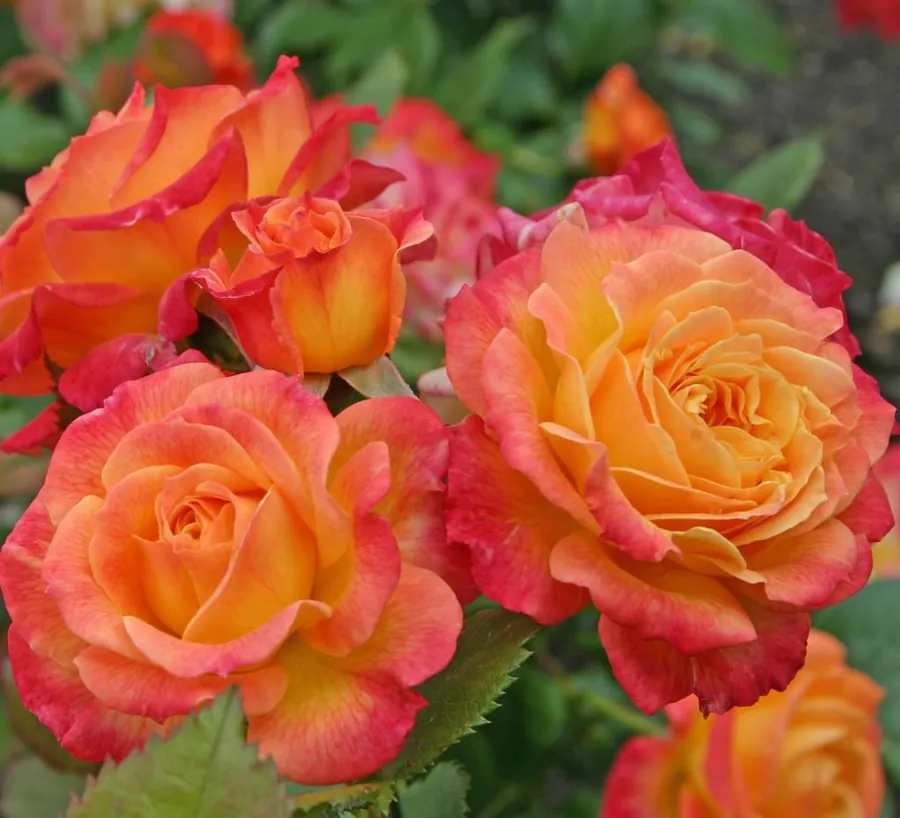
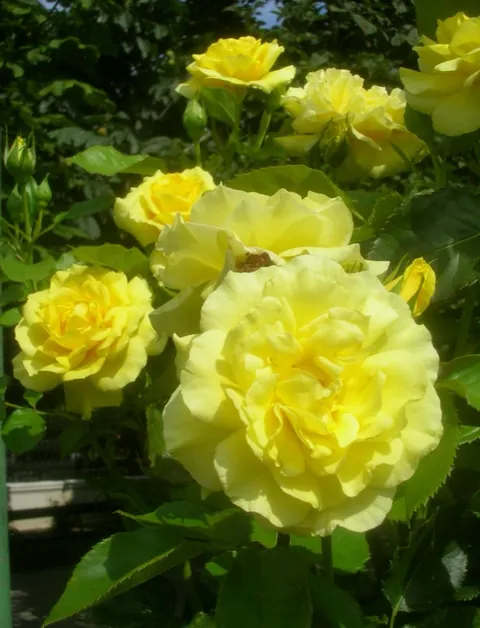
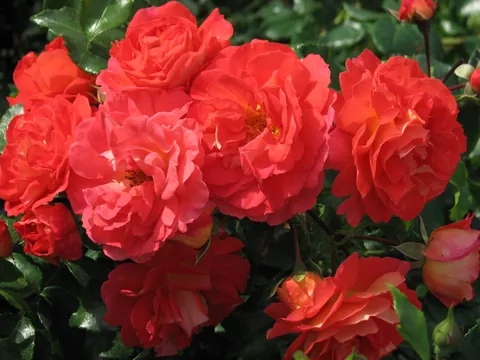
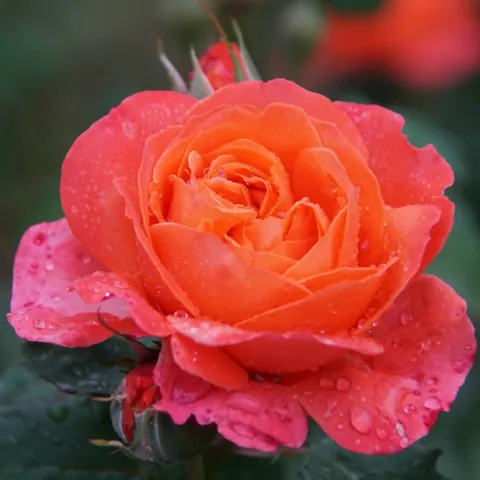
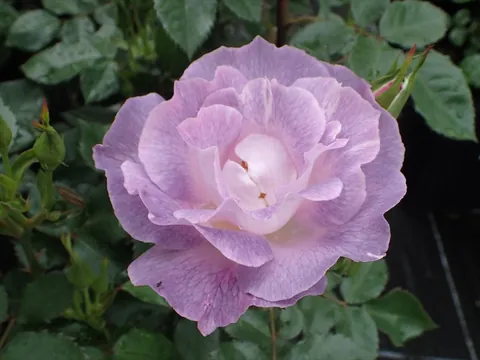



Gartenspaß, close-up of the flower
Back to catalogue
FloribundaTim Hermann Kordes, 2001Apricot and orange

Gartenspaß

Synonyms Garden Delight, Smiles; the variety is often wrongly described as a 'pink shrub' — in fact it is an orange-yellow floribunda.

Kordes

Variety profile

Flowering

Repeat flowering

Repeat-flowering, in flushes from June to the first frosts. Months are approximate, for the climate of Ukraine.

Awards

Kordes

2001 · modern bedding rose

Winter hardiness

−26 °C

USDA zone 5b–10b. All of Ukraine with moderate winter protection.

Compare reference temperatures

Plant size

130–150 × 75–85 cm
person 170 cm130–150 cm
Habit
Upright, well developed — typical floribunda
Dimensions
130–150 cm tall × 75–85 cm wide
Support
Needs no support
Shoots
Strong, straight, hold clusters well
Branching
Good, even

Flower

≈ 7 cm

50–60 petals.

Bud shape
Round-conical, warm orange
Open flower
Cup-shaped, becoming a flat rosette over time; ~7 cm across
Centre
Dense yellow centre, clearly visible in an open flower
Fullness
Full, 50–60 petals
Flower carriage
In clusters of 3–5 per shoot

Fragrance

Moderate

Moderate — pleasant and fresh, without heavy notes.

Disease resistance

4 out of 5

Good — typical modern Kordes-quality; no ADR (not entered in the competition).

Sun

Full sun for a rich colour

Thorns

Moderate
thornlessfewmoderatemanyvery many

Medium number, typical of modern Kordes floribundas.

Foliage

Dark green, glossy, healthy.

Other names

Garden Delight, Smiles
All characteristics in a table
Group
Floribunda
Breeder
Tim Hermann Kordes, Germany, 2001
Bud shape
Round-conical, warm orange
Open flower
Cup-shaped, becoming a flat rosette over time; ~7 cm across
Centre
Dense yellow centre, clearly visible in an open flower
Colour
Orange-yellow blend with a noticeable yellow undertone; depending on the weather, the tone may vary from warm 'peach-orange' to bright 'golden with an orange edge'
Fullness
Full, 50–60 petals
Flower carriage
In clusters of 3–5 per shoot
Flowering
Repeat-flowering, in flushes from June to the first frosts
Fragrance
Moderate — pleasant and fresh, without heavy notes
Hips
Not documented as decorative
Habit
Upright, well developed — typical floribunda
Branching
Good, even
Shoots
Strong, straight, hold clusters well
Thorns
Medium number, typical of modern Kordes floribundas.
Dimensions
130–150 cm tall × 75–85 cm wide
Support
Needs no support
Foliage
Dark green, glossy, healthy
Resistance
Good — typical modern Kordes-quality; no ADR (not entered in the competition)
Variations of the variety
Synonyms Garden Delight, Smiles; code KORgohowa (internal KO 01/1644-03); parentage not published (unnamed seedlings)

Colour scheme

Orange-yellow blend with a noticeable yellow undertone; depending on the weather, the tone may vary from warm 'peach-orange' to bright 'golden with an orange edge'

Rose neighbours

Perennials to plant nearby

Rose neighbours

A palette of warm yellow-orange roses for a sunny border:

Perennial companions

Purple-blue accents — the classic contrast to yellow:

lavender 'Munstead'delphinium 'Pacific Giant'lamb's ear (Stachys byzantina)catmint 'Walker's Low'

Availability worldwide

A modern Kordes Floribunda, mostly found in Europe:

  • 🇪🇺 Europe: HIGH · Kordes classic
  • 🇺🇸 USA: moderate · under the names 'Garden Delight' or 'Smiles'
  • 🇯🇵 Asia: low
  • 🇺🇦 Ukraine: moderate · listed in Kordes dealers' catalogues

More about the variety

Hips
Not documented as decorative
Variations of the variety
Synonyms Garden Delight, Smiles; code KORgohowa (internal KO 01/1644-03); parentage not published (unnamed seedlings)

How to grow

Where to plant. Sunny bedding groups of 3–5 bushes, borders in warm colours, containers on a terrace; looks lovely paired with blue delphinium — a classic contrasting combination; suitable for the front rows of beds because it flowers generously on the lower tiers.

Climate. To −26 °C — all of Ukraine with moderate winter protection in northern regions; southern Ukraine — no cover needed.

Care. A classic floribunda — prune in spring by ⅓; profuse flowering is encouraged by removing spent flower trusses; standard seasonal disease prevention.

About the name

Name. 'Gartenspaß' (pronounced 'Gartenspass') — German for 'garden joy, garden delight'. This is the original registered name of the variety, under which it is known in the post-Soviet region. It conveys the light, cheerful character of a bright variety. In English-speaking countries the variety is sold as Garden Delight, and in the USA also as Smiles.

Breeding. Bred by Tim Hermann Kordes, W. Kordes' Söhne, Sparrieshoop, Germany, 2001. Code KORgohowa. Tim-Hermann Kordes is the fourth generation of the famous Kordes dynasty (Wilhelm I – Wilhelm II – Reimer (who bred Friesia) – Tim-Hermann). Parentage not published — the house's standard practice.

Significance. This variety is an example of the modern Kordes-philosophy of the 'healthy garden rose': notable decorative value, a warm attractive colour, good resistance, moderate fragrance. It makes no claim to awards (it has no ADR) and has not made it into a Hall of Fame — it is a 'workhorse' for sunny borders. It often pairs well with 'Brothers Grimm' (also Kordes, also a warm orange) in bright bedding compositions.

Frequently asked questions about Gartenspaß

Does Gartenspaß need winter protection?

The cultivar’s reference temperature is −26 °C (USDA zone 5b–10b). Overwintering depends on the conditions. All of Ukraine with moderate winter protection.

How many times a season does Gartenspaß flower?

Repeat-flowering, in flushes from June to the first frosts.

How big does Gartenspaß grow?

130–150 cm tall, 75–85 cm wide.

Which diseases affect Gartenspaß?

Overall resistance: 4 out of 5. Good; typical modern Kordes-quality.

How much sun does Gartenspaß need?

Sun; full sun for a rich colour.

What does Gartenspaß smell like?

Moderate — pleasant and fresh, without heavy notes.

Gardeners' photos and reviews

My climate

Choose a reference temperature to compare with the cultivar’s data. This is not an overwintering forecast or advice on winter protection; consider wind, moisture and the duration of frost.

Regional data are generalised. USDA describes average annual extreme minima, not a forecast; the values in the list are rounded. Check the conditions at your site. More information: Roses in Ukraine's climate.