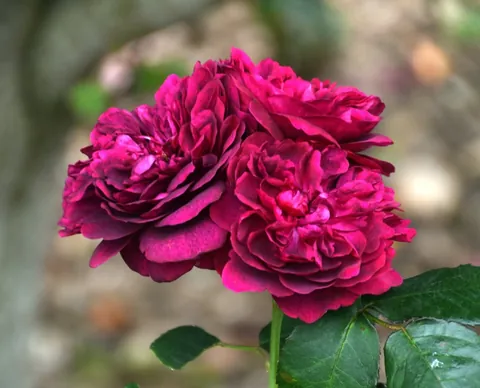
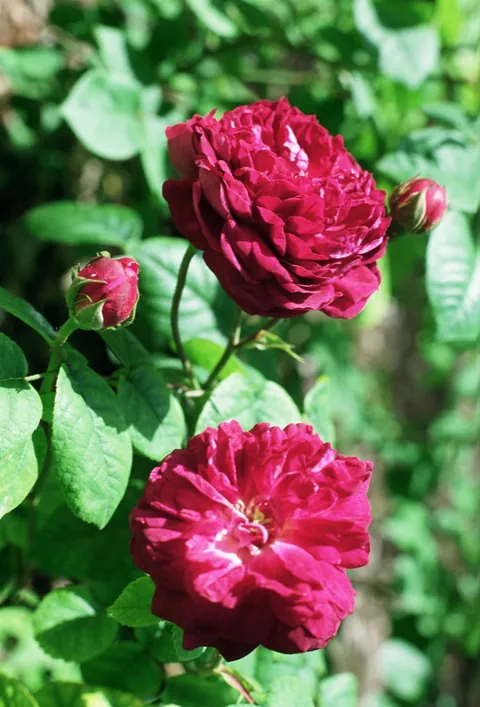
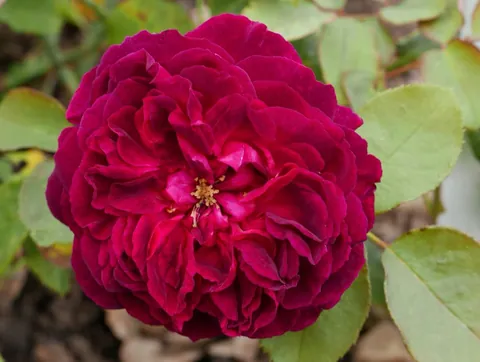
L.D. Braithwaite, close-up of the flower
Back to catalogue
English rose (David Austin); shrub roseDavid Austin, 1988Red

L.D. Braithwaite

One of the brightest pure raspberry-red Austin varieties.

Bright crimson

Variety profile

Flowering

Repeat flowering

Repeat flowering all summer and autumn; excellent flower longevity. Months are approximate, for the climate of Ukraine.

Feature

Pure crimson

One of the brightest red Austins

Winter hardiness

−29 °C

USDA zone 5. Hardy to ≈ −29 °C; in harsh winters winter protection is advisable.

Compare reference temperatures

Plant size

125 × 90–110 cm
person 170 cm125 cm
Habit
Upright, bushy, with a rounded spreading crown, arching
Dimensions
~125 cm × ~90–110 cm
Support
Not needed
Shoots
Arching
Branching
Good

Flower

9–11 cm
Bud shape
Round, dark red
Open flower
Cupped rosette, very full, with loose petals; 9–11 cm
Centre
Dense, slightly informal
Fullness
Very full, ~40–80 petals
Flower carriage
Singly and in small clusters
Flower durability
One of the most durable among English roses

Fragrance

Moderate

Moderate, sweet 'old rose' scent, intensifying as the flower ages.

Disease resistance

4 out of 5
Rustresistant

Very good against rust and botrytis; good against spotting and mildew (better in dry conditions).

Sun

Full sun

Repeat flowering all summer – autumn.

Thorns

Many
thornlessfewmoderatemanyvery many

The canes are noticeably prickly.

Foliage

Slightly greyish green, deciduous.

Other names

Breeder's code AUScrim.

All characteristics in a table
Group
English rose (David Austin); shrub rose
Breeder
David Austin, 1988
Bud shape
Round, dark red
Open flower
Cupped rosette, very full, with loose petals; 9–11 cm
Centre
Dense, slightly informal
Colour
Bright raspberry red (crimson), later cerise
Fullness
Very full, ~40–80 petals
Flower carriage
Singly and in small clusters
Flowering
Repeat flowering all summer and autumn; excellent flower longevity
Fragrance
Moderate, sweet 'old rose' scent, intensifying as the flower ages
Flower durability
One of the most durable among English roses
Habit
Upright, bushy, with a rounded spreading crown, arching
Branching
Good
Shoots
Arching
Thorns
The canes are noticeably prickly.
Dimensions
~125 cm × ~90–110 cm
Support
Not needed
Foliage
Slightly greyish green, deciduous
Resistance
Very good against rust and botrytis; good against spotting and mildew (better in dry conditions)
Use
Mixed border, groups, planted along a fence as a rich red accent
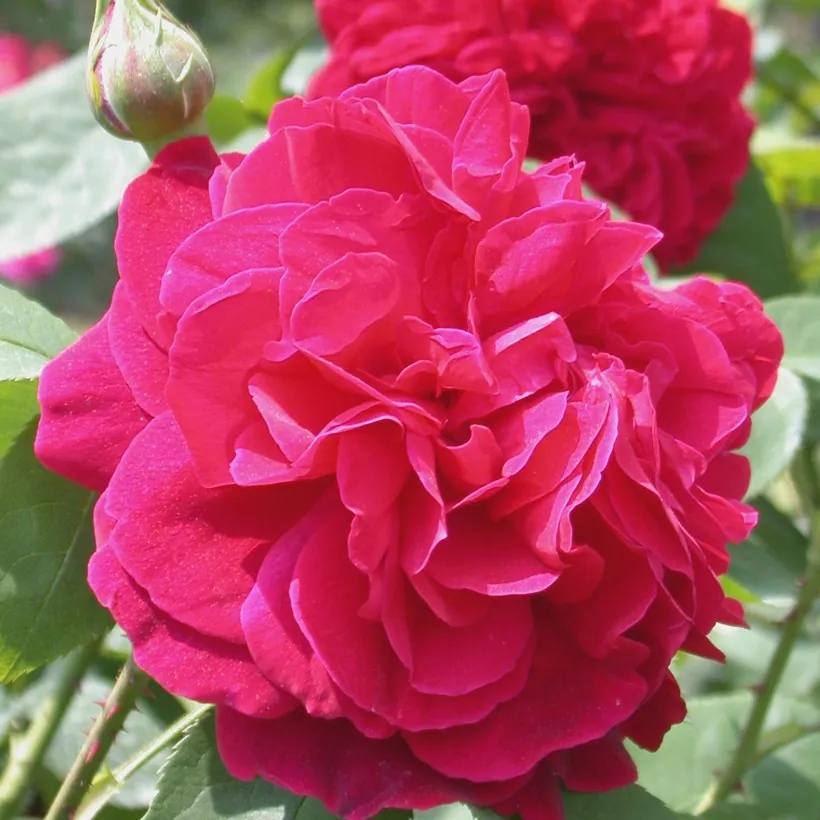
Colour scheme

Bright raspberry red (crimson), later cerise

Rose neighbours

Perennials to plant nearby

Rose neighbours

Red and purple fragrant roses keep a rich 'velvety' palette around L.D. Braithwaite.

Companion perennials

Blue perennials provide contrast with the bright crimson:

catmint (Nepeta)sagePerovskialavender

Contrast accents

For contrast beside the bright red, use white or blue accents:

white rosedelphiniumsilvery foliage

More about the variety

Use
Mixed border, groups, planted along a fence as a rich red accent
How to grow

Where to plant. Mixed borders, groups, or along a fence as a rich red accent. Along a fence: plant no closer than ~1 m from a neighbouring shrub, so each bush gets enough light and air.

Climate. Hardy (USDA 5, to ≈ −29 °C); in harsh winters winter protection is advisable.

Care. Good disease resistance (better in a drier climate); repeat flowering comes with deadheading. The colour is brightest in full sun.

About the name

Name. After Leonard Dudley Braithwaite, David Austin's father-in-law. Second name: Austin Crimson.

Breeding. David Austin (UK), code AUScrim, 1988. Parentage: a seedling of 'Mary Rose' × 'The Squire'.

Significance. One of the purest and brightest crimson varieties from Austin, with exceptional flower longevity.

Frequently asked questions about L.D. Braithwaite

Does L.D. Braithwaite need winter protection?

The cultivar’s reference temperature is −29 °C (USDA zone 5). Overwintering depends on the conditions. Hardy to ≈ −29 °C; in harsh winters winter protection is advisable.

How many times a season does L.D. Braithwaite flower?

Repeat flowering all summer and autumn; excellent flower longevity.

How big does L.D. Braithwaite grow?

About 125 cm tall, 90–110 cm wide.

Which diseases affect L.D. Braithwaite?

Overall resistance: 4 out of 5. Good; better in drier climates.

How much sun does L.D. Braithwaite need?

Sun; full sun; repeat flowering all summer – autumn.

What does L.D. Braithwaite smell like?

Moderate, sweet 'old rose' scent, intensifying as the flower ages.

Gardeners' photos and reviews

My climate

Choose a reference temperature to compare with the cultivar’s data. This is not an overwintering forecast or advice on winter protection; consider wind, moisture and the duration of frost.

Regional data are generalised. USDA describes average annual extreme minima, not a forecast; the values in the list are rounded. Check the conditions at your site. More information: Roses in Ukraine's climate.