



Back to catalogue
Floribunda / Ground Cover; ShrubletTim-Hermann Kordes; W. Kordes' SöhneBicolour

Larissa

ADR 2008 + Gold Orléans; 5/5 health; delicate pink quartered; hardy to −28 °C — all of Ukraine without winter protection; in the USA as Powderpuff.

Rigo-Rosen / Roselax series · Kordes Resistenzzucht

Variety profile

Flowering

Continuous, very profuse

Awards

ADR 2008

+ Gold Medal Orléans · Kordes Resistenzzucht

Winter hardiness

−28 °C

USDA zone 5. 'extremely winterhardy' (Kordes); all of Ukraine without winter protection. 'extremely winterhardy' (Kordes) · all of Ukraine without cover.

Compare reference temperatures

Plant size

60–80 × 60–80 cm
person 170 cm60–80 cm
Habit
Spreading, with arching canes — a typical Kordes landscape rose
Dimensions
60–80 × 60–80 cm (Kordes: 70×60)
Support
No support needed
Shoots
Flexible, with a natural arching habit
Branching
Excellent, from the base

Flower

4–6 cm
Bud shape
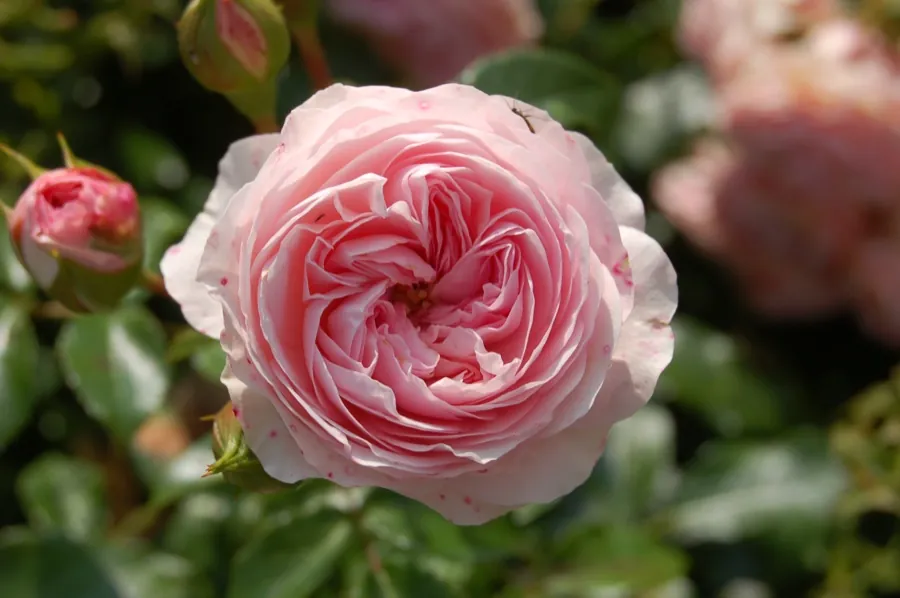
Round, delicate pink
Open flower
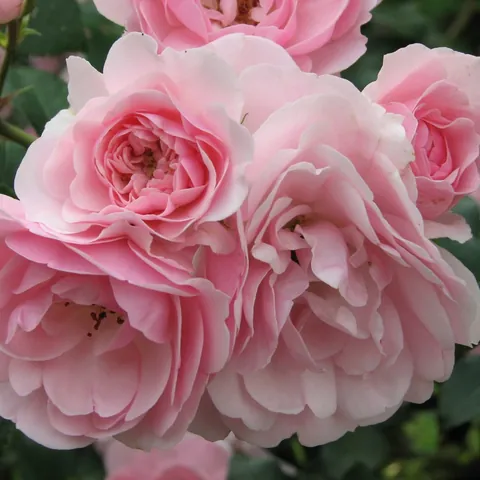
Quartered very full form — petals arranged in 4 sectors, as in old garden roses
Centre
Tightly packed, no visible stamens (very full)
Fullness
Very full (41+), 70–80 petals
Flower carriage
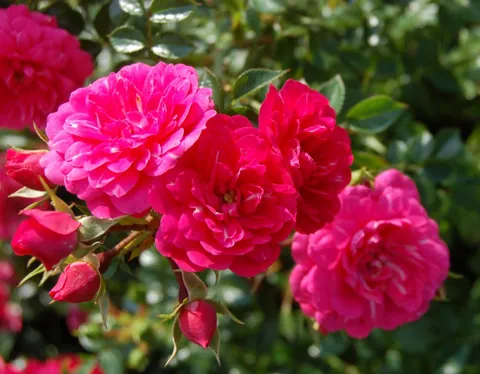
In inflorescences of 3–7 flowers — profuse flowering

Fragrance

Faint

Faint — practically no scent (typical of landscape roses).

Disease resistance

5 out of 5

5/5 — ADR-certified 2008; Kordes Resistenzzucht programme; excellent against black spot, powdery mildew and rust.

Sun

Sun and shade

Full sun; tolerates partial shade.

Thorns

Few
thornlessfewmoderatemanyvery many

Few thorns — typical of modern Kordes landscape roses.

Foliage

Dark green, leathery, very healthy.

All characteristics in a table
Group
Floribunda / Ground Cover; Shrublet
Breeder
Tim-Hermann Kordes; W. Kordes' Söhne, Germany
Bud shape
Round, delicate pink
Open flower
Quartered very full form — petals arranged in 4 sectors, as in old garden roses
Centre
Tightly packed, no visible stamens (very full)
Colour
Delicate pink ('medium pink'), outer petals lighter — a soft 'fade from the centre' effect; no yellow or apricot, no bicolour
Fullness
Very full (41+), 70–80 petals
Flower carriage
In inflorescences of 3–7 flowers — profuse flowering
Flowering
Continuous, very profuse
Fragrance
Faint — practically no scent (typical of landscape roses)
Hips
Not documented
Habit
Spreading, with arching canes — a typical Kordes landscape rose
Branching
Excellent, from the base
Shoots
Flexible, with a natural arching habit
Thorns
Few thorns — typical of modern Kordes landscape roses.
Dimensions
60–80 × 60–80 cm (Kordes: 70×60)
Support
No support needed
Foliage
Dark green, leathery, very healthy
Resistance
5/5 — ADR-certified 2008; Kordes Resistenzzucht programme; excellent against black spot, powdery mildew and rust
Variations of the variety
Correct code KORbaspro (NOT KORterschi — a different Kordes variety); internal KO 98/1661-05; US PP 21,429; parentage KORmixal × KORparesni (both Kordes breeding forms without public names); synonym Powderpuff (USA, Star Roses); 4th Tim-Hermann Kordes variety in the catalogue — alongside Florentina (2011), Kordes Jubilee (2012)

Colour scheme

Delicate pink ('medium pink'), outer petals lighter — a soft 'fade from the centre' effect; no yellow or apricot, no bicolour

Rose neighbours

Perennials to plant nearby

Rose neighbours

Family of 'trouble-free' landscape roses — a warm pink-red range:

Companion perennials

Silvery-violet family — sets off the soft pink:

lavenderlamb's ear (Stachys byzantina)lady's mantle (Alchemilla mollis)ornamental grasses

Availability worldwide

A modern Kordes landscape rose with 2 trade names:

🇩🇪 Germany: high · official Kordes🇺🇸 USA: high · as Powderpuff (Star Roses)🇪🇺 Europe: high · via Kordes dealers🇺🇦 Ukraine: moderate · via European nurseries

More about the variety

Hips
Not documented
Variations of the variety
Correct code KORbaspro (NOT KORterschi — a different Kordes variety); internal KO 98/1661-05; US PP 21,429; parentage KORmixal × KORparesni (both Kordes breeding forms without public names); synonym Powderpuff (USA, Star Roses); 4th Tim-Hermann Kordes variety in the catalogue — alongside Florentina (2011), Kordes Jubilee (2012)

How to grow

Where to plant. Urban borders, landscape drifts, containers, the front of mixed borders; ideal in a group with Knirps as a 'duo of Kordes-landscape pinks' (Knirps — saturated, Larissa — delicate).

Climate. Hardy to −28 °C — all of Ukraine without winter protection; 'extremely winterhardy' according to Kordes' description.

Care. Minimal — prune in spring; needs almost no disease prevention (ADR-certificate); tolerates partial shade.

About the name

Name. 'Larissa' — a female name of Greek origin (Λάρισα — a city in Thessaly, central Greece, founded in the sixth century BC). Kordes often uses simple, melodious female names with no specific model (like Caramella, Anna's Promise). Synonym 'Powderpuff' (USA, Star Roses) — literally 'powder puff', a hint at the soft pink fluffiness of the quartered flowers.

Breeding. Bred by Tim-Hermann Kordes at W. Kordes' Söhne (Sparrieshoop, Germany); in-house breeding in 1998, market release in 2008. Correct code KORbaspro (NOT KORterschi — that is a different Kordes variety; internal code KO 98/1661-05). US Plant Patent PP 21,429. Parentage: KORmixal × KORparesni (both are Kordes breeding forms without public names). It belongs to the Rigo-Rosen / Roselax series — healthy landscape roses from Kordes in the 2000s, aimed at urban greening.

Significance. ADR 2008 — the German benchmark for resistance and quality; Gold Medal Orléans. The 4th Tim-Hermann Kordes variety in our catalogue — alongside Florentina (2011, Arborose climber), Kordes Jubilee (2012, nostalgic HT). Tim-Hermann is the 4th generation of Kordes (Wilhelm I 1887 – Wilhelm II – Reimer – Tim-Hermann). One of the typical ADR-award winners of the 2000s. Ukrainian portals often mix up the year (1998 — breeding vs 2008 — market) and the code (KORbaspro vs KORterschi).

Frequently asked questions about Larissa

Does Larissa need winter protection?

The cultivar’s reference temperature is −28 °C (USDA zone 5). Overwintering depends on the conditions. 'extremely winterhardy' (Kordes); all of Ukraine without winter protection.

How many times a season does Larissa flower?

Continuous, very profuse.

How big does Larissa grow?

60–80 cm tall, 60–80 cm wide.

Which diseases affect Larissa?

Overall resistance: 5 out of 5. Excellent; ADR-certified; resistant to black spot, powdery mildew and rust.

How much sun does Larissa need?

Sun and shade; full sun; tolerates partial shade.

What does Larissa smell like?

Faint — practically no scent (typical of landscape roses).

Gardeners' photos and reviews

My climate

Choose a reference temperature to compare with the cultivar’s data. This is not an overwintering forecast or advice on winter protection; consider wind, moisture and the duration of frost.

Regional data are generalised. USDA describes average annual extreme minima, not a forecast; the values in the list are rounded. Check the conditions at your site. More information: Roses in Ukraine's climate.