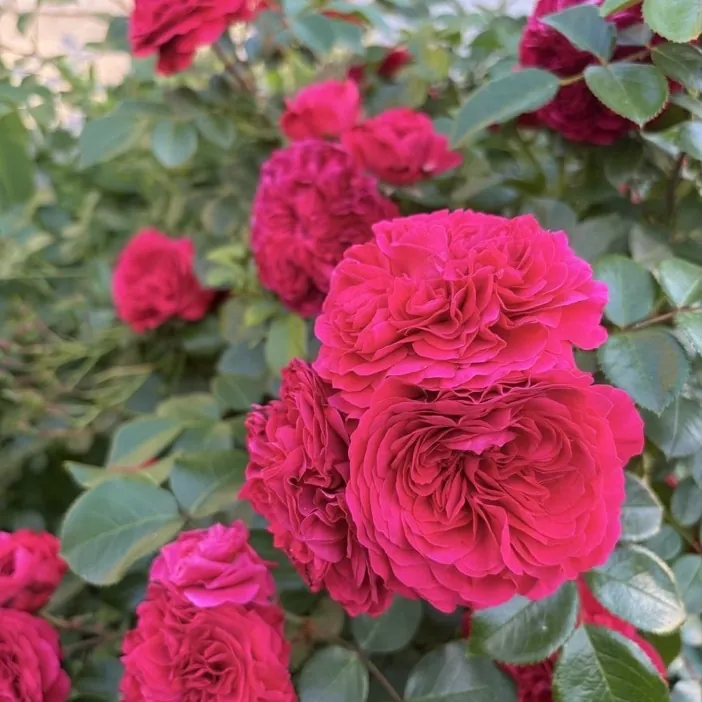
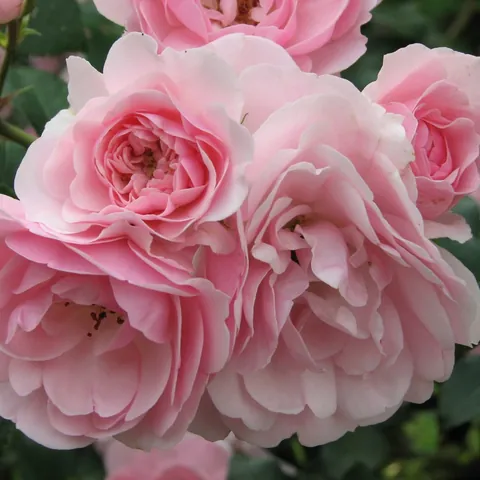
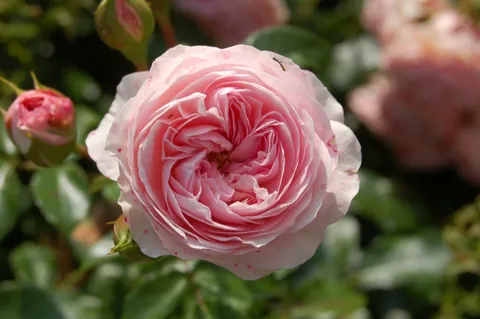
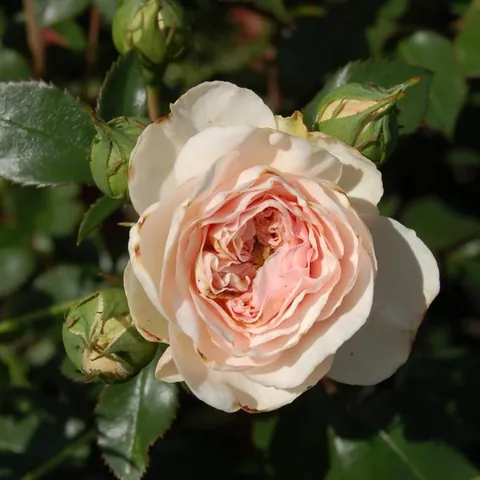
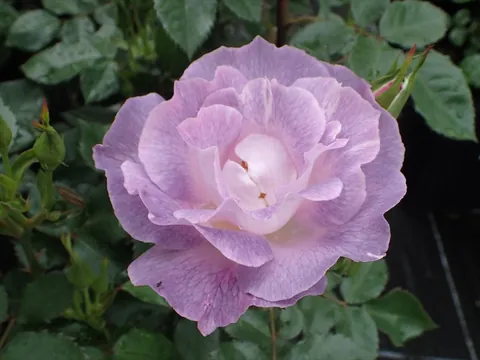




Leonardo da Vinci, close-up of the flower
Back to catalogue
Shrub rose / FloribundaAlain Meilland; Meilland International, 1994Bicolour

Leonardo da Vinci

4 awards (Gold Monza 1993; Gold Hague 1997; Top Rosen NL 1997 + Cert. Belfast); ~80 petals in the quartered old-garden-rose form; rain-tolerant; the forerunner of the popularity of the 'old-style' form at Meilland.

Romantica™ series · the era of the Italian Renaissance

Variety profile

Flowering

Repeat, profuse

Awards

4 awards

Gold Monza 1993 · Cert. Belfast 1996 · Cert. Hague 1996 · Gold Hague 1997 · Top Rosen NL 1997

Winter hardiness

−20 °C

USDA zone 6b. In Ukraine with light protection in the north.

Compare reference temperatures

Plant size

70–110 × 90–120 cm
person 170 cm70–110 cm
Habit
A spreading shrub with dense foliage — the typical Romantica form
Dimensions
70–110 × 90–120 cm; in a warm climate up to 150–200 cm (can be trained as a small climber)
Support
No support needed (as a climber — needs support)
Shoots
Sturdy, upright
Branching
Good, from the base

Flower

8–10 cm
Bud shape
Round, warm pink, full
Open flower
Quartered old-style form — petals arranged in 4 sectors; the benchmark of Meilland Romantica's 'new nostalgia'
Centre
Tightly packed, in the same pink tone
Fullness
Very full (41+), 75–80 petals
Flower carriage
In clusters of 3–5 flowers

Fragrance

Light; apple + mown grass

Light — described by Meilland as 'apple + mown grass'. Often described as almost scentless — the variety's strength lies in its form, not its scent.

Disease resistance

4 out of 5

4/5 — known for high tolerance of spots; recommended as 'rain-tolerant'.

Sun

Sun+

Full sun; tolerates some shade in the heat.

Thorns

Moderate
thornlessfewmoderatemanyvery many

Medium number, typical of modern Meilland Romantica roses.

Foliage

Dark green, leathery, healthy.

All characteristics in a table
Group
Shrub rose / Floribunda
Breeder
Alain Meilland; Meilland International, France, 1994
Bud shape
Round, warm pink, full
Open flower
Quartered old-style form — petals arranged in 4 sectors; the benchmark of Meilland Romantica's 'new nostalgia'
Centre
Tightly packed, in the same pink tone
Colour
Cyclamen pink / 'Bengal pink' — a clear, warm pink with no ombré and no bicolour; even across the flower. As it fades, it turns a muddy pink.
Fullness
Very full (41+), 75–80 petals
Flower carriage
In clusters of 3–5 flowers
Flowering
Repeat, profuse
Fragrance
Light — described by Meilland as 'apple + mown grass'. Often described as almost scentless — the variety's strength lies in its form, not its scent.
Hips
Not documented
Habit
A spreading shrub with dense foliage — the typical Romantica form
Branching
Good, from the base
Shoots
Sturdy, upright
Thorns
Medium number, typical of modern Meilland Romantica roses.
Dimensions
70–110 × 90–120 cm; in a warm climate up to 150–200 cm (can be trained as a small climber)
Support
No support needed (as a climber — needs support)
Foliage
Dark green, leathery, healthy
Resistance
4/5 — known for high tolerance of spots; recommended as 'rain-tolerant'
Variations of the variety
Correct code MEIdeauri (NOT MEIzeli — a common error; MEIzeli is a different Meilland variety); US PP 9,980 (1997); parentage Sommerwind × (Milrose × Rosamunde); synonyms Léonard de Vinci (Fr.), Romantica Pink; it has a red sport, Red Leonardo da Vinci (MEIangele 2003, ADR 2005) — this is a different variety

Colour scheme

Cyclamen pink / 'Bengal pink' — a clear, warm pink with no ombré and no bicolour; even across the flower. As it fades, it turns a muddy pink.

Rose neighbours

Perennials to plant nearby

Rose neighbours

Romantica + pink-apricot English roses — warm classic flowerbeds:

Companion perennials

Classic cottage family — violet-blue accents:

lavendercatmint (Nepeta)lamb's ear (Stachys byzantina)lady's mantle (Alchemilla mollis)

Availability worldwide

One of the most popular Meilland Romantica roses in the world:

🇫🇷 France: very high · Meilland🇪🇺 Europe: very high · a 30-year classic🇺🇸 USA: high · Star Roses🇺🇦 Ukraine: high · via European nurseries

More about the variety

Hips
Not documented
Variations of the variety
Correct code MEIdeauri (NOT MEIzeli — a common error; MEIzeli is a different Meilland variety); US PP 9,980 (1997); parentage Sommerwind × (Milrose × Rosamunde); synonyms Léonard de Vinci (Fr.), Romantica Pink; it has a red sport, Red Leonardo da Vinci (MEIangele 2003, ADR 2005) — this is a different variety

How to grow

Where to plant. Classic romantic flower beds, mixed borders with lavender, central borders, by stone walls; ideal in a group with other Romantica roses (Jean Giono, Alexandrine) — 'an Italian Renaissance' in the garden.

Climate. Down to −20 °C — in Ukraine: south and centre without protection, north with light protection.

Care. A classic shrub — prune in spring by a third of its height; removing spent blooms encourages new flushes; rain-tolerant (a rare advantage) — less prevention needed after rain.

About the name

Name. The rose is named after Leonardo da Vinci (Leonardo da Vinci, 1452–1519) — the Florentine painter, sculptor, engineer and scientific genius of the Renaissance. Creator of the 'Mona Lisa', 'The Last Supper', flying machines and anatomical drawings. The variety belongs to the Romantica™ Meilland series, whose names refer to the Italian Renaissance — alongside Botticelli, Michelangelo and others.

Breeding. Bred by Alain Meilland at Meilland International (Provence, France), market release 1994. CORRECTION: the correct code is MEIdeauri, NOT MEIzeli (a common error — MEIzeli belongs to another Meilland variety). US Plant Patent PP 9,980 (1997). Parentage: Sommerwind × (Milrose × Rosamunde).

Significance. One of the most commercially successful Meilland Romantica roses, the forerunner of the popularity of the 'old-style' form in modern Meilland breeding. 4 international awards: Gold Medal Monza 1993, Certificate Belfast 1996, Certificate The Hague 1996, Gold Medal The Hague 1997, Top Rosen Netherlands 1997. It has a red sport — Red Leonardo da Vinci (MEIangele, 2003), which received ADR in 2005. Ukrainian portals often mistakenly attribute the ADR to the pink Leonardo — this award belongs to the red sport, not the main variety. Do not confuse with the historic variety ['Leonardo da Vinci' De Tartas, 1855 — a nineteenth-century China rose].

Frequently asked questions about Leonardo da Vinci

Does Leonardo da Vinci need winter protection?

The cultivar’s reference temperature is −20 °C (USDA zone 6b). Overwintering depends on the conditions. In Ukraine with light protection in the north.

How many times a season does Leonardo da Vinci flower?

Repeat, profuse.

How big does Leonardo da Vinci grow?

70–110 cm tall, 90–120 cm wide.

Which diseases affect Leonardo da Vinci?

Overall resistance: 4 out of 5. High; known for its toughness against spots; 'rain-tolerant'.

How much sun does Leonardo da Vinci need?

Sun+; full sun; tolerates some shade in the heat.

What does Leonardo da Vinci smell like?

Light — described by Meilland as 'apple + mown grass'. Often described as almost scentless — the variety's strength lies in its form, not its scent.

Gardeners' photos and reviews

My climate

Choose a reference temperature to compare with the cultivar’s data. This is not an overwintering forecast or advice on winter protection; consider wind, moisture and the duration of frost.

Regional data are generalised. USDA describes average annual extreme minima, not a forecast; the values in the list are rounded. Check the conditions at your site. More information: Roses in Ukraine's climate.